My Epson 4900 Starved to Death

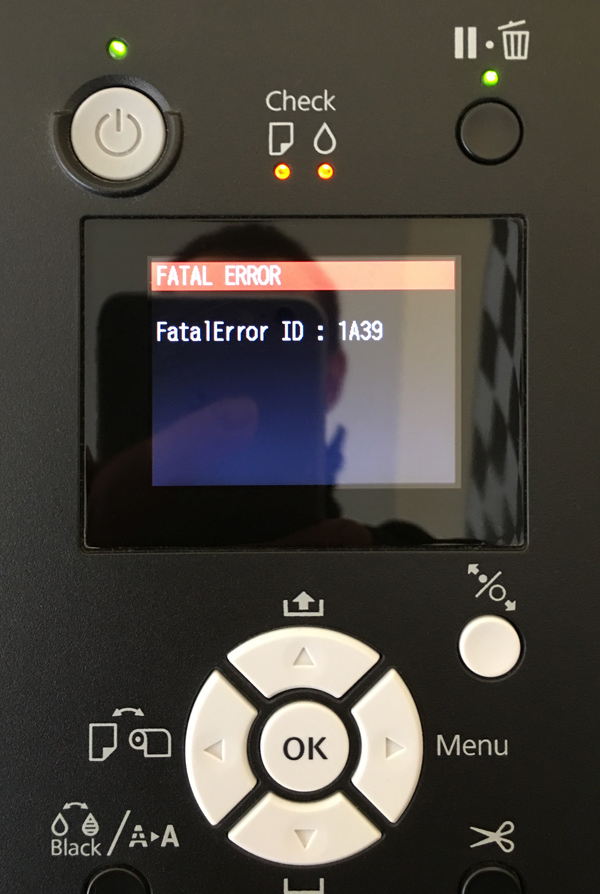
4900-head-errorWhen I turned on my Epson Stylus Pro 4900 a few days ago to do the regular maintenance cycle, the dreaded fatal error 1A39 appeared on the LCD. Kudos to Epson for these descriptive error messages. Not.

A quick search on the net as well as phoning the service and I had a complete diagnosis: the print head went dead. Replacement (including the pump unit) would cost about 80% of a new printer. Oops.

This is the fourth occurrence of such a problem in my circles. The urban legend says that when left turned off for a while, ink dries up from the head and since it is also used for cooling, being inkless repeatedly (no cooling at startup) will fry something in the head assembly. This seems to affect Epson’s current TFP heads (used in the 4900/7900/9900 – those models me and my acquaintances had issues with). The legend also tells that in newer heads (the ones that you get if you go the replacement route or buy a x900 printer these days) had been redesigned and free of this problem.

This theory is somewhat supported by the fact that most of the printers having this problem were used sporadically. I had no issues with the 4900 during the 3 years I used it heavily, but during the last one and a half years it had been sitting mostly idle, only doing a small print every two to four weeks.

In other words, it’s been starved to death.

Since my printer already made much more profit than it’s cost, I’m just mildly irritated. But saying that it’s not irritating to run into a design flaw (in case the legend holds true) that costs me money would be a lie.

Anyway, I’ll need a new printer. My use in the future will continue to be light, so I’m not going the TFP route again. Yes, the legend says that this problem had been fixed in the new heads, but Epson also publicly stated several times that new printers are not susceptible to clogging – which was far from truth with the 4900. So no TFP, thank you.

I’m looking into two printers now: the 17″ Epson P800 (which uses the previous generation AMC head), and Canon’s 24″ iPF6450 PRO 2000. The 17″ PRO 1000 had been quickly ruled out by not having a straight paper path, not supporting some heavy media I use, and it’s ridiculous margin handling (I can’t print a 30×45 on an A3+ paper). Epson’s new P7000 was considered for a fleeting moment, but it uses a TFP head, so I stopped thinking about it.

Fortunately I’m not in a hurry to get a printer immediately, so I’ll have time to do some evaluation before making the decision. I’ll start with a first look on the P800 towards the end of next week.

But there’s a gift in every problem: since the only thing I used Windows for was printing, I could finally eliminate the very last (albeit virtual) Windows machine in the company! And man, this is a huge time saver. Based on this, I’ll take the opportunity to reimplement my printing workflow purely on OS X. I badly needed this, but there were always more excuses important things. Now I ran out of them.

Postscript: I’m selling the remaining consumables (inks, cutter blade, maintenance tank) as well as fully operational parts (roll spindle, roll unit, paper tray, or any other parts you may need) from the dead printer. Please let me know if you are interested.

  ☕ ☕ ☕

Did this post help you? Consider buying me a coffee if so.

Zeiss Otus 1.4/28 First Impressions

Today’s arrival of the Otus 1.4/28 completes the last large piece of the 5DS R induced lens kit revamping puzzle. And it’s large is several ways…

My new core kit consists of the following lenses: Zeiss Distagon T* 2.8/15, Otus 1.4/28, Otus 1.4/55, Apo Sonnar T* 2/135 and Canon EF 500mm f/4L IS II USM as well as Canon’s 1.4x III extender.

But back to the 28mm. This may be one of the first production lenses available, which I bought for my own use. I mention this because I’m increasingly getting tired of photo equipment reviews where the reviewer gets a lens or camera from the manufacturer for a short period of time to form conclusions that should (in theory) drive sales. Sorry, but I don’t believe people who tell me to buy a lens that they haven’t purchased for themselves. It’s a bit stinky for me. Buying an expensive instrument is almost always a revelation: “I spent a lot on this item because I trust the manufacturer, the instrument is that good and it’s definitely worth it.”

So, the 28mm Otus is that good and it’s worth every (euro)cent I spent on it. If you know me, you know that these are from someone who’s picky to the extreme. No, it’s not perfect, but it’s the best wide angle lens I’ve ever used. That is, there’s no point in doing pixel peeping. If you are curious, I’d recommend to subscribe to Lloyd Chambers’ site for detailed aperture series and tons of sample images. I’m a long time subscriber and Lloyd’s site is one of the few I trust these days. Another review I’d recommend is a veteran Otus user Ming Thein’s.

Given my tight schedule, I only had a few hours today to do initial checks. Light was totally lousy, so no images made with the lens today. But here’s one of the lens, with which I’m going to jump right in the middle.

The Otus 28 with LEE's push-on filter holder

The Otus 28 with LEE’s push-on filter holder

And this is about using filters on the 28. I’ve switched to LEE’s 100mm square filter system a few years ago – and never looked back. The 28 has a 95mm filter thread, for which LEE has a normal adapter ring (no wide angle option is available). Unfortunately, my two-slot filter holder vignettes at the corners when rotated to 45 degrees using the normal ring. I was really disappointed by this, but for who knows what reason, I’ve tried to fit LEE’s 100mm push-on holder on the lens. To my greatest surprise, it was a perfect fit. My jaws literally dropped when I took a closer look on the front of the lens. There’s a small recess in front of the hood bayonet for the push-on holder. Absolutely marvelous. To the marketing guys at Zeiss: you should advertise this. It’s a huge plus.

You get a tiny bit of corner darkening even with the two-slot push-on holder, but you can either remove one of the slots or get rid of the vignetting in post.

Side view showing the holder's fit and how large the Otus 28 is

Side view showing the holder’s fit and how large the Otus 28 is

The 28mm is on the larger and heavier side of optics. Some would say that it’s extremely large and heavy, but to anyone accustomed to carrying and using super telephoto lenses, its manageable. But you need to watch out for the weight. There’s no tripod collar, so you’ll need to hang the lens off the camera’s mount. Which will put more than usual stress on both the lens mount and on the tripod screw. Since my 1D Mark II’s tripod screw socket suddenly separated from the L-plate, and the rig hit the ground with the 24-70 mounted, I’m giving suspicious looks to mounting screws. Fortunately the 5DS R has a strengthened base place, and I’m using a Kirk L-plate that is secured to the camera in two places (with the tripod screw and fastened to the strap lug). Ball head sag could also be a problem (but it’s not with the geared heads like the Arca-Swiss d4 I’m using).

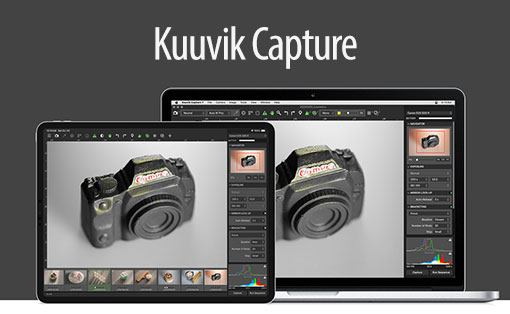
Focusing experience is great, images pop to sharp when using Kuuvik Capture‘s live view. A word of caution though (this is omnipresent with all high performance lenses and the huge 50 megapixel resolution of the 5DS R). You can’t focus 100% perfectly using the minified live view image. Not even in 6x magnification (16x is just 6x blown up in software, so forget about that). It may show that you nailed focus perfectly, which could fall rather unfortunate planes on the final image. Even at f/5.6. So it is advisable to check images at 100% magnification after they were taken. I’m doing this in Kuuvik Capture after each capture, and for shots I think would be final, I also do a check in Capture One. Yes, you need a notebook for this, but heck, the 11″ MacBook Air weighs about 2/3 of the Otus and fits in the pocket of my trusty Domke photo vest…

Speaking of f/5.6. It seems that I will definitely need focus stacking if I need front-to-back sharpness. It would be a cardinal sin to kill the lens’ resolution and wonderful micro-contrast with diffraction, and at f/5.6 depth of field is definitely not enough for making everything sharp on the image. Or look for another composition where there’s no front-to-back sharpness needed. This isn’t new with the 5DS R, just be prepared to do some extra work to extract every last ounce of quality from this beast.

I did a quick comparison of the other wide lenses I have now: with the Canon 24/2.8 IS and 35/2 IS. The tiny 24 was known to blow even the TS-E 24mm away for center sharpness. Well, the Otus is better in the corners than the 24 in the center. Even at f/5.6. While the 35mm has more uniform image across the frame, it’s simply not in the same leagues with the Otus. I found that basically there’s no point in comparing the lens with anything except another Otus. Although I had no time (nor intention) to do side by side comparisons, the 28mm shows the same clean, transparent, airy images that the 55mm and the Apo Sonnar 135 are known for.

That’s all for now, after the first half day with the lens (this is a first impressions post after all). More when I will have chance to use it for actual work. But just like with every other lens in my current kit, it’s love at first use. I’m completely confident that they’ll bring home tons of great images during the coming decades (yes, decades).

  ☕ ☕ ☕

Did you enjoy this post? Consider buying me a coffee if so.
First Outing with the Zeiss Distagon 2.8/15

Christmas arrived early this year for me – the sleigh disguised as a DHL truck… In the package there was a box containing a Canon-mount Zeiss Distagon T* 2.8/15 lens. After the usual shots around the house, I decided to visit my favorite lens torture place.

I usually check basic lens functions here, look for centering errors and such. Just to get a feeling of how the lens will perform.

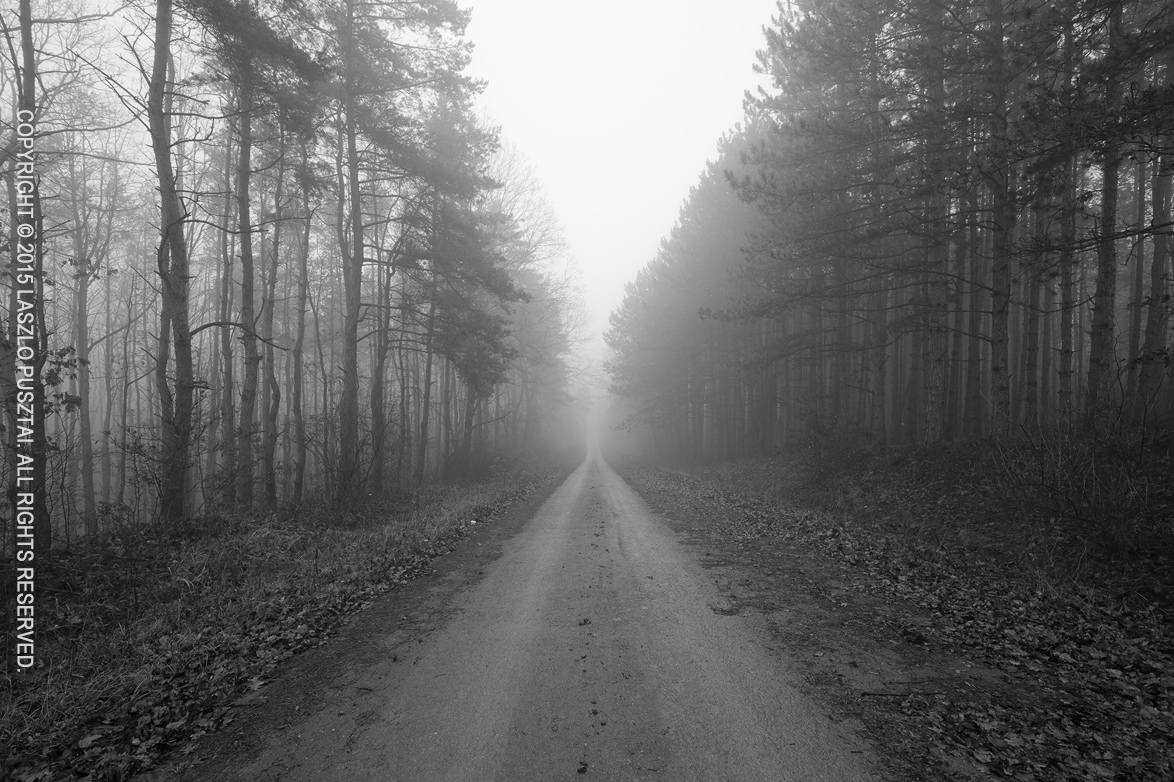
Today it was a foggy, damp evening, with a light drizzle. I had absolutely no intention to make an image. But the 15mm Distagon surprised me big time. This is my third Zeiss, and they have a common trait: the ability to render even the most mundane subjects in an interesting and pleasing way.

Case in point:

Foggy, Damp Evening

Foggy, Damp Evening

The 2.8/15 draws a true-to-life, well balanced image. No signs of the “tingling” behavior of Japanese designed glass (both Canon and Sigma are similar it this regard). It’s interesting that I experienced the same with hi-fi equipment in the past. Well, cultural differences and preferences at work.

I just prefer the Zeiss look.

15mm is the widest focal length I’ve ever used (17mm being the second widest). I like the interesting and dynamic perspective ultrawides can produce, and after a decade of working with them I find 15mm pretty easy to work with. Much easier than 17mm was.

I’ll spend some time shooting the lens during the holidays, and will share my further impressions. In January the lens will go back to Zeiss for a little surgery: to get rid of that useless lens hood and make it compatible with my LEE filters. More on this later.

Zeiss Otus 1.4/55 ZE First Impressions

It’s both hard and easy to write about the Otus. Hard, because there are qualities in this lens that one has to witness in person. And easy at the same time, since there are so many good things about it. So many, that one tends to forget about all the minor glitches and imperfections.

I didn’t want to join the “crap shot with an Otus” gang you may find on different forums, so went out to catch the last days of fall. I have the 55 for about a month now, but had only a few days to work with it since its arrival (partly because natural reasons, but mostly because it went back to Zeiss after the first days – more on this later).

Image Quality

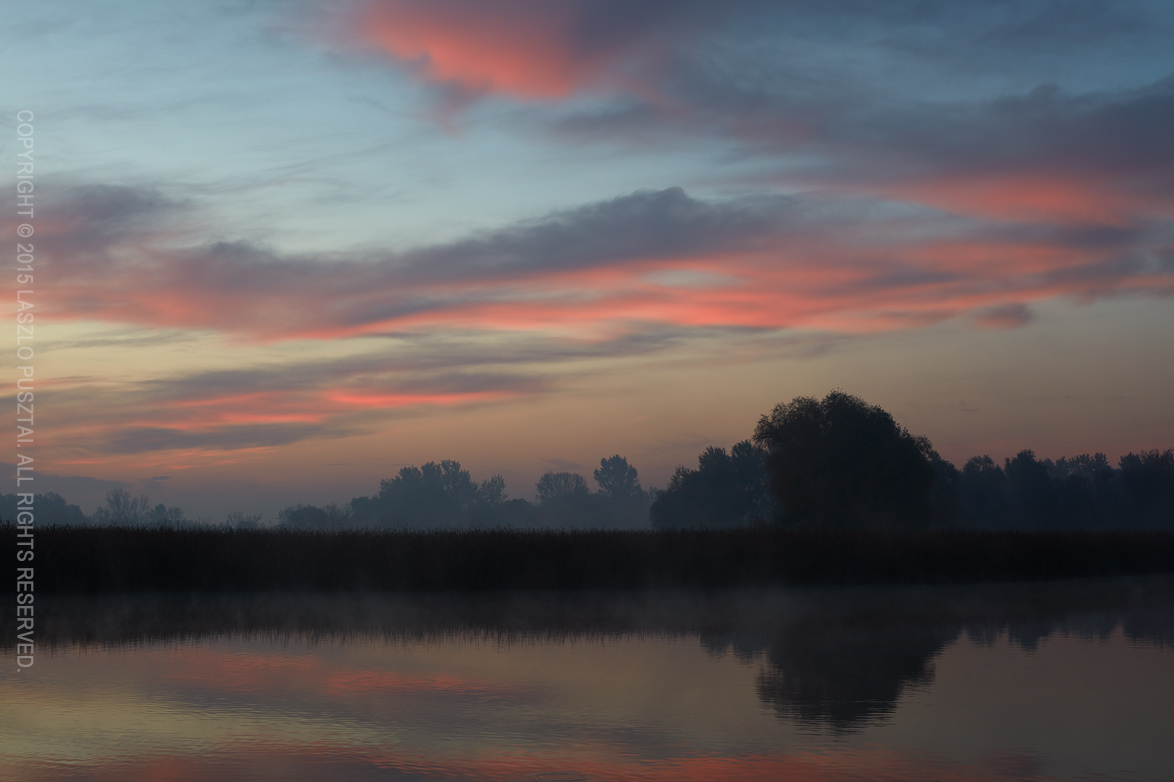
It’s among the best I’ve ever seen. And I don’t just mean its high resolution. Take the following image for example. I’ve shot this scene from my favorite port on Lake Tisza more than a couple of times.

Morning on the Lake

Morning on the Lake

None of the other images have this airy, three dimensional feeling that draws the viewer into the image. Some manufacturers refer to the residual aberrations in their products as the lens’ character. The character of the Otus is that it has no character. It was shocking when I noticed it with the Apo Sonnar 2/135, but the Otus 55 is the same. Even mundane subjects look good when photographed with these lenses. They render the scene almost as I see it.

I was in constant awe during the first morning with the Otus. I hadn’t had this feeling since the early days of digital photography. With the D60, 5D and 1D Mark II, L lenses were better than the cameras. But since the 5D Mark II and III arrived (not to mention the 5DS R), lens problems became more and more visible and partly ruined the game for me. It’s pretty devastating to shoot a great scene only to realize later that your lens is not up to the task. My recent move to an all-prime setup alleviated this problem to some degree, but only the Otus was able to evoke that feeling again. Even at 100%, all I see are gorgeous pixels.

No, it’s not completely, 100% free of all optical aberrations, but being an apochromat, the most annoying color errors are corrected to a very high degree. What remains is strong vignetting wide open, and barrel distortion. Neither of those is very hard to correct during post processing, it you want to correct them at all. Vignetting really helps the following image.

Late Fall Colors

Late Fall Colors

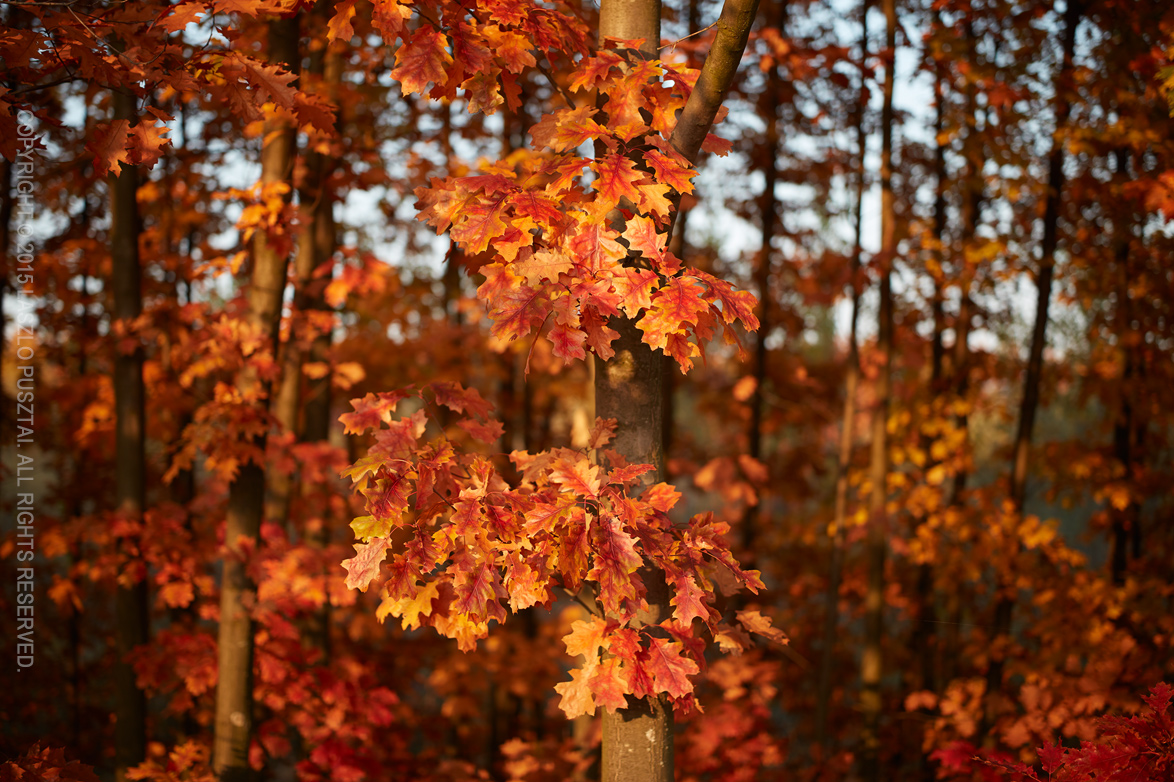
This was shot at f/1.4 and the quick transition from sharp to unsharp helps to attain three dimensionality. The lens is completely usable at f/1.4 without any restrictions. You don’t have to stop down for better image quality – this is huge creative freedom.

The only aberration that could be problematic is distortion. It’s clearly visible in some situations (think architecture), but I would strongly recommend leaving it uncorrected if possible, as distortion correction may kill the lovely micro-contrast of the Otus. Try to work around the distortion with your composition instead.

Speaking of contrast, the high contrast really insists black and white conversion, as you can see in my previous post.

Handling

I won’t talk about build quality, since it’s as good as one can wish for, so let’s move on to handling.

This is a large lens. I won’t say huge – huge is the word for the first generation Canon 600mm and 400mm IS lenses in my book. Its weight really helps to stabilize the camera if you must shoot handheld. In other words, it’s like a 24-70 zoom.

Small focusing ring rotation is a recipe to endless frustration when it comes to manual focus – and the Otus’ 245 degree rotation makes it easy and a joy to focus the lens. As you might already noticed, there’s no autofocus. But I would nevertheless recommend to calibrate your AF microadjustment value, because the AF sensor still works for focus confirmation – and precise focusing is crucial to extract the maximum attainable performance.

A sturdy tripod and a stable head is the real home of the Otus (especially on the 5DS R). I also prefer to shoot tethered to Kuuvik Capture for all the benefits the larger screen can bring.

The Glitch

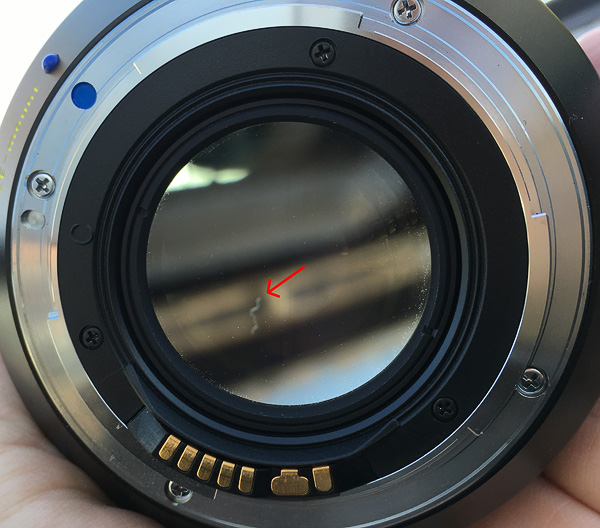
otus-lintAt the end of the very first morning I touched the rear lens element. And when I started to clean it, I noticed a long lint (thread? hair?) inside the lens. It was visible on the very first shots I made of the lens for the insurance company.

So it went back to Zeiss immediately (actually to the dealer and they sent it to Zeiss). I received the lens earlier today, lint removed and focal flange distance readjusted. Because it was “out of spec”. I’m talking about a brand new, premium lens here.

I don’t know, but there’s something terribly wrong with quality control these days. I received the first 5DS R completely dead, had to send back several iPads because of screen uniformity and color cast issues… It’s not only Zeiss, it’s the industry in general.

The question is not whether you’ll get a lemon, the question is when will you get a lemon. And how the dealer and/or the manufacturer handles the situation. Fortunately for me, all these problems were quickly and successfully solved by the dealer and/or the manufacturer. Free of charge. But I cannot stress enough the importance of buying from a reputable dealer… And the importance of inspecting/testing new gear.

Also note that even a lint this large rarely shows up on real world images. The two pictures above (and the black and white if you followed the link) were taken with the lint present – and you don’t see it. It reduces contrast and actually became visible on homogenous backgrounds only at some focusing distances.

Oh, and you can see on this image how hard is to keep the rear element clear. It’s not Canon’s fluorine coating. The rubber focusing ring is also a dust magnet. But a little extra cleaning work is acceptable in exchange for the lens’ superlative imaging qualities. I just hope that the large opening for the distance scale will not suck dust and dirt into the barrel.

Compared to the Sigma 50mm Art

Ok, but how it compares to the Sigma? This is a question you surely will ask when thinking about a high-grade normal lens. I bought a Sigma last year (my first impressions review is here) for the 5D Mark III. The 5DS R stirred the pot quite a bit, to a degree where I decided to spend the $4000 on the Otus and part with the Sigma.

Please note that we’re splitting hairs here – both lenses are vastly superior to what Canon or Nikon has to offer. The Sigma is a great lens, just not on the level of the Otus. It’s quite close, and if you don’t want to spend $4000 on a normal lens, the Sigma is an excellent choice. But the Otus is better…

The Otus has higher resolution in the corners. In the image center the Sigma is pretty close (on the 5DS R), but the corners are a different story – even at f/5.6. Color correction is much better in the Otus. I prefer the overall “look” from the Otus. It’s more natural, while the Sigma tends to be a little clinical. Distortion is visibly less on the Sigma – this may be a serious point if you are doing lots of architecture work. Haven’t compared vignetting, as neither bothered me too much.

Focusing is by far superior on the Otus. Although the Sigma is an AF lens, it’s implementation is quite inconsistent and I was unable to arrive at a working AF tuning setup that works both at infinity and close distances. So I consider the Sigma a manual focus lens. With live view focusing it’s bearable, but it’s way faster to focus the Otus.

Conclusion

As my better half says: “we love the Zeisses”. And as she continues: “there must be a significant difference if even I can notice it immediately”.

This is a kind of equipment that will actually make your images better. Partly because of the wonderful rendering, partly because it slows you down, and finally because you’ll find much more joy in making images with this lens.

Yes, a good photographer can make good images with crappy cameras, but a good photographer can make images that sing with the Otus.

If manual focusing and the normal lens fits your working style, working from a tripod or even tethered doesn’t scare you away, and actually print your images large – do yourself a favor. Rent an Otus. And if you have the funds – buy one. This may be the best investment in photo gear you ever made.

Accessories to Get the Most Out of Your 5DS R

The Canon EOS 5DS R is indeed a great camera, rivaling or even surpassing medium format digital offerings. But to extract its capabilities to the last ounce, you’ll need the appropriate lenses, accessories and technique.

Let’s get the lens question out of the way first, before I move onto the accessories and gadgets – the real topic of this post. This camera ignited a complete revamp of my lens set. I’ve already replaced the 500mm with the Mark II because of the 7D Mark II, but the 5DS R made changes also necessary in the shorter focal lengths range. The first lens that got replaced was the 135mm – with the Zeiss Apo Sonnar 2/135 ZE replacing the Canon EF 135mm f/2L USM. The Canon was no slouch, but the Zeiss is in a completely different league. Next came the Sigma 50mm f/1.4 Art replaced with the Zeiss Otus 1.4/55 ZE (actually this change is in progress, as the first copy went back to Zeiss – more on it after the issue settles). On the wide end I’m about to acquire a Zeiss Otus 1.4/28 ZE (when it comes out next year) and a Zeiss 2.8/15 ZE.

It may look pricey at first, but these lenses are not comparable even to the Sigma Arts. With the Sigma 50, 5DS R images just look like regular 35mm DSLR images, albeit with slightly higher resolution. But they are still limited to 40×60 cm print sizes according to my standards. There’s a lot of empty magnification in those images. With the Otus 55, 60×90 cm is easily reachable. The images remind me of those I saw from Hasselblads. The Otus 55 costs around $4000, which is in line with medium format normal lens offerings priced between $3000 (Schneider) – $6000 (Leica). And the 5DS R is more than affordable compared to medium format cameras/backs.

With this said, it’s not surprising that you’ll need tripod stability and shooting discipline used with medium format gear. The setup I describe in the following sections was built slowly during the last couple of years to satisfy my landscape photography requirements. Removing “field frustrations” one by one.

As a quick overview, you can see my rig on the following picture.

Ready to shoot

Ready to shoot

Tripod and Head

I’m using a Gitzo 3532LS tripod for more than three years now. These legs proved to be versatile, have great torsional rigidity and dampen vibrations rather quickly. I prefer three legs sections for increased stability, and myself being 172 cm, this tripod gives me just the right height to work comfortably even on slopes.

On the head front, the Arca-Swiss d4 is my choice. I had been struggling with ballheads for a decade, and they became unbearable when I started to shoot tethered most of the time. I had to wait three months for the d4 to be delivered, but it well worth the wait. Now I can adjust the camera position with just one hand, while holding the MacBook Air in the other. Not to mention that sagging omnipresent even with the best ballheads is a thing of the past. I prefer the d4 compared to the Cube, because of the quick adjustment feature.

The third piece of the the support puzzle is the camera plate. I’ve relocated my Kirk plate from the 5D Mark III – it is 100% compatible. As I wrote in my Kirk plate first impressions piece, I really like its two attachment point fixing method. Together with the 5DS R’s reinforced base plate, it provides very stiff support. Note that no battery grips are used here – they just introduce another attachment point with possible flex and sag.

Filters and Lens Shading

I moved to the LEE filter system when I started shooting with primes only. Four different filter sizes were unmanageable – even with the two types of filters (ND and polarizer) that I use. Still don’t like graduated filters and the dark mountain tops you see so many times on photographs made with them, and my LEE filter set consists of just a 100x100mm polarizer, a 3 stop ND, plus the Little and the Big Stopper.

They beautifully solve the filter thread problem, but forget about stock lens shades. So I had to find a solution. Sometimes I used my hat to shade the lens front element, and that gave me the idea: get a piece of black paper/plastic, and figure out how can I hold it in place (remember, one hand for adjusting the head/camera/lens, another for the MacBook – there’s no third one for holding the shade). I ended up using a Wimberley Plamp as a third hand. Originally I had a piece of black cardboard in my bag as a shade, but recently switched to a piece of matte plastic named Shadepirate. You can’t see on the above picture, but I put a piece of Velcro under the clip of the Plamp to protect the tripod leg.

Tethering

Tethering became integral part of my workflow years ago. At the beginning I had been dragging a 15″ MacBook Pro around, but that turned out to be a bit heavy and problematic. For more than a year now, a 11″ MacBook Air serves as a field computer. It fits into the pocket of my Domke vest, weights as little as five or six 4×5″ film holders… Yes it’s a bit more than 1kg, but my backpack and tripod weighs around 20kg together, so that’s not a huge increase.

Of course I use my own software – Kuuvik Capture – on the MacBook for controlling the camera. But usually also keep a copy of Capture One open so that I can make critical decisions on the filed.

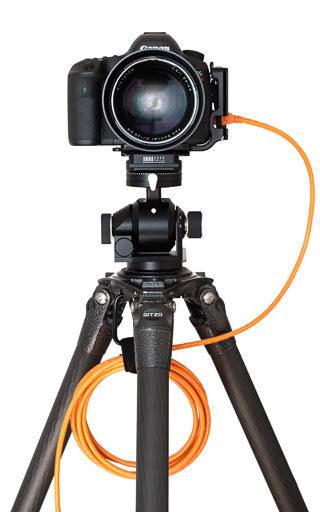
With the arrival of USB 3, cable quality became increasingly important. You need to have good signal integrity for a reliable connection. For this reason, I settled down with TetherTools’ TetherPro cables – currently the 15 feet (4.57m) orange one. As an interesting side note, we had a handful of Kuuvik Capture support incidents where changing the cheap cabling to a good one solved the issue.

Conclusion

For me, the 5DS R marks the end of the casual 35mm shooting era, but in exchange delivers image quality previously available only with much more expensive medium format systems. Even with expensive Zeiss glass, the complete system price/performance ratio remains on a uniquely high level.

Not to mention that the same camera can be used for birding with stellar results – a domain no medium format camera dare to enter.

  ☕ ☕ ☕

Did you enjoy this post? Consider buying me a coffee if so.
Photographing Grebes with the 5DS R

The 5DS R became my main camera the instant I got my hands on it. Honestly, I thought that it will somehow augment either the 7D Mark II or the 5D Mark III as a high-res landscape camera, while one of those will remain my wildlife camera. I was wrong.

The 5DS R has so many seductive qualities that I tend to forget all its shortcomings and difficulties (more on those later).

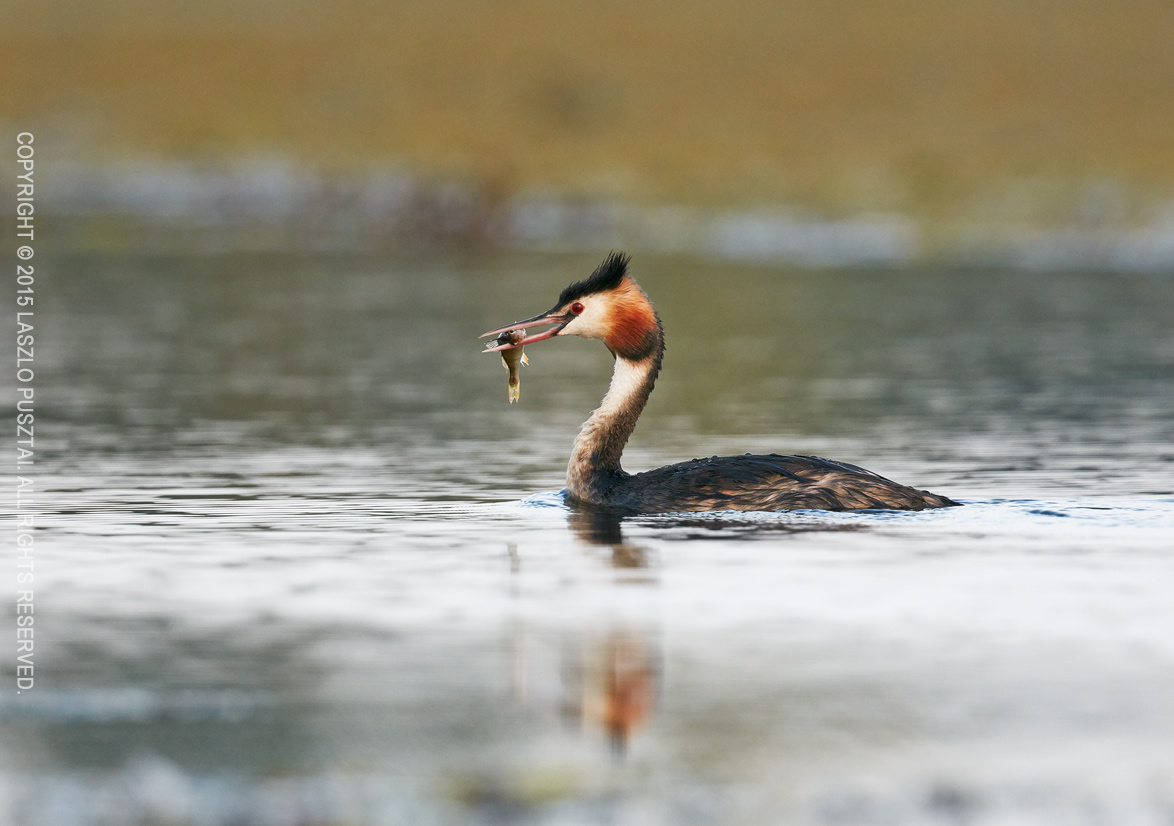
Colors are bold and thanks to the anti-aliasing cancellation filter it can produce lovely crisp images. Such as the following one.

aaa

A moment before diving

It was taken in early morning light with the Canon 500/4 IS II lens and the 1.4x III teleconverter. It’s a moderate crop of about 26 megapixels – still enough for a 40×60 cm print. Yes, you can crop the hell out of these files, and still retain a huge amount of details due to the lack of AA filtering.

Some of my former grebe images are 6-8 megapixels from the 1D Mark II… So its a huge increase in usage flexibility.

Of course those huge files have a few consequences you have to live with. First, the 5DS R feels like a medium format camera. From the sound of the mirror to the time it needs to display an image on the LCD. It feels like you travel a decade back in time… Press the play button and wait… Also I haven’t experienced buffer full issues since the 1D Mark II – but run into that quite a lot even using 1066x Lexar CF cards.

You also need more time to cull a shoot. Fortunately I have an app for that: with Kuuvik Capture 2 I can sift the daily crop of 1500-2000 images pretty quickly. An old friend of mine was sitting besides me last morning and was surprised how fast the app deals with 50 MP files (and this was on a 1.4GHz 11″ MacBook Air I use as a field computer).

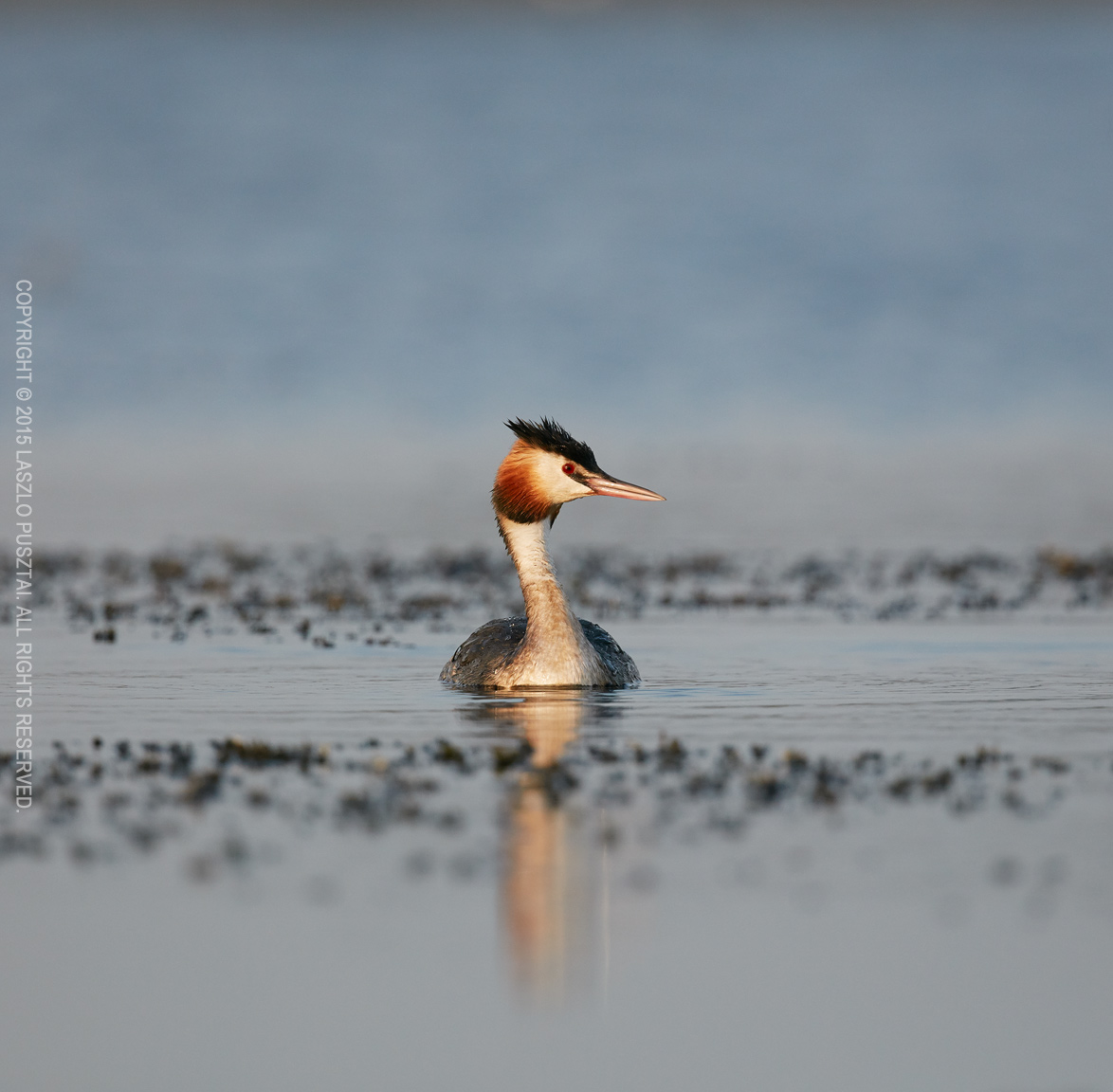
The next one is cropped from the sides for the rectangular composition. Same lens and converter combo. I stop down to f/6.3 with this combination, which is a bit below the f/6.7 diffraction limit of the camera. So unlike landscapes, one doesn’t have to deal with the depth of field versus diffraction issues here.

bbb

Curious visitor

Surprisingly, I found ISO 800 images a bit sharper than ISO 400 ones, so all of these were made on 800. I’ll have to investigate this further before I can draw serious conclusions. But until then, ISO 800 seems to be perfectly usable with no need for extra noise reduction.

The images in this post are the tranquil ones (the action shots are saved for another post). The 5 fps maximum speed turned out to be usable with a little anticipation of what’s going to happen (which also helps your photographs and in the understanding of the behavior of the species you are photographing). But for fast paced action I still reach for the 7D Mark II.

I tend to like to include a bit of the bird’s habitat in my images (maybe I should call them birdscapes), for which the full frame sensor is a real boon. And I can crop the surroundings away if a tight composition is what I’m after.

ccc

Breakfast for the nestlings

AF is superb. The best I’ve ever found on a Canon camera (excluding the 1D X, because of it’s faster focus driving speed). The only thing I miss is the AF mode selection lever of the 7D Mark II. I find myself reaching for the lever and cursing who’s responsible for this omission quite often.

A hot topic is the dynamic range of current Canon sensors. Well, while sometimes I would need more (maybe a handful of times during the last 12 years), what the 5DS R offers usually pretty much enough. Especially that I print my images where I have just 6 or 7 stops, and usually expose my images properly with no need to recover from the shadows. Also I like to utilize clipped highlights and shadows as artistic tools… So I’m not complaining on this front.

ddd

Good night!

As you may already think, I really like the 5DS R. It’s not the absolute fastest and the most suitable camera for bird photography, but those limitations are igniting my creativity and are not in the way of image making. It’s an exceptional tool for making the kind of photographs I have in mind.