Fixing a Painful Mongoose M3.6 Problem

I’m using the Mongoose gimbal head since late February. It is a great head with one recently discovered issue. Which turned out to be a painful one – literally.

Whenever I use my long lens setup on a tripod I try to improve its stability and maneuverability by gripping the lens the way shown on the following image. With the Mongoose I have a solid platform to lean my left forearm against (this is why I place the arm of the head on the left, even if it obstructs controls on the lens).

1D2_1318_1088

Gripping the lens to improve stability

This worked fairly well during the colder months when I was wearing a fleece and a jacket. The problem surfaced on the very first hot spring day when I left warmer clothing at home and my skin was in direct contact with the Mongoose: the horizontal movement locking knob on the head’s base was constantly sticking in my arm, causing a pain directly proportional to the force I used to stabilize the lens with.

The offending screw from another angle

The offending screw from another angle

I was out on Lake Tisza when this first happened, together with my guide, who is also an avid photographer – and retired mechanical engineer. When I told him about the issue, he pulled out a piece of blue foam you see on these pictures from his bag to cover the screw…

This quick fix saved the day (not to mention my forearm), and when I left I even got a bigger piece of the same foam from him to affix it to the head.
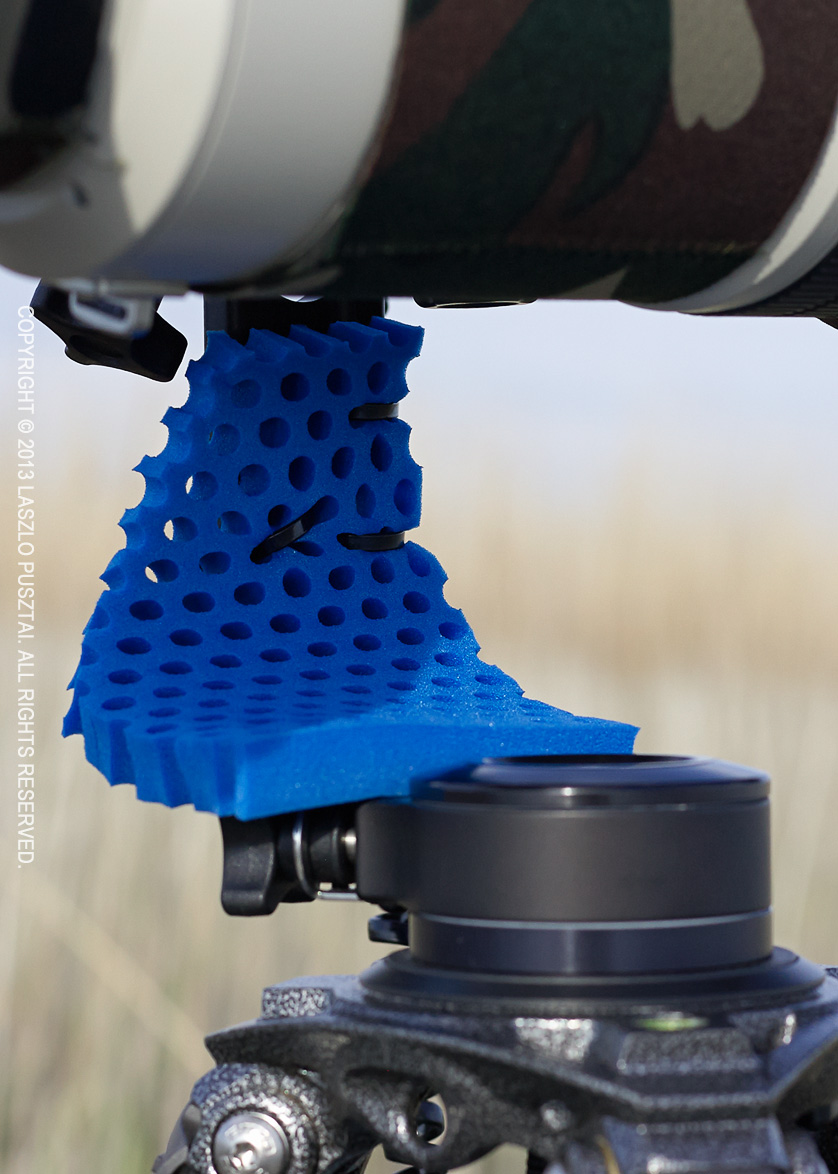
Foam and zip-ties to the rescue

Foam and zip-ties to the rescue

Although we discussed a couple of proper solutions, I had no time to implement any of those before going out next time, so just zip-tied the foam to the holes on the arm of the head.

All in all, this solution works pretty well, but I’m a bit disappointed to run into an oversight like this on a $600 head.

  ☕ ☕ ☕

Did this post help you? Consider buying me a coffee if so.
Zooming Out – The Move to an All-Prime Setup

I have been shooting with Canon’s L series zoom lenses (the 17-40, 24-70 and 70-200 IS to be exact) for almost a decade. Everything seemed fine, I made several great images with them. The seduction began on a cold January night in Norway two years ago – I tried a friend’s TS-E 24. I was immediately sold. So much that I didn’t want to put the 24-70 on the camera any more. Bought a TS-E 24 later that year and the 24-70 started to collect dust.

Floors

Floors, 100mm f/2 on a 5D Mark II

The final nail in its coffin was a vacation in Sicily last year. To travel light and be able to enjoy the vacation itself besides shooting, I bought three primes. In addition to having image quality that puts the 24-70 into shame, I really loved to work with them.

There was something that inspired my creativity – maybe the discipline of not being able to easily change the shot’s angle of view and forcing me to move around, maybe the freedom from having to think about focal length choices. I don’t know, I just like the process and the results.

Last year I sold both the 17-40 and the 24-70 and just used the two 24s and the 50. And an interesting thing started to materialize: instead of thinking about which focal length should I use I started to see in 24mm and in 50mm. When I realized this I regularly threw the “travel 100” into my bag. And I preferred it to the 70-200.

The final decision to replace the 70-200 was born last weekend. After going through my former images and checking which look do I prefer on the long end I ended up with a conclusion I find shots in the 150-250mm range uninteresting, and that the 70-200 was more in line with my vision on cropped sensor bodies than on full frame. From here the decision was pretty straightforward: get a 135mm f/2L.

I ordered one on Saturday and selling my 70-200. The lens arrived yesterday (isn’t Amazon great?) and I’m waiting for an opportunity to put it through its paces. The cactus and palm house of my favorite botanic garden will open this weekend, and I’m planning a visit next week. I’ll post my experiences.

So my current setup consists of the 24/2.8, 50/1.4 and 100/2 travel trio and the TS-E 24 II, 50/1.4, 100/2, 135/2 quartet for regular use. I plan to add a TS-E 17 and a TS-E 90 instead of the 100/2 when Canon updates the current 90 (I don’t like the fixed placement of tilt/shift axes).

Unfortunately I start to find the 300mm focal length interesting again. And the only option there is the 300/2.8 IS II. Which is heavy and expensive… So I’m hesitant at the moment.

All in all, if you aren’t shooting in a rush, and can move around, I highly recommend to give a try to Canon’s relatively inexpensive and great fixed focal length lenses. They might shake up your vision and photography – just they did with mine.

Long Lens Rig Weight Reduction

Equipment weight reduction is a continuous project for me: I’m always looking for solutions that can shave off a few hundred grams of my already heavy bag. The last step – reducing the weight of my birding setup – started with a tripod head change. I had been using a Really Right Stuff BH-55 ballhead with a Wimberley Sidekick to hold my 500 f/4 for six years or so. Last spring I noticed a problem with the BH-55: the panoramic base became loose so much that in some positions I was unable to lock it without significant play. I attributed this wear to the heavy use of the Sidekick on it. I also wanted to end the years long irritation coming from the BH-55’s tendency to creep when you tighten the main knob: it drove me nuts on several occasions when I tried to slightly change a composition with medium-tele lenses.

Last summer I replaced the BH-55 with an Arca-Swiss Z1sp Classic (that is the one with the screw operated clamp – I’m not a fan of lever release clamp mechanisms). This solved the creep issue, but not the excessive wear the Sidekick puts on the panoramic base. So I started to investigate other side-mount gimbal head options (the 500/4 isn’t that heavy to require full Wimberley style heads, and side-mount heads are much lighter).

The Head

I read about the Mongoose head a few year ago in Artie Morris’ Birds as Art blog. At $600 it costs $100 more than the Wimberley but weighs 2/3 of the WH-200-S (0.68 vs 1.04 kg). Actually it’s just 90 grams heavier than the Sidekick alone! What kept me from buying one immediately was the high shipping cost from the US to the EU. But recently Naturescapes.net offered a 10% discount on tripods and heads so I took that offer and ordered the latest incarnation of the Mongoose: the M3.6.

650D_1309_2457

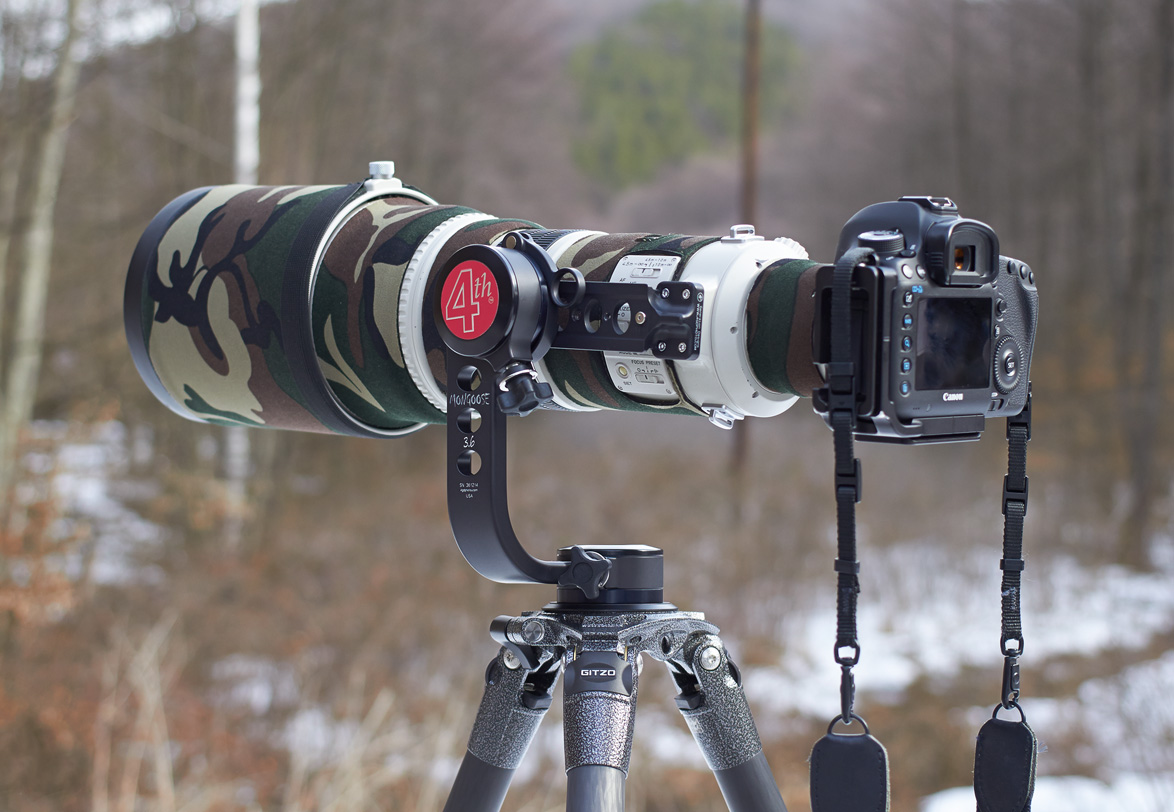
4th Generation Designs Mongoose M3.6 head and lens foot with Canon 500 f/4 IS

This head is 0.67 kg lighter than the Z1 + Sidekick setup, or mere 90 grams heavier even if I decide to bring both heads. But weight saving does not stop here.

Replacement Lens Foot

I was able to shave off another 200 grams by replacing the original lens foot and Wimberley P-50 lens plate with 4GD’s lightweight lens foot. You can see the resulting setup on the above picture.

Lens Cap

This is the most weird part of the game: you can make your rig 1/4 kg lighter by replacing the big, heavy leather lens cap with a lightweight and strong Don Zeck cap. It is also easier to put on and remove, and can even protect your lens while the hood is in shooting position.

At the end I was able to reach 1.12 kg weight reduction – and even get more functionality! Let’s talk about these additional things.

Using the New Rig

Bad news first. You can only order the Mongoose with a lever-release clamp – no screw-in version. Ask me after a year how it behaves. Also, the mechanical quality of the head is not on the same level as Arca-Swiss or high precision German or Swiss gear. It is a notch below RRS and roughly on par with Wimberley head quality. I mean generous tolerances and play here and there. I was even unable to tighten the vertical axis knob enough to stop the lens from moving. But 4GD has a good solution for that – which brings us to the good stuff.

Long Lens Macro

Long Lens Macro

Deadbolts. You can use them to completely lock horizontal and/or vertical axes. This is great when you want to add an extender or carry the rig over your shoulder. No more need to over-tighten knobs (which will result is excessive wear over the years – it’s hard to tighten my Sidekick completely after all those years).

Despite the generous tolerances, the head provides a stable platform when both knobs are tightened. Lacking good birding opportunities during the last weekend I tried it with stationery subjects – where stability is even more important. The setup worked remarkably well.

I really like the construction of the replacement foot. Its low profile makes it fit under the lens hood! It is just long enough to cover the two extreme balance points: no extender and a lightweight body (5D3 in my case) and 2x extender plus 1D series body.

Forget about carrying the lens by this foot, however. Your fingers will not fit between the plate and the lens. I rarely want to carry the lens by the foot, so its not a huge issue for me. The lens either is on the tripod or in its Kinesis long lens case. But if you want to carry it, a Kirk Super Grip Handle is a useful accessory.

The foot sports a short double dovetail section, so I can use my Wimberley F-1 flash bracket on it. I prefer this bracket to other solutions because of its versatility. Note that the flash cannot be centered with the F-1, but I usually put it as off-center horizontally as possible, so this isn’t an issue for me.

All in all I’m satisfied with the setup. I can hardly wait for the birding season to begin and put these new toys through their paces.

  ☕ ☕ ☕

Did this post help you? Consider buying me a coffee if so.
The Expendables: Canon 650D + 40/2.8 Pancake

I haven’t touched an APS-C Canon since 2006. After using a D60 for three years, I made its last image in 2005. I have been using full frame and APS-H since then. However, I bought a 350D in 2006, which I sold immediately after the first shoot – although image quality was good for the time, I really disliked everything else about the camera.

So why I have a 650D then? The answer is simple: we needed a cheap EOS for software testing. A camera that I won’t bemoan if we happen to kill its shutter after a year or so or amortize it any other way. The 500 EUR 650D seemed to fit the bill. And I bought a 40mm f/2.8 STM pancake lens with it – both for fun and for regular testing use.

Although I had no intention to use the camera for image making, I brought it to a Sunday walk last weekend. This post is about my impressions about both the camera and the lens.

The Camera

What touched me the most is the touch screen interface. It really helps to make an otherwise crippled and awkward physical interface usable. It really surprised me when I picked up a camera last fall how usable it is. Somehow I like it more than the 60D and the 6D. Touch controls are well implemented, but a dedicated graphics processor would help to make it iPhone-fluid. Some operations are low end Android-sluggish (like flipping through images and pinch zooming). It is self-explanatory and works quite intuitive. I only miss one feature: double-tap to switch between 100% and fit zoom levels. To tell you the truth I would love to see this touch interface on my 5D Mark III.

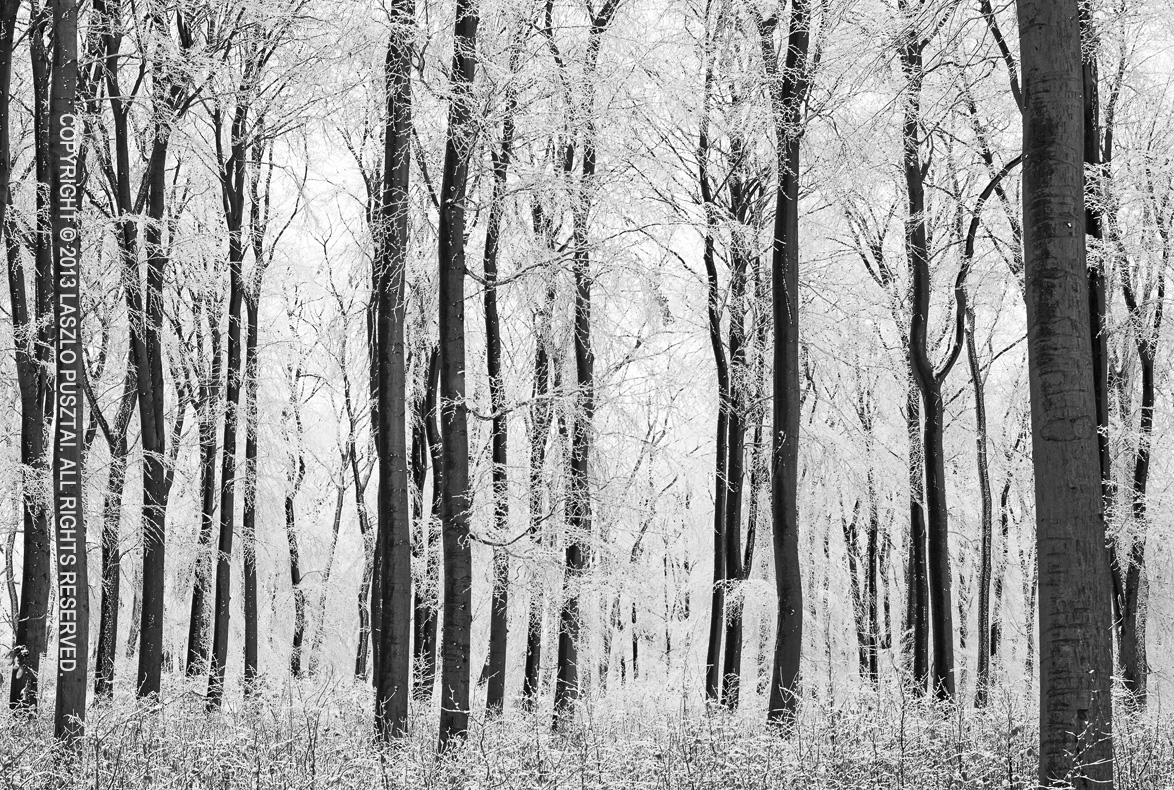
Frozen Forest

Image quality is not something to rave about: it is the usual contemporary, diffraction limited at f/7, but still usable up to 30×45 cm prints thing. Something I’m not really a fan of. But as I said, it’s still usable for making medium-sized prints.

I haven’t used a plastic camera body in years, and I can attest that magnesium alloy can be really cold in sub-zero environments. But I was able to carry the 650D around without a glove! It actually felt warm after hours of walking around in the winter forest. This was a positive surprise.

Another surprise was how it drives lenses. First I thought that something went wrong and the lens will fall apart… But I found these unusual noises to be normal with two copies of the model, as well as the 600D. I’m still in fear to put on my more expensive lenses.

Actually I quite like this small camera and will borrow it from testing for casual weekend walks. Who knows, it’s always good to have a camera with me.

The Lens

It is a gem. Small, light, inexpensive (at 150 EUR), and delivers great image quality. My first experience wasn’t so good, however. Just after picking it up right from the bag, the lens refused focusing. Some weird noise came from the AF mechanism, but no focusing. Removing and re-attaching the lens helped. Back at home I quickly checked the net about what the hell is going on here, and found that the lens needed a firmware update. Oh yeah, now you can upgrade lens firmware without bringing them to a Canon service center! This is good. But notice that you need a 650D, 5D3 or 1DX for this.

Wall at an Abandoned Rocket Base

Image quality is really good on the 650D, so I became interested in putting this small wonder on my 5D3 next time. Just to see whether its up to the quality of my favorite cheap prime trio.

The new stepping motor (STM) focusing is slow and noisy. Don’t expect something you used to with USM. But it seems accurate. Manual focusing is another story. I don’t like focus-by-wire lenses. Call me old school, but I prefer the physical connection between my hand and the focused distance. The focusing ring is also tiny, but the whole lens is tiny, so nobody can expect a huge ring here.

I will keep this lens in my bag most of the time. Weight is not an issue, and it delivers great images. Absolutely recommended for everyone.

Canon EOS-1D X and 6D Impressions

Many thanks to Canon Hungary for kindly supplying test cameras for our project!

From time to time a bunch of cameras arrive at my desk for measurements and software compatibility testing. This is a double-fun exercise: besides learning a lot about cameras I have the opportunity to try out and photograph with almost all of them. Among the recent group borrowed from Canon Hungary, there was two cameras I was eager to try out: the EOS-1D X and the EOS 6D. Fortunately the testing period included a weekend, so I had a little more time to go out and play with both, and to compare them with my 5D Mark III and 1D Mark II (which I still have because it can’t be sold at any sensible price).

First and foremost: I would be hard pressed if I had to choose between the 1DX, 5D3 and 6D based solely on image quality. All three are capable of producing great images. You can’t go wrong with any of these. You can also find several reviews on the web doing all the pixel-peeping. So I will concentrate on handling and usability – both playing an important role in my camera selection.

In General

I have been an EOS-1 user for almost a decade, and I immediately felt home with the 1D X. Sure, it is bigger and bulkier than recent models, but at 1550g it’s still 20g lighter than the 1D Mark II. For me this weight dictates the use of the E1 hand strap.

It seems that only the 1-series Canons are designed for people having a nose. Having anything than a small and flat nose is a recipe for discomfort and greased LCD on all non-1 Canons. The 1D X being thicker reduces the distance the viewfinder protrudes from the body, so it’s slightly less convenient than previous models. In comparison: the 5D Mark III is bearable, but the 6D is awful: I can’t see the entire image in the finder without risking to break my nose…

Switching between the 1DX and the 5D3 is effortless: I was able to instinctively find all the controls as they were where they should be. Not so with the 6D. I found the omission of the joystick, the inconvenient selection dial and mixing picture taking controls with playback controls so much frustrating to use that I put down the camera just after half an hour and decided against buying one, despite holding it still feels good. I understand that it’s a sacrifice one has to make for reduced size/weight/price, but I’m rather carrying/paying more for something that’s a joy to use. If I desperately need a cheap/light backup camera then I might buy one, but at the moment I don’t feel that need.

The CF compartment door on the 1D X I tested was loose and emitted a squeaking noise every time I squeezed the body – and you have to squeeze it to be able to pick it up. I don’t know if it’s a problem with this given demo unit, but it’s not something that I experienced with previous 1s and definitely not something I would accept on a $6800 camera. Even the 5D3’s CF door was better.

Features I Miss

Although the 5D3 and the 1DX are from the same mold, there are a couple of pretty useful 1-series features I miss on the 5D3: eyepiece shutter (the 5D3’s plastic thing is a joke), the ability to save the whole camera configuration to a card and load it later, and the ability to lock up the mirror for several shots (which is pretty useful if you do brackets).

On the other hand, the RATE button introduced on the 5D3 and the truly silent shutter of both the 5D3 and the 6D (the silent shutter on the 1DX is pretty useless) are features that could find a home the 1DX.

Things That Need to be Done Fast

All four cameras were pretty responsive, but I was especially interested in a few things. The first was buffer clear time. Lots of people talk about the buffer capacity, but I found the time needed to write all images to disk more important. Even a smaller buffer with faster clearing could be useful. In this comparison the 1D2 lost by huge margin: using a 16GB SanDisk Extreme Pro card it was capable of taking 19 shots (on average) in a burst and it took 15 seconds to clear the buffer. During the last decade it proved to be inadequate more than a couple of times. The 5D3, with a 32G Lexar Pro 1000x card was able to capture 37 images before starting to slow down and the buffer cleared in mere 2.5 seconds! The 1DX was able to capture 58 shots in a 12 fps burst, and wrote them to the same 32GB Lexar Pro 1000x card in 7 seconds. Even the 6D was better than the 1D2: it took 21 frames and wrote them in 8 seconds to a 32GB SanDisk Extreme Pro SD card. In terms of fast capture and fast card writing both the 1DX and the 5D3 are wonderful.

I was interested in how fast these cameras drive a long telephoto (without and with teleconverters). I made no numerical comparisons, just how fast they felt. Surprisingly the 1D2 was the candidate for the fastest lens drive medal, but it has to correct what it did in a second round several times. Maybe its NiMH batteries could provide more power to the lens? The 1DX drove the 500mm f/4L IS quickly and precisely, even with teleconverters attached, so the aforementioned medal went to the 1DX. Lens drive is not where the 5D3 AF system shines. However, my experience shows that its AF system is far better than the 1D2 for tracking birds – even if it drives lenses noticeably slower than its big brother. Here the 6D pleasantly surprised me: lens drive was faster than the 5D3’s! So I sincerely hope that Canon would be able to squeeze out a 6D-equivalent lens drive from the 5D3 with its upcoming firmware update.

The last thing I tried was low light focusing – with the center point only. The 6D is the clear winner here – it was able to focus on features I was barely seeing! The 5D3 took second place, with a bit of hesitation (read: several seconds) before grabbing focus at the same spot where the 6D focused instantly. The 1DX hesitated even more, but was able to grab focus, but the 1D2 was unable to achieve focus in any of my tests.

Conclusions

Let’s start with the easiest one: the 6D impressed me with its low light focusing ability and speedy focus drive, but it was not enough to outweigh its shortcomings in the handling department. So as I mentioned I decided to skip this body for now.

The old 1D Mark II held against the competition pretty well, despite its 9 years in service. I changed my mind about selling it: I would get less for it than a medium level Montblanc pen costs, but its still a pretty usable and capable camera – up to ISO 800. It stays until it dies.

And now the big question: 1DX or 5D3? I bought the 5D3 at the time when the 1DX had no f/8 focusing ability. Would Canon introduce the 1DX with this feature I would end up with that camera, no question about it. But the 5D3 will get that feature in April, so again a tie. Now I see four decision factors:

  • Action-stopping ability (high fps, focus tracking and focus drive). It you need this go with the 1D X.
  • Size/weight. I would take my 5D3 to a vacation paired with my beloved light primes without any hesitation. Would not even think about that with the 1D X (been there, done that with the 1D2 – not again).
  • You get 22% more pixels with the 5D3, which is important for landscapes/architecture. I will do some print comparison between the 1DX/5D3 files in the coming weeks to see how much they differ at 40×60 cm print size.
  • And, of course, price. At $6800 I feel the 1DX a bit overpriced. At the vicinity of $5000 it would be an instant get for many people I believe.

Nowadays I do more landscape and architecture photography than birding, so the 5D Mark III serves me well. Metering and the quality of its files are well above previous generations. The only advantage of the 1DX from my point of view is its action-stopping ability. In all other aspects the 5D3 is a better choice. Should I feel the need for more than 6 fps and slightly faster focus I will grab one.

Oh yes, one way to avoid the above decision is to own them both :)

  ☕ ☕ ☕

Did you enjoy this post? Consider buying me a coffee if so.
Red Veil in 5D3/1DX Viewfinder

This still annoys the hell out of me. I briefly mentioned the viewfinder illumination issue in my initial 5D Mark III impressions post. Today I shot with an 1D X (more on the camera in a later post), which has the exact same problem. OK, this is not surprising as the two cameras share (almost) the same auto-focus system.

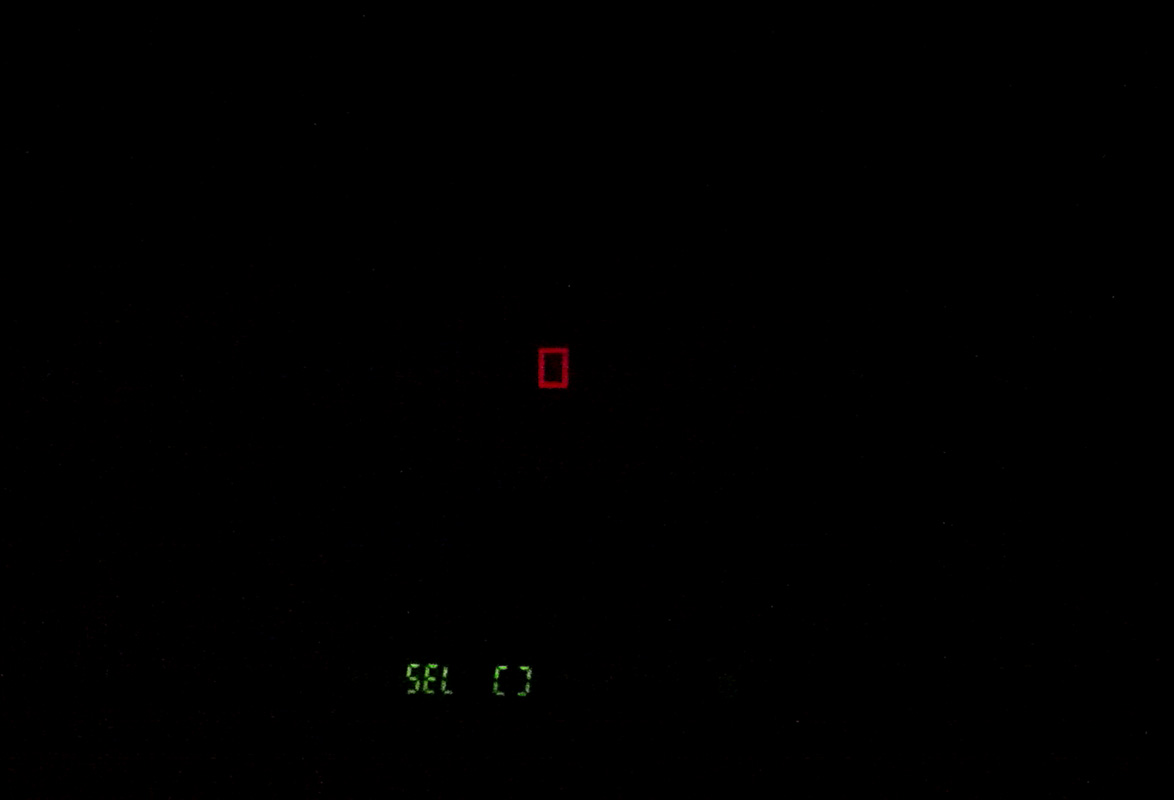
To quickly sum it up: when anything (AF point or grid line) is illuminated in the 5D3/1DX viewfinder, then the entire screen glows in red. This is especially distracting if you have the grid lines turned on (which will produce a whole-screen red flash every time the AF system locks). The following picture shows what you see in the finder in complete darkness while selecting the focus point (body cap on). You’ll get the same amount of red light for AF confirmation.

1D X viewfinder with center AF point selected

A red veil over the finder image is clearly visible in usual conditions I shoot in, such as during golden and blue hours (but surprisingly the same amount of illumination is not enough to show anything in bright sunlight making the situation even more frustrating).

I like grid lines but hate to see them flashing, so I decided to swap out the ground glass in the 1DX with my Ec-D (gridded) screen from the trusty old 1D2. I thought that will cure the problem by avoiding grid line illumination. It wasn’t true success, as the red veil still remains when AF points are lit. Not s smack-you-in-the-face red flash, but still there and still distracting.

Just for comparison’s sake, here is a picture showing how the old-style Canon AF point illumination worked. Just the selected area was lit (actually there was a faint glow in other/unselected AF points, but my iPhone was unable to capture that).

1D Mark II viewfinder with center AF point selected

I still prefer the old-style illumination and consider the new system a huge step backward in usability, which plagues otherwise wonderful tools. Hope that Canon will find a better solution in their next generation cameras.