Lexar 1000x and SanDisk Extreme Pro

Just got a bunch of new cards from B&H for my 5D Mark III (and in preparation for the upcoming 6D). The set consists of two 32GB Lexar Professional 1000x CompactFlash cards and two 32GB SanDisk Extreme Pro SDHC cards. The Lexars will replace the 16GB SanDisk Extreme Pro and a bunch of 8GB Extreme IVs I used in the 5D3 since I bought the camera (actually the Extreme Pro will remain in use, as “emergency” storage).

Here are my initial observations.

Man, these Lexars are blazing fast! I can shoot god-knows-how-much frames before the camera starts to slow down. Then the buffer is emptied to the card in just a few seconds after I release the shutter. They are noticeably faster than the SanDisk Extreme Pro was. This is the speed I always wanted to have!

Forget about using SD cards in the 5D Mark III, however. They are that slow. I have a 32GB SanDisk in the SD slot for situations when I don’t have time to fiddle with swapping the CF (think action). I hope the the 6D will drive these cards faster.

Btw, you can find some numbers on the performance of these cards in Rob Galbraith’s now abandoned CF/SD performance database. According to his measurements the Lexar is 36% faster than the SanDisk Extreme Pro I used. My observations are completely in line with these numbers.

So if you have a 5D3, then these Lexars are the way to go, period. And B&H has an attractive price tag on the 2-Pack.

Retina MacBook Pro – After 2 and a Half Months

The 15″ MacBook Pro with Retina Display is by far the best computer I had ever used, no question about it. And I had used great many – although only a handful made a deep impression (I mean a positive impression, because I came across several that made unforgettable bad impressions). These are heavy words from me. As you might have been noticed I’m really picky on everything I use (just browse the Hall of Shame section for rants about bad design and/or execution).

You can read my initial impressions about the machine here.

During the last months I had used the machine as a desktop for software development (both iOS and OS X) as well as studio work, and lugged it around the country as a field laptop to assist during my photo trips. Most of my first impressions are still valid, and I love the machine even more than I though at first. I would just like to add further observations.

Battery Life

In my initial post I wrote around 5 hours. Since then OS X 10.8.2 came out, which increased battery life substantially. Now I get something between 6 and 8+ hours, depending on the usage pattern (disabling Adobe Flash holds a great contribution to increased battery life, though).

Tethered Shooting

Working Tethered

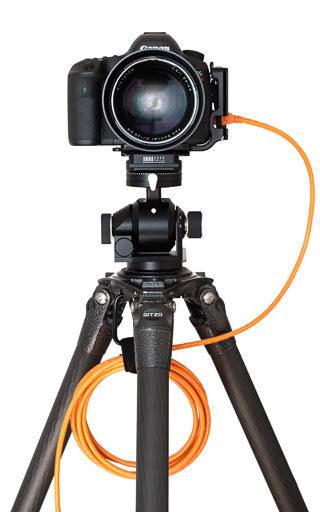
I started working tethered for landscape shots immediately after receiving the MacBook, and the benefits far outweigh the inconvenience of lugging around a computer. Before the MacBook I had tried to use the Lenovo X200s for tethered work, but was not really satisfied with it and abandoned the idea until the MacBook arrived.

I like several things about this setup.

No time required for image sorting and selection later. I just bring home the keepers. This proved to be a huge time-saver!

I can make the first cut of the final processing in the field, using the same tools I use in the studio. This fits extremely well into my creative process. The high resolution and color-accurate display helps a lot in this. It’s like holding an A4 sized print in front of me. I even stitch panoramas made with the 24mm TS-E lens to check whether everything is good about the shot.

Images are immediately backed up, as the the tethering software saves images to both the memory card in the camera and onto the computer. (Which app? – you might ask. Don’t worry I’ll devote a few posts for that subject later.)

As I wrote in my first impressions piece, the machine fits perfectly into my Lowepro Pro Trekker 400AW. Fully loaded it’s now a back-breaking experience, but if I leave home stuff I don’t need for the shoot, then the full weight is around 15kg, which is bearable. I did several 2-3 hour hikes with the setup without any effects on my back and shoulders (did I mention that the Pro Trekker is a great backpack?).

Other Good Things

The notebook-as-the-desktop was really helpful during the August storms. I routinely power down and disconnect sensitive equipment during thunderstorms, as I saw quite a few over-voltage spikes in the past. But with the MacBook I can continue working during these hours. I really like thunderstorms and they put me in a creative mood, so it’s a big plus!

Last, but not least, no more copying or syncing or Dropboxing files between my desktop and field notebook! No more forgetting to copy something in the hurry before I leave! This saves me lot of time and the peace of mind that comes from the fact that I always have everything I need with me is priceless.

What I miss?

Thunderbolt docks. Matrox’s and Belkin’s solutions are both delayed. Plugging in all those cables (all the connectors of the machine are populated) in the morning really pisses me off. I’ll be first in the line for one of those docks!

Kirk L-Plate for the 5D Mark III

Got my Kirk BL-5DIII plate on Tuesday, and would like to share some thoughts about it. It’s a good design with some oversights.

Pros:

  • You can buy it right now. The RRS plate for the 5D3 is still backordered. Shipping to Hungary was also $27 less with this plate than it would be for the RRS. Both plates cost $140.
  • I really appreciate the second locking point at the strap loop. My 1D2 fell off from its RRS plate a few years back. The plate was on the 1D2 for a few years, and the thread in the tripod screw socket suddenly gave up. Fortunately the losses were just a remote switch and the EUR 70-80 repair cost of the socket. All in all, having a second mounting point could prevent this. This is a big plus.
  • It is light. Feels lighter than RRS plates.
  • I prefer its form factor compared to the RRS plate.

Cons:

  • The base of the plate around the screw does not fit flush against the camera body. There’s no precise locking point when you tighten the screw. I suspect that I could tear out the socket if I over-tighten. I definitely prefer RRS and Wimberley plates in this regard.
  • The front of the plate tends to punch a hole in your hand if you happen to handhold your camera. It is a major oversight! It was a painful discovery on my part, so I immediately reached for a file and rounded the offending corner. But this should be done by Kirk!

“Custom” Rounded Corner

Overall I’m satisfied with the plate, and would give it 3.5/5 stars.

Gitzo 3532LS First Impressions

I had sold my 8 years old Gitzo 1325 tripod along with my 5D Mark II a few weeks ago, so I was looking for a new tripod. There was nothing wrong with the 1325, I just had an opportunity to step up. I was looking for something similarly spec’d. This boiled down to two choices: the new (2012) Gitzo 3532LS and the RRS TVC-33. They are shockingly similar in all aspects, except two: the “I’m an expensive tripod, steal me” pattern on the RRS and their prices. The RRS retails for $925 (which is about 960 EUR after shipping and import duties), but I bought the Gitzo for 680 EUR including shipping (both are net prices). That is, the RRS is 40% more. Simply does not worth it.

The 3532LS is a great tripod. But even the 1325 was a great one. Weight is about the same. Length is about the same (add or take a few grams and millimeters). Gitzo added some nice features to their newest generation, however:

  • Leg locks. On the 1325 I had to learn the exact torque that I should use to tighten the locks – tightening the upper ones a tad more than the lower ones. Just to avoid inadvertent unlocking. The G-Lock system does not let the legs to rotate, so this is not an issue any more.
  • Included spiked feet and snow feet. The spikes are rubber covered. The snow/mud feet looks a bit clumsy compared to the huge one I had for the 1325. But that size was really prohibitive – I had used them only once in 8 years. These smaller ones will find a permanent place in my bag.
  • Spare washers and grease is included (as well as wrenches and a dust cover).
  • Although I had no issue with the 1325’s top plate locking system (and I had carried it over my shoulder with the 500/4 attached a lot), the new secure locking system is a welcome addition.
  • Max load is doubled (25kg now).
  • The entire tripod seems to dampen vibrations much quicker and better than the 1325 did.
  • Weight hook at the bottom of the top plate. Great to hang your heavy bag (or a beanbag) here in windy conditions. I really appreciate this addition.
  • A carabiner hole on the rim of the top plate (I prefer to attach the strap with a carabiner than wrapping around the head).
  • Leg angle stops can be pulled out from the outside (there are finger recesses on both sides), so you don’t have to push them out from inwards. Nice!

The only negative thing I found was that after removing the top plate, some of the exposed edges were quite rough. Actually they were not deburred. I thought that they will scar my fingers in the worst moment, so picked up a file and deburred those edges.

I hope that this product will prove to be at least as reliable as it’s predecessor. It’ll stay with me for the upcoming decade – or even more.

First Flight Shooting with the 5D3

Yesterday evening I went out to Lake Tisza for a two hour flight shooting test. Courtship feeding was in progress these days in the whiskered tern colony and I thought that that could be a good test for auto focus capabilities, and a chance for me to learn to use the new AF system.

I’ve used two lenses: a 500mm f/4L IS USM with the 1.4x II extender, and a 400mm f/5.6L USM. Both lenses had an 600EX flash attached to a bracket with a Better Beamer – for just a gentle touch of fill light. I shot handheld with both lenses. Yes, it is not the funniest thing to follow fast moving birds with about 6kg of glass and metal, but wanted to know how it feels with the smaller body of the 5D3.

Self-Shadow

The new AF system worked quite well. It was as good if not better than the aging system in my 1D Mark II. Coming from the 1D2, the ability to show the active AF points in the finder was a real boon – I could instantly refocus when the system catched the otherwise busy background.

I was surprised that I did not feel the need for the grip when shooting with the 500mm. Although the 5D3 is not that much bigger than the 5D2 was, it fits my largish hand much better. I was able to grip the body securely and maneuver the 500mm lens with it. I was even more surprised that with the 400mm I could use the grip – the rig felt somehow nose-heavy. Or I just missed the hand strap. This point needs more testing. But at the moment I think I will work without the grip for at least a month or so.

Images are first class, there’s nothing to complain about them. I really love the huge 22 megapixel files – I can crop them as needed later without risking my usual A3+ sized bird print quality.

For those interested in the f/8 thing. I started to avoid shooting with the 2x teleconverter since the 1DX specs arrived – just to see if there’s anything I miss with it. Actually I have gained a lot – better image quality (the 2x II is quite a lemon). I also had to push myself and move closer to the birds. It proved to be great fun – the closer you are the more you became a part of their lives. Bottom line: don’t feel a burning need for the f/8 focusing capability at the moment. I just let those images that would need the 2x go.

Courtship Gift

Regarding the bad things. There a few of course. The most irritating of them is the auto brightness control algorithm. On several occasions the screen remained so dark that I can’t see a thing on it (it was golden hour, so the sunlight was quite muted). When I pressed the play button sometimes brightness came back. So I ended up turning off the auto thing and controlling brightness myself.

Another observation that makes me sad is the inability to judge sharpness from the LCD. I do AF microadjustment check/recalibration before each shot for the actual working distance. But frankly I was unable to judge where the focal plane is without cranking up JPEG sharpening seriously. But that have a negative side effect on the histogram and blinkies. I would like to see the LCD image properly sharpened for the camera’s display (or even a custom function that would allow slightly over-sharpening it so that one can judge sharpness much easier) without affecting the JPEGs and the histogram. Maybe in the 5D4 or 5…

All in all I really love the 5D3. It is a joy to work with this camera. Is it perfect? Far from it. But if I treat is as a tool then I’m sure it will produce some great images in the upcoming 3-4 years.

Canon 5D Mark III Initial Impressions

Finally got my 5D Mark III today! Spent the last 2.5 hours on updating the firmware and setting it up the way I use to use Canon bodies and did some initial tests. For the curious and impatient: it’s a 8 out of 10 body in my opinion.

What I like:

  • Construction. Feels more like an 1D than a 5D. No flexing and squeaking parts when you squeeze it. Also like that it is a bit heavier than the Mark II was – it fits my large hands much better.
  • Speed and responsiveness. This camera really reacts fast. Feels even faster than my aging 1D Mark II.
  • In the few shots I made colors seemed more natural than the Mark II, but I think future versions Capture One should improve their handling of the files.
  • The ability to reverse the top and back dials for manual mode. I usually shoot in Av, and prefer to use the mail (top) dial for setting aperture even in M mode. This was always working on the 1 series, and finally it is available on the 5D!
  • Like that Canon went forward in the level of customization – it’s still quite limited, and not enough for me, but at least the direction is good.
  • Depth of field preview button is finally on the right side.
  • The remote release socket is moved down to the position where it was on the original 5D. Mark II was a pain to use in the portrait position with a RRS L-bracket. I really appreciate this change.
  • The live view/movie mode switch. I don’t care about movie shooting at all, so it’s great that all the movie related stuff is moved away in still image mode.
  • The LCD. It is way better that the old one was. Finally Canon made and LCD with the aspect ratio of the images the camera produce.

All in all, it’s light years ahead of the 5D Mark II. Does it reach the level of the 1 series? Not really. There are few things that I strongly dislike (some are shared with the 1DX and I would dislike them even on that body):

  • No dedicated mirror lock-up button. This is ages old… Maybe sometimes somebody will listen… I would love to set mirror lock-up to the M-Fn button!
  • The USB port is a joke. It’s not deep enough, the cable does not sits in it snugly. I had to push it in a couple of times to make a secure connection.
  • Don’t like the on/off switch’s position. I managed to turn off the camera twice while changing the exposure mode.
  • Virtual level. Imprecise, and pain in the ass to use. I’ll continue to use the 3D level in eFinder Tools of my Viewfinder app or a simple 2-axis bubble level.

I dislike several things about the AF system from the user interface design point of view, some are cosmetic, some are pretty serious. It might be that I’m overly sensitive to UI design (this is what I do part time for a living), but these annoy me too much.

  • Illumination is worthless against bright backgrounds. I don’t see that the points are illuminated at all. I would prefer the strong illumination on the former 1-series bodies.
  • They way the grid is implemented. I always disliked this feature on Nikons and preferred the interchangeable focusing screen approach (I use the grid screen on my older bodies). The fact that the gridlines flash red annoys the hell out of me. Especially when I move the active focusing point with the joystick. Of course I can turn off illumination completely, but then I loose it completely…
  • Not to mention the infamous ‘AF point does not illuminate in AI Servo mode’ issue.
  • I ended up using the mode where all 61 points are always displayed (just to know where they are without fiddling with the selection around). When I leave the camera idle for a while (that is, when the bottom part of the viewfinder is not visible) then non-cross-type points are starting to flash. This is OK when I select them, but in this mode it is downright annoying. Imagine you are watching a bird to do something and the camera starts to flash the AF points (all of them except the central region with an 500/4 and 1.4x attached)…

All in all I like the camera – it definitely worth it’s price – but will stick with my 1D Mark II for occasions where the UI of the new AF system does not make me happy. Hope that Canon will fix the AF UI issues in the rumored upcoming firmware update.

Stay tuned for more as I use the camera regularly.