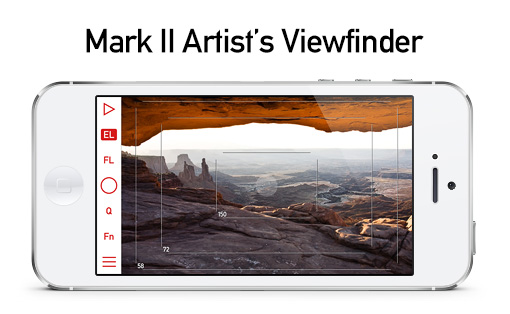
Version 3.5 of ShutterCount Mobile (including the Pro edition) brings File Mode to the iOS app.
File Mode is designed to be used with cameras that store the shutter counter in image files, that is almost all Nikon and Pentax models.
While on the Mac it is pretty easy to bring images into the app, it’s a bit tricky on iOS: you have to import them into Photos first. Basically you have two options to do it.
The first is to connect the camera (or a card reader) directly to your iPhone or iPad, and let iOS to import the image into Photos. On this year’s USB-C equipped iPads its straightforward, but on devices with a Lightning connector you’ll need Apple’s Lightning to USB Camera Adapter.
The second option is to import the image into Photos on your desktop computer and let it sync through your iCloud Photo Library to the phone.
Either RAW (NEF/PEF/DNG) or JPG format photos will do it, but I recommend small size JPGs, as the app only needs the metadata from the image, not the pixels.
Other options, such as sending the image through iMessage or via email might strip the metadata portion, in which case the app will tell you that shutter count information is missing from the file.
 Once the image is in Photos, open ShutterCount and tap Connect. Tap Open Photo… and the app will let you select the image from your photo library.
If the image is present locally on your device, which is usually the case, especially if you just imported it, the reading will be done immediately.
But if for some reason the photo is in the cloud (because you imported it into the desktop Photos, or if iOS migrated it to the cloud due to low available space on your device), it needs to be downloaded.
 For JPGs, Photos will handle the downloading. But for RAW files, Photos will only download the preview JPG, and strip all the metadata we need. In this case ShutterCount will download the complete file for you.
Once the download completed, the app will do the reading.
ShutterCount 3.5 is a free update for existing owners. New users can purchase it in the App Store. Also available is a Pro edition containing all optional extras, such as the Plus Pack with graphing and forecasting features.
File Mode on iOS requires iOS 12 or later and supports the exact same cameras it does on a Mac. For the complete list, please refer to our Tech Specs page.

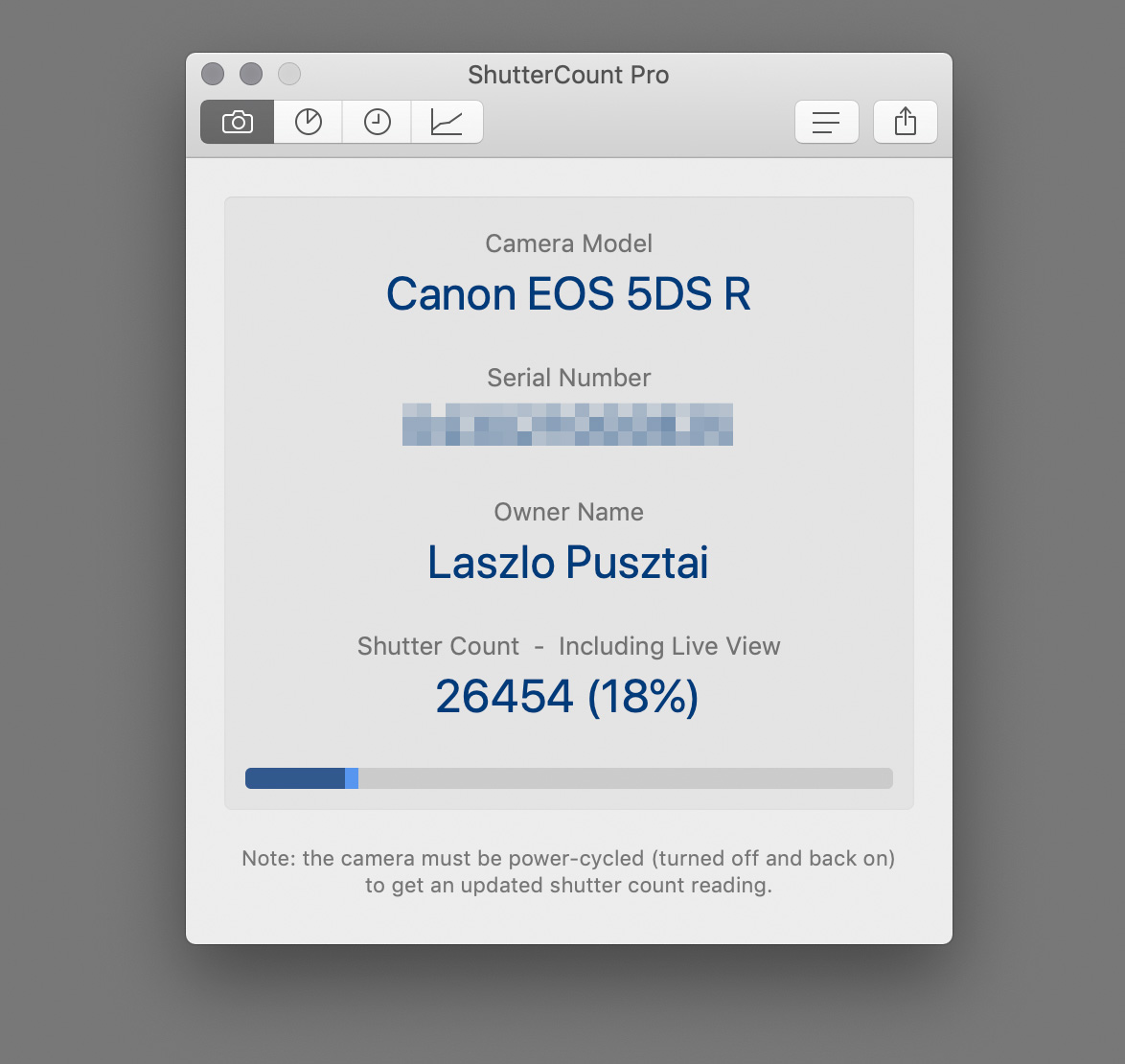

 Step 1/a : Cameras having either a Wireless communication settings or Built-in wireless settings menu, the Clear settings item is on that menu.
 Step 1/b : Older models hide the clear function in a different place: go into the Wi-Fi function menu and press the INFO key. The resulting General sett. screen will have it. Note that the camera’s network (MAC) address is also displayed here. If you use MAC address filtering on your Wi-Fi, you should enable access for this address.
 Step 2 : First choose Wi-Fi settings (or Wi-Fi/NFC settings) from the menu.
 Step 3 : Choose Enable to enable Wi-Fi support. Be aware that enabling Wi-Fi may disable the USB port on the camera, so if USB stops working after this, you need to come back here and disable Wi-Fi. NFC is not supported on Apple devices, so I recommend to turn it off when your camera has that option.
 Step 4 : The camera may ask for a nickname. There’s no other option here, but to confirm that you will provide one. It doesn’t matter what the actual nickname is. Our apps does not use it for anything at the moment. I usually recommend to accept what the camera offers.
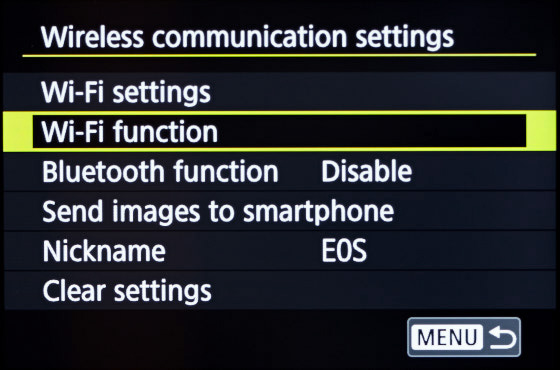 Step 5 : Choose Wi-Fi function to begin. Note that the location of the Wi-Fi function menu differs from camera generation to generation.
 Step 6 : You must choose Remote control (EOS Utility), even if the app is running on an iPhone or iPad. The camera will think it’s talking to EOS Utility, when in reality it will talk to our apps. Pressing the INFO button on this screen will show the network (MAC) address of your camera. If you use MAC address filtering on your Wi-Fi, you should enable access for this address.
 Step 7 : Newer devices will show you this screen. Since you are connecting for the first time, choose Register a device for connection. Later on, you can recall specific settings here to quickly re-connect with different apps on different devices (but that’s a topic for another post). If the screen is skipped by the camera, don’t worry.
 Step 8/a : On newer Canons, choose Switch network at this point.
 Step 8/b : Older models will present the Connection method screen, where you should choose the Select a network option. Even more older ones will call the Select a network option as Infrastructure mode. On these more older cameras you will also need to choose Find network on the subsequent screen.
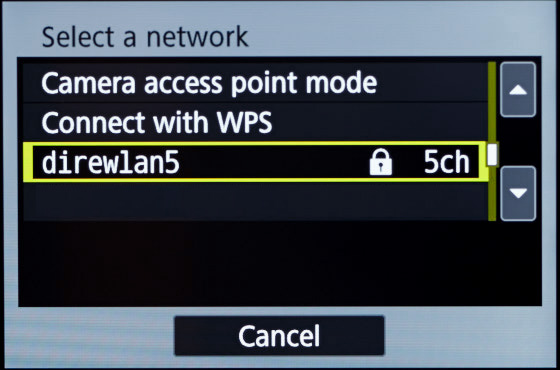 Step 9 : Choose your existing Wi-Fi in the next step. Forget about Camera access point mode (described just above) and WPS/PBC. Choose the network your iPhone, iPad or Mac is connected to. A word of caution though. Canon’s Wi-Fi implementation is unable to handle Wi-Fi roaming (that is when you have multiple Wi-Fi access points in the house). Each access point will appear as a different network here, and chances are that the camera will pick a wrong one even if you are selected the correct one. Try the pairing procedure close to each access point to see which one the camera sticks to if you experience connection issues.
 Step 10 : Older models will bother you with a question about the key format. I’ve never seen a Wi-Fi network in my entire career that hasn’t used a textual password, and Canon also realized the uselessness of this option and eliminated it from newer cameras. But you should choose Enter 8-63 ASCII characters if the camera insists.
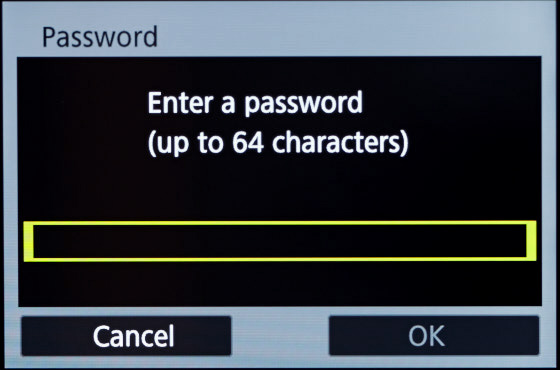 Step 11 : Enter the password for your Wi-Fi network. Again, if you use MAC address filtering, you will need to allow access for the camera’s MAC address, otherwise this screen will not appear or the password will not be accepted.
 Step 12 : Choose Auto setting to get the IP address (and other basic networking parameters) from your router automatically. Just line your phone does.
 Step 13 : This is a “this page is left blank intentionally” kind of screen… Choose OK.
 Step 14 : The camera now entered pairing mode. If you haven’t done so, put ShutterCount or Kuuvik Capture into pairing mode. Don’t let the message fool you, do not start EOS Utility – it’s not needed, and would just cause trouble. The camera will think that it talks to EOS Utility when it talks to our apps.
 Step 15 : This last screen confirms that the camera found the app. Choose OK and enjoy the app! Again, don’t let the message fool you. The camera seems to think that everything is a PC. If your camera prompts for saving the newly created Wi-Fi settings at this point, choose SET1.
 The app provides the three shortcuts you see on the screen shot.
 These enhancements are also allow us to detect when someone attempts pairing in the wrong pairing mode.