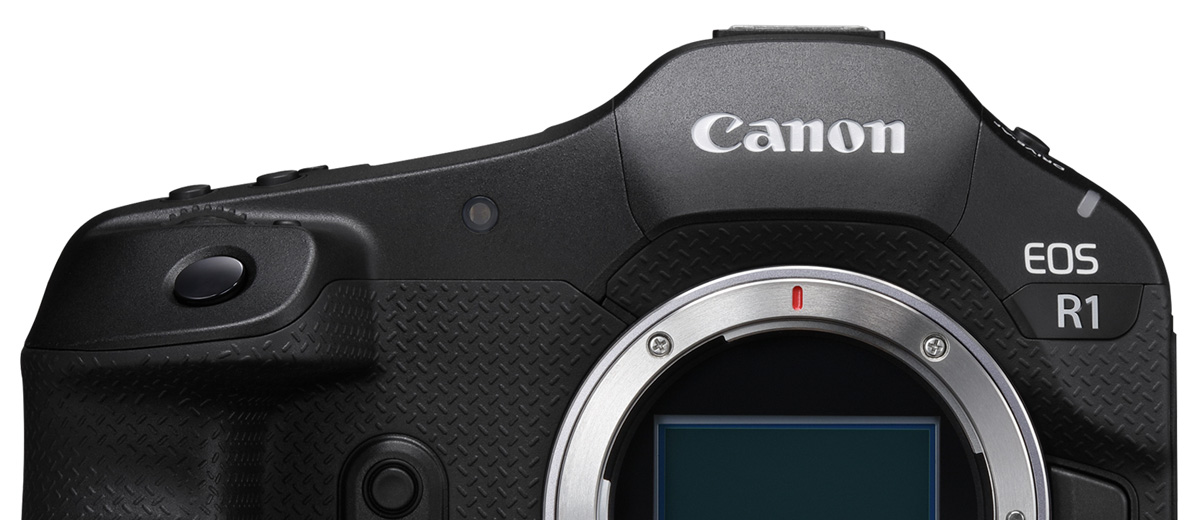
Canon EOS R1 Support in ShutterCount and Kuuvik Capture

ShutterCount 6.7 and Kuuvik Capture 6.7 had been released on Friday with Canon EOS R1 support.
ShutterCount is a step-up from the camera’s rudimentary built-in shutter counter available in the menu: the app provides usage logging even in the standard version; but if you have the Live View Pack or ShutterCount Pro, then you’ll be able to see the number electronic shutter actuations as well on the Distribution Chart.

On the other hand, Kuuvik Capture is not simply a “step-up” from EOS Utility: its in a completely different universe. You’ll want to try this app if you do product photography or need to cull thousands of images (which the R1 will undoubtedly produce for you).

The updates for both apps are free for existing users. They are available in the respective (Mac and iOS) App Store.

Canon EOS R5 Mark II Support in ShutterCount and Kuuvik Capture

ShutterCount 6.6 and Kuuvik Capture 6.6 had been released two weeks ago with Canon EOS R5 Mark II support. ShutterCount is the world’s first shutter count reader with support for this new camera.

ShutterCount also adds support for the Nikon Z6 III.

With that said, there’s something I have to talk about.

People tend to assume that we get cameras in advance of their official release and start banging on our doors with varying level of arrogance on day one of a camera’s availability.

Let me put this straight.

Canon does not provide us with cameras before their release. We have to cope with the ridiculous (un)availability these days, just like anyone else.

Canon also does not provide any kind of documentation for us. We have to reverse engineer new cameras, develop code for the new features, work around the myriad of surprise firmware bugs, and validate the results against our strict standards. We will not release an update until it functions properly and reliably.

Now this, ladies and gentlemen, does not happen overnight. We have to put in substantial amount of work – not to mention the money camera purchases and rentals burn.

But thanks to our decade-long expertise and advanced technologies, we routinely bring out new updates quickly after a camera’s release.

So instead of complaining about new camera support on day one, please save your energy for thank you emails when new camera support arrives.

Kuuvik Capture 6.5 : Download Skipping

Kuuvik Capture is used for diverse purposes and in diverse environments, in some of which long download times interfere with the photographer’s workflow. Think about transferring huge RAWs over Wi-Fi. Or a camera having USB 2.0 only. So it’s not surprising that skipping image downloads was among the most requested features.

The app already sported an option to skip downloads during sequences, and you could choose which part is downloaded if you shoot RAW+JPG, but version 6.5 takes it a step further.

The new Nothing option of the Download setting will cause Kuuvik Capture to skip every single download. Standalone captures as well as images in a sequence. It is available for RAWs and JPGs besides RAW+JPG pairs.

Use Download > Nothing to skip the downloads.

Naturally, the Download setting is now visible for all image quality settings.

You can still control sequence download skipping separately with the Do not download images captured in a sequence setting in case Download is set to other than Nothing. But in case of Nothing, the Do not download images captured in a sequence setting is automatically turned on and grayed out.

Works exactly the same way on both Mac and iPad.

A little thing, but I’m sure a lot of people will appreciate it.

Kuuvik Capture 6.5 : Unaligned RAWs

There’s a serious disease spreading across the photographic industry, and unfortunately Canon also got infected recently. I’m talking about mandatory lens distortion correction. That is, when a manufacturer instead of doing proper optical correction, decides to make it in software. Well, the lens will get smaller and cheaper to manufacture, but micro contrast and resolution will suffer heavily. I do recommend checking out Bryan Carnathan’s distortion test images and reviews for more information. He did a groundbreaking job with publishing this information. For example this is how the RF 16mm f/2.8 looks.

Note that the RAW data in RAW files is not corrected. Only JPGs – and the JPG previews embedded into RAWs. And here lies the problem. Imagine the lack of alignment between a heavily distorted RAW data and the corrected rectilinear preview on images taken with the RF 16mm f/2.8 – and how unaligned Kuuvik Capture’s RAW clipping warning layers will become thanks to this.

To add insult to injury, Canon does not put distortion correction metadata into the RAW files, so there’s no chance to correct RAW clipping warning layers in the app.

You may ask: “You have distortion correction technology in your other apps, why don’t you profile and correct the lenses yourself?” Well, even if we did, the correction we apply would not precisely match what Canon does with the embedded preview JPGs. The only solution would be to expand Kuuvik Capture into a full-blown RAW converter and ignore embedded previews. This doesn’t seem to bet a good value proposition right now…

Since I have tons of experience with software distortion correction and its negative effects on image quality, I would never buy a lens requiring software distortion correction for professional use. And recommend you to stay away from those as well.

How can you check that a lens requires mandatory correction? Go into the Lens aberration correction menu on your camera and if the Distortion correction item is set to ON and grayed out, then you’re dealing with mandatory correction.

Canon’s distortion correction setting

For RAW shooters I highly recommend to turn ALL corrections off here. You want the embedded preview to reflect what’s contained in the RAW data as much as possible, so these are all working against you.

Beginning with version 6.5, Kuuvik Capture will not load RAW data by default if it detects a distortion corrected embedded preview. It will display a warning message instead so you can know about the situation.

Of course you can override this and load RAW data regardless. There are a lot of lenses where this correction have slight effects. Or you might forgot to turn distortion correction off on your camera and still want to have a RAW histogram. The choice is yours. But you can make an informed choice.

If RAW data is loaded for an image having distortion correction, the RAW histogram will be labeled Unaligned RAW so you can be aware of that RAW clipping warning layers may not be properly aligned.

You could have a situation where you have a bunch of images with in-camera distortion correction applied, and it would be a pain to override the new loading behavior manually for each one.

So we added a new preference to control RAW data loading behavior. Instead of the former checkbox, you now have three choices: Always, Aligned Only and Never. The default is Aligned Only. Choosing Always will restore the previous app behavior and load RAW data if present regardless of the preview’s distortion correction.

RAW loading behavior setting in Kuuvik Capture 6.5

List of lenses with mandatory distortion correction

As of 1/10/2024, I’m aware of the following Canon RF lenses requiring mandatory software distortion correction. Most of them exhibiting an extreme level of barrel distortion.

  • RF 16mm f/2.8 STM
  • RF 24mm f/1.8 Macro IS STM
  • RF 28mm f/2.8 STM
  • RF 10-20mm f/4L IS STM
  • RF 14-35mm f/4L IS USM
  • RF 15-30mm f/4.5-6.3 IS STM
  • RF 24-50mm f/4.5-6.3 IS STM
  • RF 24-105mm f/2.8L IS USM Z
  • RF 24-105mm f/4-7.1 IS STM
  • RF 24-240mm f/4-6.3 IS USM
  • RF-S 10-18mm f/4.5-6.3 IS STM
  • RF-S 18-45mm f/4.5-6.3 IS STM

This is brutal. Even L lenses are affected. That’s it about the “RF mount enables higher quality optical designs” promise. Oh yes, may I mention the over-the-top focus breathing of Canon’s RF lenses? Not a surprise that I’m not remotely a fan of the RF mount.

With the unaligned RAW warning, Kuuvik Capture 6.5 helps you to be aware of one more nasty reality of today’s “digital world”. A little aid for professionals striving to make informed decisions.

Kuuvik Capture 6.5 : Live View Auto-Restart

Kuuvik Capture‘s philosophy is to provide features that genuinely help people’s actual work – instead of cramming every single camera setting into the app. All the while keeping the user interface clean, logical and easy to work with.

Boy, this could be a challenge sometimes… Just like with live view auto-restart I’m going to talk about today.

Photographers requesting this feature were coming from the areas of product and scientific work. Two of them capturing images through a microscope, actually. The idea was pretty simple: if you take an image with live view on, automatically restart it so that the next image can be checked and captured as fast as possible.

We were working on this since last summer. It is a premier example how much work may be required to implement seemingly simple things – I usually laugh out loud when someone tells me that “it’s just a couple of hours”. We ran into a bunch of camera firmware peculiarities and issues, and had to rewrite the code handling downloads and live view activation substantially. But finally here it is!

Live view auto-restart is off by default, and can be activated from one of two places. The first is the Capture pane of the app’s Settings dialog. Both on the Mac and on iPad.

The live view auto-restart setting in the Mac version

As you can see, there’s a wide variety of wait time choices ranging from immediate to 16 seconds. Note that “immediately” actually means “as fast as the camera can do it”: on some DSLRs (like the EOS 5Ds R) it’s a second or so.

The second place differs by platform. On the Mac, its under the Camera > Auto-Restart Live View menu. On iPad it’s on the Live View Options panel.

Auto-restart on the Live View Options panel in the iPad version

The live view button on the toolbar gained a new state to indicate that the auto-restart is armed and waiting: it turns blue. Of course it happens only if you set a wait time of 2 seconds or longer.

Auto-restart armed and waiting

If you touch the app in any way (press a key; click or tap with the mouse, trackpad, or on the screen; initiate a capture from the camera; etc) auto-restart will be aborted as we don’t know what you are up to.

I’d like to reiterate that live view auto-restart will work only if you initiated a capture from live view. It will not start live view if you captured an image with live view off.

And that’s it. Enjoy!

Kuuvik Capture 6.1 Available Now

We’ve released a minor update to Kuuvik Capture earlier this week. It brings Canon EOS R7 support and mostly OS compatibility updates.

On the Mac the app follows the system-wide renaming of Preferences to Settings in macOS 13. Plus, you can now set the app’s appearance (that is, light or dark) independent of your Mac’s system setting.

The new Appearance setting in the Mac version

On iPadOS 16 this release restores the ability to use the actual device name during pairing.

In the new operating system Apple finally fixed the severe issues that plagued multi-touch in iPadOS 15, so we’ve updated our touch detection code to take advantage of the corrected behavior.

The iPadOS bug where the OS may fail to properly close the app before updating it, and subsequently, not knowing which one to run, greets users with a pitch black screen, affects Kuuvik Capture as well. The fix is quite easy: force quit and restart the app (both copies) to wipe corrupted state information. See our knowledge base article for detailed instructions.

The update is free for existing users, and is available on the respective App Store.