The Andromeda Galaxy

The last couple of days presented great opportunities for astrophotography. Clear, windless nights, coupled with fine winter sky subjects – such as the M31 (and its two companions, M32 and M110).

The Andromeda Galaxy

The Andromeda Galaxy

Taken with the Canon EOS 7D Mark II and the EF 500mm f/4L IS USM lens, mounted on my Astrotrac. This image consists of 16 frames exposed at ISO 1600 for 1 minute each. Well, I was skyfog-limited at 1 minute exposures.

Fixing Extremely Slow rsync on OS X

Last night I moved out my photo collection from my MacBook Pro’s internal SSD to a neat little Samsung T1 USB3 SSD. And since Time Machine still can’t handle backing up external drives correctly (it removes the external drive’s contents from the backup when it is not connected), I created a small script to do the backup using the good old rsync.

Backup of the T1 goes to a dedicated AFP share on my FreeBSD server (shared using Netatalk). An Elgato Thunderbolt 2 Dock provides gigabit Ethernet connectivity for the MacBook Pro. I usually see file transfer rates in the 60MB/s – 110 MB/s range from this setup. So the 3MB/s average what rsync produced here was a bit shocking.

And the transfer rate jumped up to the usual range when I downloaded something from the Internet! And went down to 3 megs when the download finished…

It seems that the nine year old version of rsync included in OS X Yosemite can’t handle the OS’s network power management features correctly. When another app wakes up the net to full speed, it works fine, but rsync alone can’t do that.

The solution is embarrassingly simple: install rsync from the ports collection. Did that, updated my script, and presto, I suddenly get transfer speeds in the 50MB/s – 80MB/s range…

  ☕ ☕ ☕

Did this post help you? Consider buying me a coffee if so.

Hardware vs Software Monitor Calibration

Monitor calibration produces a set of curves, one for each of the three color channels. These curves are responsible for bending and twisting the device’s native color to reach our calibration goal. Where these curves are stored is a main differentiator between regular and so-called “hardware-calibrated” monitors.

Regular monitors depend on the computer’s video chip to store the curves. Hardware-calibrated monitors store the curves inside the monitor’s look-up table (LUT).

MonitorVsVideoLUTs

Above are the calibration curves for my current setup as shown by the ColorEyes Display Pro calibration software. On the left are the curves for my Retina MacBook Pro’s internal display; while on the right are the curves for the EIZO CG241W monitor. Note that this software puts the curves either in the video LUT or in the monitor LUT – but not both. Other packages, such as basICColor Display tend to utilize both for hardware-calibrated monitors.

While the video card stores these curves at 8-bit, my EIZO’s internal curves are at 12-bit. At higher bit depth calibration is more precise and virtually eliminates color banding and seepage. Hardware-calibrated monitors also store the curves permanently (of course until the next calibration).

Calibration software loads the video LUT as part of the calibration process. But what happens if the computer is rebooted or turned off and on again on the next day? Unfortunately video card hardware does not store and automatically re-apply calibration curves on startup. So the question remains: where to store them and who will reload them?

Apple invented a fairly obvious solution to answer this question: embed calibration curves into the display’s ICC profile. This way they could be handled together as a single entity. Because the ICC profile specification does not provide any storage space for calibration data, Apple had created a new profile tag, the infamous video card gamma table (VCGT). To complete their solution ColorSync loads these curves when needed. Calibration packages also support this by embedding newly computed calibration curves into the profiles they create.

Windows 7 and above also sports a video card LUT auto-loading feature, but it isn’t as obvious as on a Mac. I would recommend reading my old post about the topic.

In the next installment of my monitor calibration series I’ll talk about what can one reasonably expect from proper calibration and profiling.

  ☕ ☕ ☕

Did this post help you? Consider buying me a coffee if so.

AstroTrac Polar Scope – Another Take

PolarScope2In a post last year, I talked about the replacement of my AstroTrac’s crappy polar scope with one designed for the Vixen Polarie.

Well, that solution worked kind of well for a while, but the adapter was made of plastic, the scope was friction locked into the adapter, and the lack of firm bonding between the scope itself and the adapter resulted in lots of headaches.

I liked the Polarie’s scope, but its large screw-less housing was a nightmare to design an adapter for. So I went out searching for another scope, and found another Vixen product, this time the polar scope of their Sphinx mount. It is basically a naked version of the Polarie scope, with a thread on it, and without the former’s bulky case. Otherwise it’s exactly the same.

What you see on the picture is the scope with the adapter we made for it. Everything is held firmly in place by screwing things together.

And the new scope with our adapter prototype is lighter than the Polarie scope was alone (232g vs 268g).

Artist’s Viewfinder in the Update Magazine

Yours truly talks about the Mark II in Ebru TV’s Update magazine back at Photokina 2014.

Frame Highlighting in Artist’s Viewfinder 4.1

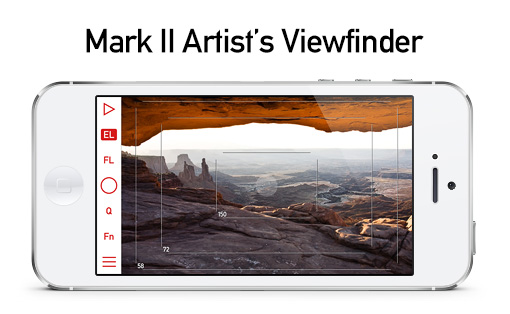
This morning I have been field testing a neat new feature of the of the upcoming version of the Mark II Artist’s Viewfinder. The new feature is the ability to highlight frames.

Let’s jump right in. I’ve included a couple of previews from my test. Below is the first. Click it (or the others) for a 100% view. These screen-sized previews are quite large because I’m using an iPhone 6 Plus.

VF_00108

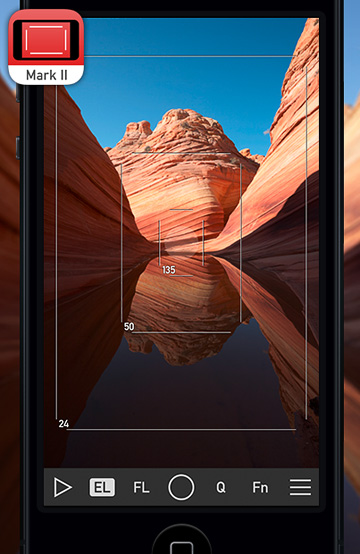
As you can see on the image, the “highlighted” frame remains a solid line, while all others will become dotted. This is a handy way to document your preferred lens choice right on the view itself. But it also leaves you all the what-if choices with other focal lengths.

VF_00128

By default you can highlight a frame by triple tapping inside it, just like the cardboard cutout-like frame mask works with a double tap. Or, you can even swap them, that is you can assign highlighting to double taps and frame masks to triple taps. Whatever works for you. But please note that these are two mutually exclusive things.

VF_00130

Frame highlighting will be available in version 4.1 of the Mark II Artist’s Viewfinder, planned to be released later this month. This will be a a free update for existing Mark II owners (and a paid one for Viewfinder Basic/Pro/Cine users).