Tern Landing

Sometimes Fortuna smiles at you. This image was shot with the very last rays of the setting July Sun illuminating the tern. Even the 7D Mark II’s autofocus was struggling, and I was able to shoot just one frame.

Whiskered Tern Landing

Whiskered Tern Landing

But this one frame turned out to be my favorite from the day. Shutter speed at 1/500s was slow enough to let the bird’s wings go blurred, but luckily its head is tack sharp. A few clouds caused the background water and sky to go muted pastel, while the bird is burning in the setting Sun. No flash, just available light.

Great Crested Grebe Drying

Patience pays off in bird photography. I had been sitting at the bottom of the boat in full ghillie for an hour or so that morning, when a grebe surfaced just a few meters from the boat.

Grebe shaking off water and drying

Grebe shaking off water and drying

The bird’s colors accentuated by the golden morning light play very well against the sky’s reflection in the windblown water.

5DS R with the 500mm f/4L II and the 1.4x converter. Slight crop.

Photographing Grebes with the 5DS R

The 5DS R became my main camera the instant I got my hands on it. Honestly, I thought that it will somehow augment either the 7D Mark II or the 5D Mark III as a high-res landscape camera, while one of those will remain my wildlife camera. I was wrong.

The 5DS R has so many seductive qualities that I tend to forget all its shortcomings and difficulties (more on those later).

Colors are bold and thanks to the anti-aliasing cancellation filter it can produce lovely crisp images. Such as the following one.

aaa

A moment before diving

It was taken in early morning light with the Canon 500/4 IS II lens and the 1.4x III teleconverter. It’s a moderate crop of about 26 megapixels – still enough for a 40×60 cm print. Yes, you can crop the hell out of these files, and still retain a huge amount of details due to the lack of AA filtering.

Some of my former grebe images are 6-8 megapixels from the 1D Mark II… So its a huge increase in usage flexibility.

Of course those huge files have a few consequences you have to live with. First, the 5DS R feels like a medium format camera. From the sound of the mirror to the time it needs to display an image on the LCD. It feels like you travel a decade back in time… Press the play button and wait… Also I haven’t experienced buffer full issues since the 1D Mark II – but run into that quite a lot even using 1066x Lexar CF cards.

You also need more time to cull a shoot. Fortunately I have an app for that: with Kuuvik Capture 2 I can sift the daily crop of 1500-2000 images pretty quickly. An old friend of mine was sitting besides me last morning and was surprised how fast the app deals with 50 MP files (and this was on a 1.4GHz 11″ MacBook Air I use as a field computer).

The next one is cropped from the sides for the rectangular composition. Same lens and converter combo. I stop down to f/6.3 with this combination, which is a bit below the f/6.7 diffraction limit of the camera. So unlike landscapes, one doesn’t have to deal with the depth of field versus diffraction issues here.

bbb

Curious visitor

Surprisingly, I found ISO 800 images a bit sharper than ISO 400 ones, so all of these were made on 800. I’ll have to investigate this further before I can draw serious conclusions. But until then, ISO 800 seems to be perfectly usable with no need for extra noise reduction.

The images in this post are the tranquil ones (the action shots are saved for another post). The 5 fps maximum speed turned out to be usable with a little anticipation of what’s going to happen (which also helps your photographs and in the understanding of the behavior of the species you are photographing). But for fast paced action I still reach for the 7D Mark II.

I tend to like to include a bit of the bird’s habitat in my images (maybe I should call them birdscapes), for which the full frame sensor is a real boon. And I can crop the surroundings away if a tight composition is what I’m after.

ccc

Breakfast for the nestlings

AF is superb. The best I’ve ever found on a Canon camera (excluding the 1D X, because of it’s faster focus driving speed). The only thing I miss is the AF mode selection lever of the 7D Mark II. I find myself reaching for the lever and cursing who’s responsible for this omission quite often.

A hot topic is the dynamic range of current Canon sensors. Well, while sometimes I would need more (maybe a handful of times during the last 12 years), what the 5DS R offers usually pretty much enough. Especially that I print my images where I have just 6 or 7 stops, and usually expose my images properly with no need to recover from the shadows. Also I like to utilize clipped highlights and shadows as artistic tools… So I’m not complaining on this front.

ddd

Good night!

As you may already think, I really like the 5DS R. It’s not the absolute fastest and the most suitable camera for bird photography, but those limitations are igniting my creativity and are not in the way of image making. It’s an exceptional tool for making the kind of photographs I have in mind.

Fall Colors – A Different Kind

Fall is the premier photography season for me. You get everything from bold colors, through creamy pastels, to the special atmosphere that morning and evening fog brings.

This year’s summer storms on Lake Tisza had wiped out lots of nests and birds are working a bit overtime to raise their nestlings. For me this provides great opportunities to combine fall colors into my bird photography.
sdf

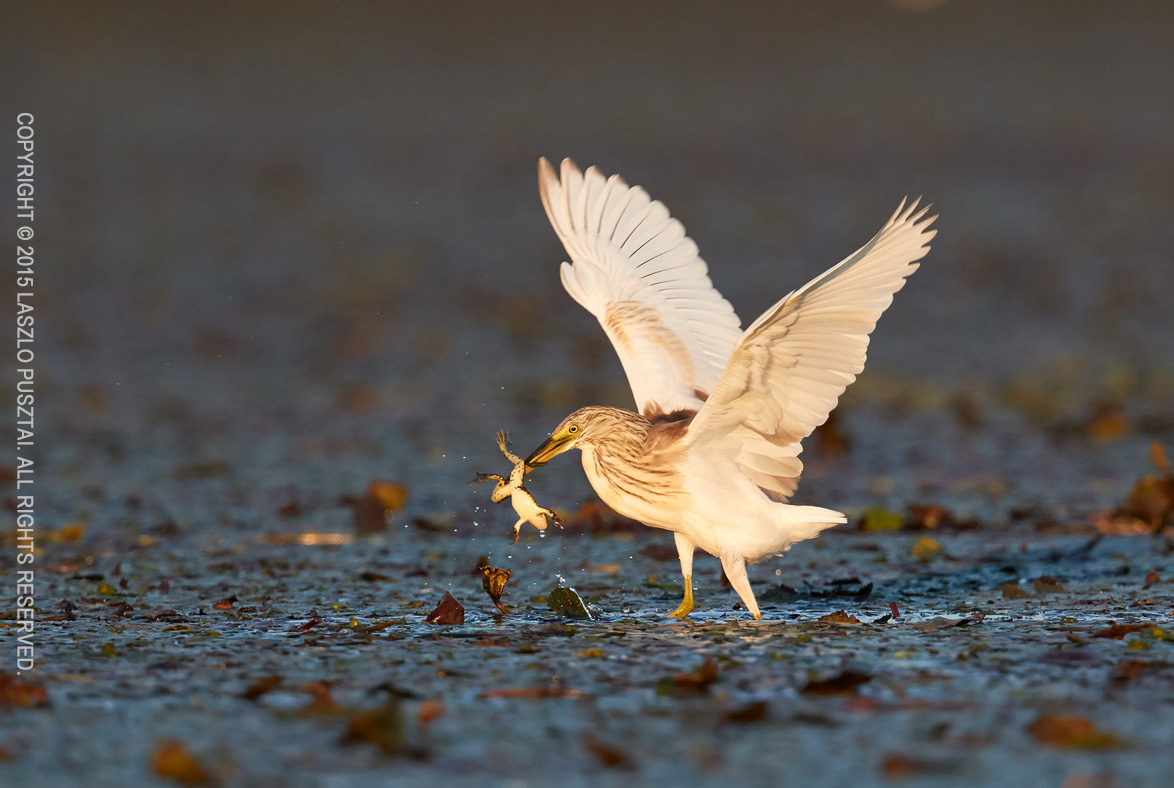
Squacco Heron Catching Frog

As the water starts to get clear and water chestnuts are dying, you get these metallic blues everywhere – even at places where you only see vast water chestnut carpets summertime. The golds and browns of Squacco herons provide dramatic contrast against the water – so much that I had to lower saturation significantly on the above image (made in warm evening light).

Photographed with a Canon 7D Mark II and the astonishingly wonderful EF 500mm f/4L IS II USM lens (plus a 1.4x III teleconverter). I’m using the 500/4 II for about 5 months now, and planning to post my review soon.
The Andromeda Galaxy

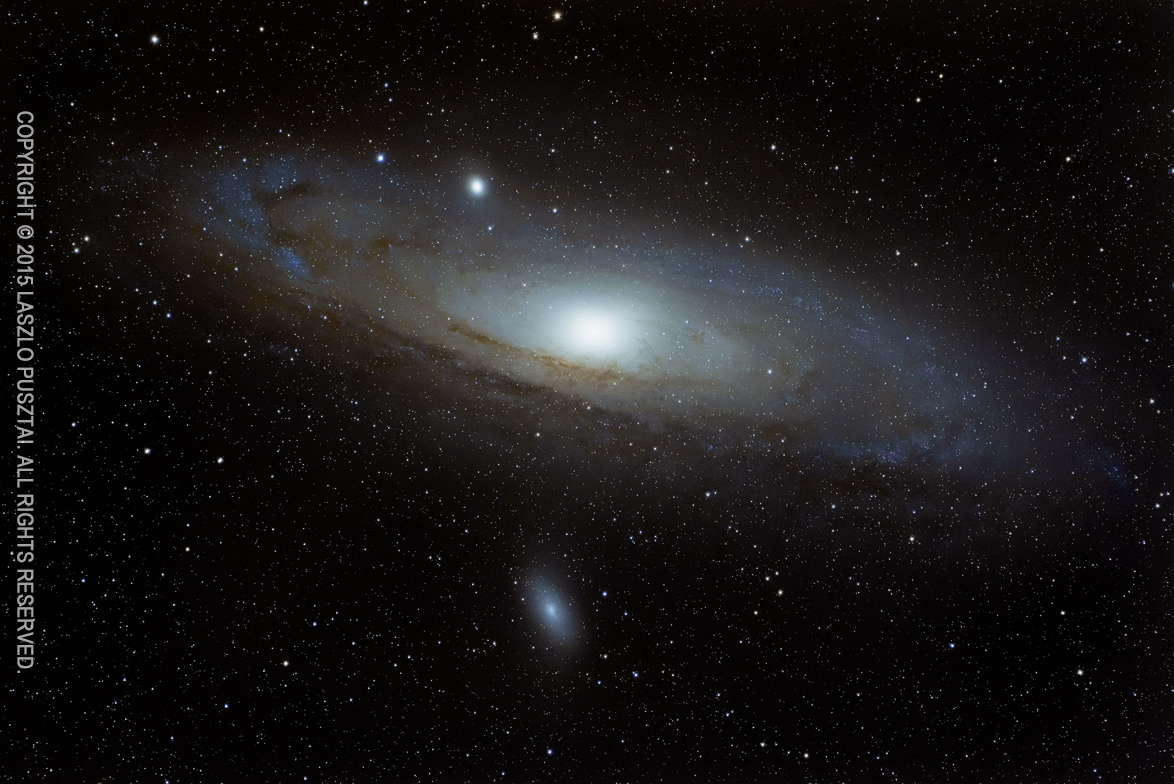
The last couple of days presented great opportunities for astrophotography. Clear, windless nights, coupled with fine winter sky subjects – such as the M31 (and its two companions, M32 and M110).

The Andromeda Galaxy

The Andromeda Galaxy

Taken with the Canon EOS 7D Mark II and the EF 500mm f/4L IS USM lens, mounted on my Astrotrac. This image consists of 16 frames exposed at ISO 1600 for 1 minute each. Well, I was skyfog-limited at 1 minute exposures.

Long Lens Rig Weight Reduction

Equipment weight reduction is a continuous project for me: I’m always looking for solutions that can shave off a few hundred grams of my already heavy bag. The last step – reducing the weight of my birding setup – started with a tripod head change. I had been using a Really Right Stuff BH-55 ballhead with a Wimberley Sidekick to hold my 500 f/4 for six years or so. Last spring I noticed a problem with the BH-55: the panoramic base became loose so much that in some positions I was unable to lock it without significant play. I attributed this wear to the heavy use of the Sidekick on it. I also wanted to end the years long irritation coming from the BH-55’s tendency to creep when you tighten the main knob: it drove me nuts on several occasions when I tried to slightly change a composition with medium-tele lenses.

Last summer I replaced the BH-55 with an Arca-Swiss Z1sp Classic (that is the one with the screw operated clamp – I’m not a fan of lever release clamp mechanisms). This solved the creep issue, but not the excessive wear the Sidekick puts on the panoramic base. So I started to investigate other side-mount gimbal head options (the 500/4 isn’t that heavy to require full Wimberley style heads, and side-mount heads are much lighter).

The Head

I read about the Mongoose head a few year ago in Artie Morris’ Birds as Art blog. At $600 it costs $100 more than the Wimberley but weighs 2/3 of the WH-200-S (0.68 vs 1.04 kg). Actually it’s just 90 grams heavier than the Sidekick alone! What kept me from buying one immediately was the high shipping cost from the US to the EU. But recently Naturescapes.net offered a 10% discount on tripods and heads so I took that offer and ordered the latest incarnation of the Mongoose: the M3.6.

650D_1309_2457

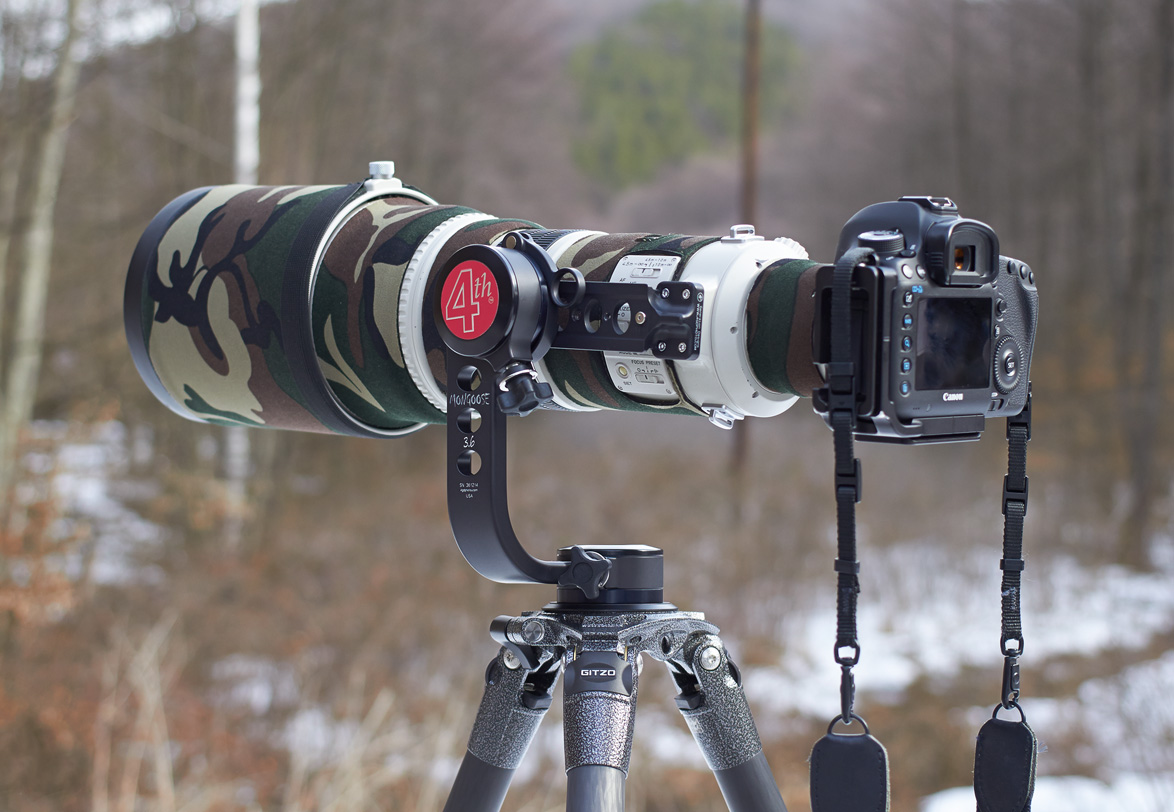
4th Generation Designs Mongoose M3.6 head and lens foot with Canon 500 f/4 IS

This head is 0.67 kg lighter than the Z1 + Sidekick setup, or mere 90 grams heavier even if I decide to bring both heads. But weight saving does not stop here.

Replacement Lens Foot

I was able to shave off another 200 grams by replacing the original lens foot and Wimberley P-50 lens plate with 4GD’s lightweight lens foot. You can see the resulting setup on the above picture.

Lens Cap

This is the most weird part of the game: you can make your rig 1/4 kg lighter by replacing the big, heavy leather lens cap with a lightweight and strong Don Zeck cap. It is also easier to put on and remove, and can even protect your lens while the hood is in shooting position.

At the end I was able to reach 1.12 kg weight reduction – and even get more functionality! Let’s talk about these additional things.

Using the New Rig

Bad news first. You can only order the Mongoose with a lever-release clamp – no screw-in version. Ask me after a year how it behaves. Also, the mechanical quality of the head is not on the same level as Arca-Swiss or high precision German or Swiss gear. It is a notch below RRS and roughly on par with Wimberley head quality. I mean generous tolerances and play here and there. I was even unable to tighten the vertical axis knob enough to stop the lens from moving. But 4GD has a good solution for that – which brings us to the good stuff.

Long Lens Macro

Long Lens Macro

Deadbolts. You can use them to completely lock horizontal and/or vertical axes. This is great when you want to add an extender or carry the rig over your shoulder. No more need to over-tighten knobs (which will result is excessive wear over the years – it’s hard to tighten my Sidekick completely after all those years).

Despite the generous tolerances, the head provides a stable platform when both knobs are tightened. Lacking good birding opportunities during the last weekend I tried it with stationery subjects – where stability is even more important. The setup worked remarkably well.

I really like the construction of the replacement foot. Its low profile makes it fit under the lens hood! It is just long enough to cover the two extreme balance points: no extender and a lightweight body (5D3 in my case) and 2x extender plus 1D series body.

Forget about carrying the lens by this foot, however. Your fingers will not fit between the plate and the lens. I rarely want to carry the lens by the foot, so its not a huge issue for me. The lens either is on the tripod or in its Kinesis long lens case. But if you want to carry it, a Kirk Super Grip Handle is a useful accessory.

The foot sports a short double dovetail section, so I can use my Wimberley F-1 flash bracket on it. I prefer this bracket to other solutions because of its versatility. Note that the flash cannot be centered with the F-1, but I usually put it as off-center horizontally as possible, so this isn’t an issue for me.

All in all I’m satisfied with the setup. I can hardly wait for the birding season to begin and put these new toys through their paces.

  ☕ ☕ ☕

Did this post help you? Consider buying me a coffee if so.