Kuuvik Capture 5 Coming to iPad

This isn’t a big surprise if you followed what I have been doing lately: a high performance imaging pipeline for Technical Camera, and then USB support in ShutterCount Mobile a month ago. I have technologies at my disposal that nobody else has, so it would be silly not to make it happen.

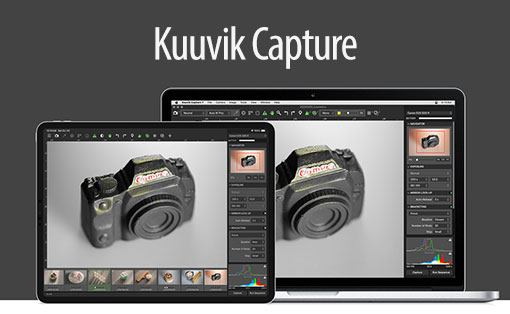
So I’m pleased to formally announce the development of the iPad version of Kuuvik Capture 5.

Let me stay for a moment with the prerequisites. In 2015 I had re-acquired the rights for Kuuvik Capture, and started paying royalties to my original business partners. But as the app evolved, keeping the old code separate from new (so that I can calculate the amount to be paid) became a headache and a roadblock to innovation. To resolve the situation, I did redeem all future royalty payments in February, opening the door for improvements across the board. You can already enjoy these in the Mac version of Kuuvik Capture 5.

Now on to the exciting stuff!

We’re aiming for the full Kuuvik Capture 5 feature set. Complete with overlays, dual histogram, multi-point live view, and so on. Of course a few things will work differently, since there are vast differences between how you interact with an iPad and a Mac. But the basic principles will remain the same.

Both USB and Wi-Fi connections will be supported. Actually, the complete camera control and sequence automation machinery is already working. I’m going to reiterate: at the time of writing nobody else in the world has the tech required to support pro-level USB and wireless tethering with Canons on iPadOS. Period.

The iPad and Mac versions will be offered as a universal purchase. That is, if you already purchased (or upgraded to) Kuuvik Capture 5, the iPad version will be a free download.

It will require an iPad running iPadOS 13.4 or later. This is a requirement for USB tethering, plus older iPads that can’t run iOS 13 simply aren’t powerful enough for the app. If you happen to have one of those, it is a great time to upgrade quickly, because…

It is planned to be released during the summer. If I were hard pressed, I would say June, but there are way too many things that can delay a development project.

I’m currently working 7 days a week on this project, and you could encourage me to push even harder by purchasing the Mac version right now. The iPad version will be yours for free soon.

ShutterCount 4.4 Brings USB Connections to iOS

The history of my ShutterCount app is a story full of world’s firsts. Just to mention the most important innovations:

  • October, 2013: The world’s first Canon shutter count reader on macOS.
  • April, 2016: The world’s first Canon shutter count reader on iOS (for Wi-Fi equipped cameras).
  • June, 2017: The world’s first shutter count reader on Mac and iOS that supports post-2014 Canon cameras and that introduces live view counters and the Distribution Chart.
  • October, 2018: The world’s first shutter count reader that supports Canon mirrorless models.
  • March, 2020: The world’s first shutter count reader that supports Canon cameras via USB connection on iOS.

The complicated Canon Wi-Fi pairing interface was always a problem for users of the mobile app. I’ve written a long guide and produced a few videos that allowed lots of people to successfully navigate this mess. But what I always wanted was proper USB support on iOS.

Last fall, with the release of iOS 13.1, Apple partly delivered my requested feature. USB tethering appeared in the OS, but was completely defunct. We’ve provided extensive feedback to Apple during the last six months, and now finally have an OS where USB tethering works reliably. I have only one gripe (with permission prompts) that I’ll discuss shortly.

How Does It Work?

First, you’ll have to have a USB port on your iOS device. New iPad Pros have a USB-C port, that’s fine (although you may need a USB-C to A adapter if your camera doesn’t have a C-type port). But for all devices having a Lightning port, Apple’s Lightning to USB 3 Camera Adapter, or the former USB 2 version, will be a required accessory.

ShutterCount USB connection on iOS

The above image shows a typical setup, with my good old 7D Mark II hooked up to an iPhone 7 Plus using the Canon-provided USB cable and Apple’s adapter.

Once the camera is connected and turned on, you’ll be greeted with a series of permission prompts. These prompts are presented by iOS (not ShutterCount), in a very un-Apple-ish manner (three prompts for a single thing).

The first two ask for Files and Folders and Camera access permissions. As I mentioned regarding Catalina’s similar approach, this is not just terrible user experience, but also a security issue as you’ll have to grant much broader permissions than it would be necessary. An example of Apple ignoring its own guidelines…

And to add insult to injury, there’s the third prompt, which will appear every single time you connect a camera. This is a rather ridiculous one: it tells you what you already know, and you don’t have an option to block access (tapping Settings will bring up Settings, but the connection will succeed). I’ve already called out Apple multiple times to fix the permission mess around tethering – nothing happened yet.

So please don’t blame us for this thing. But I do encourage you to provide feedback to Apple. The more of us complain, the more pressure on Apple to make this right.

New Camera Support and Availability

Speaking of new cameras, we’ve added support for Canon’s new EOS-1D X Mark III in both the Mac and iOS versions.

ShutterCount 4.4 is available now on the respective App Store. To use USB tethering, iOS 13.4 is required, which Apple promises to release on Tuesday.

The update is free for existing users.

Celebrating 140,000 Wonderful ShutterCount Customers

I’m proud to announce that ShutterCount just passed the 140,000 customer mark. People in more than 120 countries rely on this app to measure the number of shutter actuations on Canon, Nikon and Pentax cameras. Thank you for helping to make ShutterCount the gold standard!

Launched almost exactly six years ago in October 2013, ShutterCount was the first shutter count reader for Macs. It supported Canon cameras only at that time. But we didn’t sit on our laurels, and in April 2016 launched the first (and to my knowledge the still only) shutter count reader for iPhone and iPad: ShutterCount Mobile. Canon has changed the way its cameras work, and we were the first on the world to support this new way in ShutterCount 3, available since June 2017. This release also brought Nikon and Pentax support, and the ability – again as a first – to count and graphically display live view actuations separately. Mirrorless cameras from Canon introduced a new counting mechanism, and ShutterCount was the first app to include support in October 2018.

With an app having such a widespread user base, it is inevitable that some people will have problems. During the last six years we had helped several hundreds people. From pre-purchase questions to actual problem solving. They helped to shape the various resources we offer today to get the most out of the app: the Getting Started Guide, my step-by-step pairing guide, as well as a handful of instruction videos. Thank you!

Unfortunately there are a few people who doesn’t allow us to help: doesn’t read/watch the instructions, and doesn’t contact us for help. And usually end up leaving a bad review based on their beliefs how the app should work. It’s really hard to shepherd them back to the correct way, but we take it as a challenge and continuously improve both in app-messages and our guides.

Again, thank you all for this wonderful journey!

Tech Camera and Artist’s Viewfinder Updates

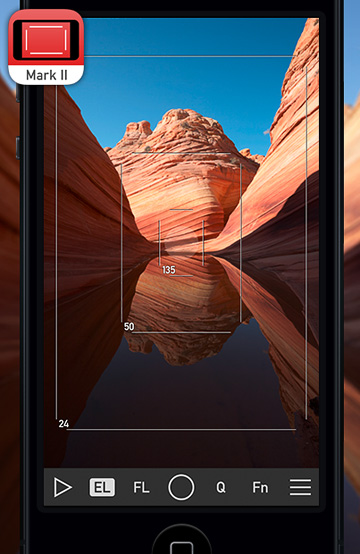
Technical Camera 1.5 and Mark II Artist’s Viewfinder 6.4 are now available on the App Store.

Both apps add support for the new 10.2″ iPad screen size, and resolve a bunch of issues on iOS 13. Artist’s Viewfinder also gains support for a few new cameras.

Technical Camera sports a new feature that didn’t make into the previous version: the exposure simulation warning. Since it belongs to exposure simulation, I’ve described it in that post.

These updates are free for existing users.

Artist’s Viewfinder 6.3 Released

Continuing today’s iOS 13 compatibility updates, version 6.3 of the Mark II Artist’s Viewfinder is now available on the App Store. It brings full iOS 13 support (again, you must update to this version if you are using iOS 13). Dark Mode is supported in the menu, but the main screen’s color theme is still controlled with the Toolbar Theme preference in the menu.

Along a few new cameras, there’s a notable new feature: Zoom to Active Frame.

Once it’s turned on in the menu, double or triple tapping a frame will not just set the mask or highlight, but will also zoom to the active frame so that it fits the screen (that is, the whole active frame becomes visible, at the largest possible size where the whole frame is on the screen). Clearing the mask or highlight will change the zoom level back to where it was before activating the frame (the original zoom level). There are a few things to keep in mind, though.

If the active frame is too small (it would need a higher zoom level than the maximum possible) or too large (smaller zoom level than possible), then it may not fit the whole screen. This may happen with long telephoto or ultra wide lenses.


Viewfinder forgets the original zoom level (and will not revert to it when the mask or highlight is cleared) if you:

  • 
manually change the zoom level after the app zoomed into the active frame;
  • switch between the wide and tele cameras on the phone; or
  • toggle Wide Mode.

When you activate another frame while still in a previously activated one, the display will change to reflect your new activation. The original zoom level will not change in this case, so clearing the active frame will bring you back to the zoom level used before the first frame activation.

Optical image stabilization and exposure simulation described in my previous posts for Technical Camera are also present in this app (since they share the underlying capture engine).

The Viewfinder Handbook was also updated to reflect the new features.

This update is free for existing users. New users can purchase the app in the App Store.

Technical Camera 1.4 : Exposure Simulation

Technical Camera did support longer exposures (up to a given device’s capabilities, which is usually in the 0.5s-1s range) from day one. And live view frame rate followed the exposure time, resulting in substantial lag when longer exposures were used.

To resolve this issue, version 1.4 introduces exposure simulation.

It works exactly the same way your regular camera’s live view does: we simulate the brightness of longer exposures by increasing ISO instead of dropping the shutter speed. The result is a fluid, high frame rate live view feed under all circumstances.

There’s a limitation, though, that you should be aware of. When light levels drop, simulation may end up showing a darker image when the actual (non-simulated) exposure would also use a very high ISO. Practically this isn’t a big deal, since very high ISOs are unusable on a phone.

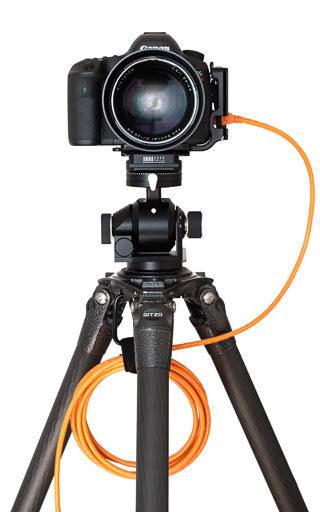
Update 10/2/2019: While it’s a version 1.5 feature, the exposure simulation warning should also be mentioned here. It appears when the simulation can no longer show the actual exposure, because it hit the high ISO limit.

In this case an orange dot starts to blink once a second.

Exposure simulation is always on, no way to disable it.

Version 1.4 is a free update for existing Technical Camera owners. New users can purchase the app in the App Store.