Making It Easier to Put Your Cap On

Manufacturers usually go for “good enough” solutions, even if they can make something significantly more usable with just a bit of more expense. Case in point: Canon rear lens and body caps (I’m citing Canon here, because I’m a Canon shooter, but it also applies to most other manufacturers).

If you ever shoot in marginal light (if you are a landscape or nature photographer, I bet you do it most of the time), then probably run into the hassle of putting your caps on. To comply with Murphy’s law, you’ll always try to attach it in the wrong position at the worst possible moment (I even have a cap at the bottom of Bryce Canyon because of this).

We have a red alignment dot on the lens mount and on lenses, but the stock caps only contain a small, shallow hole marking the attachment position – which is pretty hard to see. And the solution is pretty simple: fill that hole with white (or your color of choice) paint! It can be done in a few minutes for your entire lens collection (after you mastered the technique – I’m using a thin wire to put just a drop of paint there).

My lens cap mod

My lens cap mod

I’m using this trick for almost a decade and haven’t had any issues with putting on the caps since then.
Canon EF 24mm f/2.8 IS USM First Impressions

My sister bought my beloved 24mm f/2.8 lens a couple of months ago (and is making some pretty impressive images with it, this one being my favorite). My good old 400mm f/5.6L USM also have a new owner, so I was thinking about what new equipment should all this money fund.

The first idea was to buy a Fuji X100S, but after trying it I decided that it would require me to accept far more compromises than I’m willing to, so turned back to get some good Canon glass. The 24/2.8’s successor to be exact.

The lens arrived yesterday and just put it through the initial tests and autofocus microadjustment calibration with FoCal. Here are my initial observations.

Image quality

It’s pretty damn good – as was the old 24. A little more resolution (+), a little more distortion (-), but very similar looking images. The center is crazy sharp (much better than my TS-E 24mm). Corners aren’t that sharp, but are still very good. No surprises here. Autofocus consistency is a bit down from 99.1% to 98.6% – they are practically the same in field conditions.

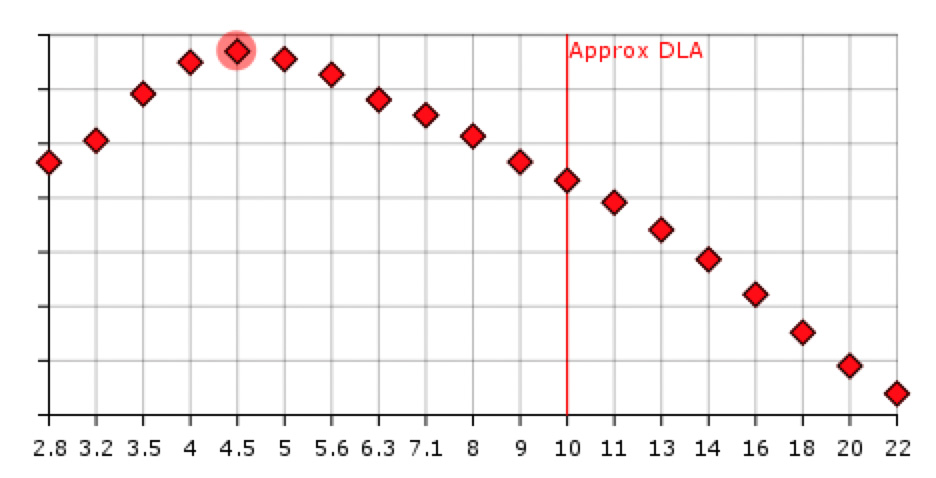
What surprised me pleasantly is the aperture sharpness profile of the new lens (after the AFMA calibration I usually do a focus consistency test as well as an aperture sharpness test).

as-24-old

Aperture sharpness of the old 24/2.8

Above is the old lens’ profile. Numbers from the vertical scale were removed intentionally, as they can’t be used outside of a single measurement (to compare lenses).

And here is the new lens’ profile.

as-24-new

Aperture sharpness of the new lens

Much better at f/2.8, and the sharpness is more consistent through the entire aperture range I routinely use (up to f/11).

Build quality

There’s a night and day difference between the 25 years old design and the contemporary one. The 24 IS’ build quality is on par with my 135/2L. Both utilize engineering plastic as the outer shell, and are tough, but still lightweight. The focusing ring is smooth and well dampened. The lens hood is, well…

Canon does not ship a lens hood with it by default. So it’s a separate purchase. With a lens in the L territory in many aspects (image quality, build quality and and also price), it would be nice to include the hood in the box. Heck, they can even put a red ring on this lens!

The hood itself is the best design I’ve seen from Canon yet. The only drawback is that you can’t remove the lens cap when it’s attached. You have to remove the hood to access the cap. Again, for this price I would expect to get the new center-pinch lens cap. So I might finally pull the trigger and buy a bunch of center-pinch Mark II lens caps.

Image stabilization

The lens belongs to my “travel trio“, so it will be used mostly handheld, sometimes in marginal light. I routinely do landscapes in those conditions and need larger depth of field, so a larger (f/1.4 for example) aperture isn’t a solution for me. But image stabilization is!

Did a couple of low light tests last evening: with a bit of patience I was able to handhold the lens up to half a second! 1/4 second exposures were a piece of cake (the test was done with a 650D, but I expect similar results on my 5D3).

I should also mention that the IS is so silent that I have to put my ears close to the lens to hear it. Also there’s no jump in the viewfinder image when IS is engaged. Light years ahead of the IS systems in my older lenses.

Conclusion

This lens is a winner. If you are into landscapes and want a lightweight and great lens, do yourself a favor and try one. I bet you’ll be immediately hooked.

Recently Canon refreshed their short non-L prime range (24/28/35) with great lenses. I can hardly wait for a similar refresh in the normal/short telephoto range (50/85/100). And may I ask for an image stabilized 135/2L?

Zooming Out – The Move to an All-Prime Setup

I have been shooting with Canon’s L series zoom lenses (the 17-40, 24-70 and 70-200 IS to be exact) for almost a decade. Everything seemed fine, I made several great images with them. The seduction began on a cold January night in Norway two years ago – I tried a friend’s TS-E 24. I was immediately sold. So much that I didn’t want to put the 24-70 on the camera any more. Bought a TS-E 24 later that year and the 24-70 started to collect dust.

Floors

Floors, 100mm f/2 on a 5D Mark II

The final nail in its coffin was a vacation in Sicily last year. To travel light and be able to enjoy the vacation itself besides shooting, I bought three primes. In addition to having image quality that puts the 24-70 into shame, I really loved to work with them.

There was something that inspired my creativity – maybe the discipline of not being able to easily change the shot’s angle of view and forcing me to move around, maybe the freedom from having to think about focal length choices. I don’t know, I just like the process and the results.

Last year I sold both the 17-40 and the 24-70 and just used the two 24s and the 50. And an interesting thing started to materialize: instead of thinking about which focal length should I use I started to see in 24mm and in 50mm. When I realized this I regularly threw the “travel 100” into my bag. And I preferred it to the 70-200.

The final decision to replace the 70-200 was born last weekend. After going through my former images and checking which look do I prefer on the long end I ended up with a conclusion I find shots in the 150-250mm range uninteresting, and that the 70-200 was more in line with my vision on cropped sensor bodies than on full frame. From here the decision was pretty straightforward: get a 135mm f/2L.

I ordered one on Saturday and selling my 70-200. The lens arrived yesterday (isn’t Amazon great?) and I’m waiting for an opportunity to put it through its paces. The cactus and palm house of my favorite botanic garden will open this weekend, and I’m planning a visit next week. I’ll post my experiences.

So my current setup consists of the 24/2.8, 50/1.4 and 100/2 travel trio and the TS-E 24 II, 50/1.4, 100/2, 135/2 quartet for regular use. I plan to add a TS-E 17 and a TS-E 90 instead of the 100/2 when Canon updates the current 90 (I don’t like the fixed placement of tilt/shift axes).

Unfortunately I start to find the 300mm focal length interesting again. And the only option there is the 300/2.8 IS II. Which is heavy and expensive… So I’m hesitant at the moment.

All in all, if you aren’t shooting in a rush, and can move around, I highly recommend to give a try to Canon’s relatively inexpensive and great fixed focal length lenses. They might shake up your vision and photography – just they did with mine.

Image Stabilizer + Tripod

Common wisdom says that you should shut off your lens’ image stabilizer when shooting from a tripod. There’s another saying that it’s safe to use on newer generation lenses, because it detects that the lens is steady and turns off the ill-effects automatically. Actually I belong to the former camp. When I compared my new non-L prime trio with the L zooms, I did a pair of test shots with my Canon EF 70-200mm f/2.8L IS USM (version 1, which I own for 9 years) for the sake of this post.

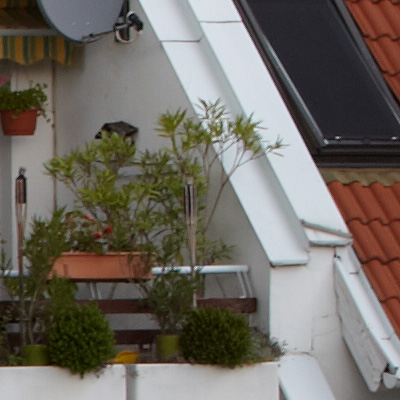
The pictures show the center of the image, where I focused with contrast detect focus and validated that the focus is spot on manually through live view (by executing a manual focusing step to see whether I can focus any better). The camera used was a Canon 5D Mark II, mounted on a sturdy Gitzo 1325 tripod and Arca-Swiss Z1 ballhead. The zoom was set to 70mm, aperture was f/8. These are unprocessed images straight from Capture One 6.4.2. Yes, these were shot on a cloudy day.

The first 100% crop is the non-IS version. As good as it gets.

Image Stabilizer OFF

 And here is what happens if you turn IS on.

Image Stabilizer ON

The bottom line: if you are seeking ultimate image quality and as such shooting from a tripod, then shut IS off (unless you test your configuration for yourself and that test proves otherwise – newer lenses can behave differently). It will also save some battery power!

L is not Always Better

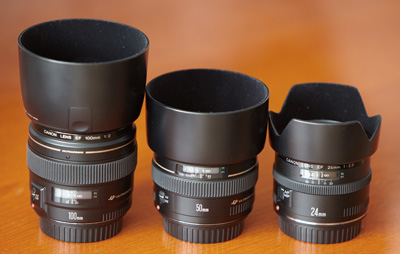
Canon 100mm f/2 USM, 50mm f/1.4 USM, 24mm f/2.8

My fully loaded camera bag is around 16kg (without the 500/4). So I started a “project” to reduce its weight substantially. The goal is to shave off 3kg. The other reason behind buying the non-L glass you see on the right was that I needed a lightweight travel kit. After contemplating a lot and considering even the Sony NEX-7 and the Fuji X-Pro 1, I had decided to go the most cost effective way: get some good primes for my 5D Mark II.

I had spent a weekend on reading reviews, analyzing resolution and distortion charts. And a strange thing started to materialize in front of my eyes. I’ve found three Canon primes that promised stellar image quality, low weight and low price tags. So I ordered the 24/2.8, 50/1.4 and 100/2 trio (of course with the optional lens hoods).

First arrived the 24mm (at the same day when Canon announced that this lens is discontinued and will be replaced with a much expensive IS version). I was surprised how sharp this lens was, blowing away my two L zooms that cover that range, and providing better center sharpness than the marvelous TS-E 24 II.

A few days later the 50mm arrived. Mounted it on the 5D II and compared it against my 24-70/2.8. It was no contest. The 24-70 was not even in the ballpark. Immediately replaced it with the 50, reducing my bag’s weight by about 600g.

The 100 produces much less shock than the other two. It is just a great lens (although I still prefer the color rendition of the 70-200/2.8 IS). Compared it with a friend’s 100/2.8 IS Macro, and at f/8, although less contrasty, it was on par with the macro lens (in the corners the little 100 produced better image quality).

These primes cost less together than a 24-105 f/4L lens and image quality at modest apertures (f/4-f/11) is much better in almost all aspects (avoid shooting towards the Sun with the 24…). Or to put it another way: I can break or otherwise ruin any of these three times to arrive at the price point of an L counterpart.