Simulating a Sony RX100 with Artist’s Viewfinder

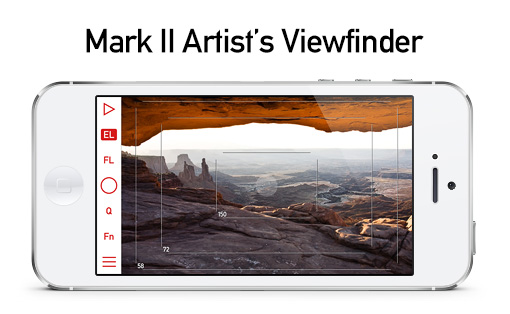
In the past months I got a few requests to add support for large-sensor compacts to the Mark II Artist’s Viewfinder app.  I’m still not convinced to go this direction, however. Partly because I see little advantage in simulating a camera where you can’t really see what focal length you are using but can easily zoom as you wish. And partly because it takes more than a new camera in the database.

But the app is flexible enough to do it for yourself, without the need to convince me to add these cameras. It takes only three simple steps described below.

Note: if you are not sure how to complete any of the steps, please refer to the Artist’s Viewfinder Handbook for detailed coverage on basic concepts.

But let’s begin! The first step is to create a custom camera. Shown below are the settings for the RX100 III.

IMG_2335

Sensor size comes from the camera’s documentation. It’s the same for all three generations. What looks a little odd here is the lens mount – as the RX100 doesn’t support interchangeable lenses. But the app requires to select one, so we use something that’s close to the 1″ sensor size: the Generic 4/3″ mount. Save the camera and proceed to selecting lenses.

I see no point in selecting focal lengths as you can’t really match them with the camera, but you can do that if you wish. Marking the ends of the zoom range gives you the bounds to operate within, however.

IMG_2336

You can add these ends using custom focal lengths, as they are not present on the default focal length list. Note that you must use the physical focal lengths here – not the 35mm equivalent ones. Shown above are the values for the Mark III, for the Mark I and II use 10.4mm and 37.1mm as the end points. Going back to the virtual camera configuration screen brings us to the last step.

And this is activating ZoomFrame. I’ll turn this on to see the frame bound at the correct aspect ratio at every focal length between the end points.

IMG_2337

That’s it. Save the virtual camera and we’re done.

One last comment though. The RX100 III’s widest angle of view is wider than that of the iPhone’s camera, so you may need a wide converter to be able simulate the wide end of the zoom.

Artist’s Viewfinder 3.3 Available on the App Store

avf2iconThe latest release of the Mark II Artist’s Viewfinder went online yesterday. This version adds several enhancements to the album, including Dropbox uploads. I wrote about these features in detail in my previous posts.

It also adds support for a couple of new cameras:

  • AJA CION
  • Blackmagic Studio Camera (4K/HD), URSA (EF/PL/Broadcast)
  • Leica T Typ 701
  • Nikon D810, J4, S2, V3
  • Pentax 645Z
  • Samsung NX-3000
  • Sony A7S, SLT-A77 II

The Viewfinder Handbook had been revised and updated for the new features.

This is a free update for Mark II Artist’s Viewfinder owners. New users can purchase it from the App Store.

If you are not familiar with what this app can do for you, I’d recommend checking out the new Features in Depth page on the app’s microsite.

What’s Coming in Artist’s Viewfinder 3.3

Version 3.3 of my Mark II Artist’s Viewfinder app is nearing completion, so I thought I’ll show you some of it’s exciting new features.

Besides the usual slew of new cameras, this release revolves around enhancements to the album.

Full Resolution Images Are Now Optional

You can save space and time by not storing the full resolution images if you don’t need them. The album browser also indicates which views have a full resolution image with a little camera badge.

IMG_0042

When you export views from the album with no full resolution images, the app will export them immediately. When at least one selected view have a full resolution image, then you’ll get the usual prompt.

View Selection

You can now select all the views in the album with just one tap of the Select All button. Well, this feature topped our feature request list, so here it goes! :)

Auto Export

This feature lets you to automatically export the preview or the full resolution image (or both) to the Camera Roll while a view package is created.

What is pretty neat is that you can separate the storage of previews from full resolution images (like shooting to different cards in a real camera).

While previews are always stored in the app’s album (you can’t turn it off), you can auto export full resolution images to the Camera Roll with no need to duplicate them in the album. Settings for configuring this are shown below.

New menu settings

This is exactly how I use the app now, and it replaced the built-in Camera app in my daily usage.

Selectable Map Type

Previously the album’s map used a hybrid type – overlaying a street map to satellite imagery. While this looks great, it may consume lots of Internet bandwidth.

IMG_2250

Starting with this release, the default map type is the standard, low bandwidth, street map. But you can switch it to satellite and hybrid if you prefer those.

While we are at GPS and mapping functionality…

New Track Logging Default

To better honor user privacy, track logging is now turned off by default. It affects only new installations, this setting will not be changed for existing users.

We have also changed the way the app starts for the first time, delaying the location services prompt until the first virtual camera is configured.

When?

The above features are already available in internal beta builds. But we are working on a few more!

If everything goes well, the new version will be on the App Store in July. It will be free for existing users. So if you became interested in the app because of these new features, don’t hesitate! Grab your copy today!

ShutterCount 1.2 Brings History Logging

Version 1.2 of my ShutterCount app is now available on the Mac App Store.

ShutterCountScreen12

New features:

  • History logging allows you to track camera usage. Logs are stored in CSV format that can be imported into Apple’s Numbers or Microsoft Excel for further processing.
  • Easily share your camera’s shutter count with your friends or a potential buyer (requires OS X 10.8 or later).

Added support for:

  • Canon EOS-1D C
  • Canon EOS 500D / Rebel T1i / Kiss X3
  • Canon EOS 1000D / Rebel XS / Kiss F
  • Canon EOS 1200D / Rebel T5 / Kiss X70

The upgrade is free for existing ShutterCount users. New users can download the app for $2.99 from the Mac App Store.

What’s New in the Mark II AVF 3.2 Update

The latest update to the Mark II Artist’s Viewfinder went online earlier today. Besides the usual slew of newly supported cameras and backs (listed in the press release), there are two feature groups I’d like to talk about. Let’s begin with new customization features.

Original Viewfinder editions had a completely neutral main screen. While the Mark II’s red/white toolbar looks pretty neat, a few users complained about the vivid colors interfering with their composition. So in the 3.2 update you can switch the toolbar into a dark and neutral themed one. It’s interesting to note that it brings a completely new character to the main screen – but still looks neat.

dark-toolbar

The new Dark & Neutral toolbar theme

Speaking of distractions, a few of you found the translucent white AF/AE point indicator distracting. You can now turn it off if you wish. But please note that the red circle will still be displayed when AF is in progress.

We also received requests to make “more Fn Keys” – that is to let the user customize the function of other toolbar buttons. And beginning with version 3.2 you can override the EL and FL buttons with the exact same functions that you can assign to the Fn Key. You’ll lose their initial functions while the override is active, of course.

Finally I was able to put my hands on the iPro lens system case for the iPhone 5s, so this update rounds out the supported wide converter/device combinations with both Schneider converters on the iPhone 5s. And also adds the Cambo WRS-1060, which utilizes the Schneider wide lens.

A fix for the “gray screen with no live view after switching to another app and back” bug is also included. While fixing this, I ran into a more serious issue: with toggling exposure lock on and off on the iPhone 5s I was able to bring the phone’s entire video capture system down to its knees. We are working on a fix with Apple, but the interim solutions is to restart live view when you disengage the exposure lock. I know, it’s a bit of pain, but there’s no better workaround yet. The good news is that only the iPhone 5s is affected.

The Viewfinder Handbook has also been updated to cover these new functions.

Viewfinder Handbook 2nd Edition

IMG_0470The wait is over… I managed to finish the new edition of the Viewfinder Handbook yesterday, and now it’s available for download.

Partly rewritten and expanded to cover version 3.1 of the Mark II Artist’s Viewfinder and ALPA eFinder II. I would recommend it to both new users and veterans of the old app — as the Mark II brought lots of changes.

New main screen, wide converter support and simulated equipment setup (now called virtual cameras) being the three most important areas.

The handbook is a 14 MB PDF file, optimized for viewing on iPads. But because it’s a PDF, you can read it on any device, be it a tablet, a Mac or a PC, and in numerous PDF reader applications.

It can be downloaded free of charge from the Mark II’s web site.