Viewfinder 4.4 with 3D Touch and iPad Pro Support

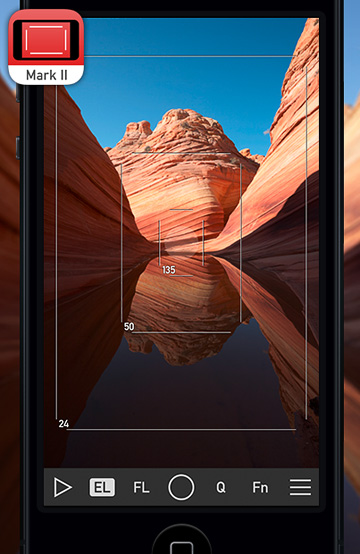
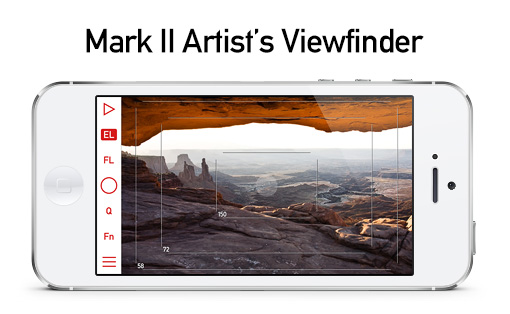
Version 4.4 of the Mark II Artist’s Viewfinder is now available on the App Store.

Besides the usual bunch of new wide converter profiles and cameras (detailed in the release notes), the two main new features are 3D Touch and iPad Pro support.

I already wrote about 3D Touch home screen Quick Actions in a sneak peek.

On the iPad Pro front, the app now takes advantage of the entire, huge screen. User interface elements remain the same size as on all full-sized iPads. This is to let the content occupy the majority of the screen real estate.

vf-ipad-pro

We also checked all the wide converters we have on the Pro, and were able to mount the Moment wide lens (both the iPad Air 2 and iPhone 5s clips fit). So this version adds support for the Moment wide lens/iPad Pro combination. More wide converters will be supported as their manufacturers come out with iPad Pro compatible versions.

Speaking of wide converters. Schneider is lagging behind again with iPhone 6s/6s+ support. We were able to use the 6 case on the 6s, so that’s in this release. But there’s no 6s Plus case yet.

Version 4.4 is a free update for existing Mark II Artist’s Viewfinder owners. Users of former Viewfinder Basic/Pro/Cine editions can upgrade for a reduced price.

Accessories to Get the Most Out of Your 5DS R

The Canon EOS 5DS R is indeed a great camera, rivaling or even surpassing medium format digital offerings. But to extract its capabilities to the last ounce, you’ll need the appropriate lenses, accessories and technique.

Let’s get the lens question out of the way first, before I move onto the accessories and gadgets – the real topic of this post. This camera ignited a complete revamp of my lens set. I’ve already replaced the 500mm with the Mark II because of the 7D Mark II, but the 5DS R made changes also necessary in the shorter focal lengths range. The first lens that got replaced was the 135mm – with the Zeiss Apo Sonnar 2/135 ZE replacing the Canon EF 135mm f/2L USM. The Canon was no slouch, but the Zeiss is in a completely different league. Next came the Sigma 50mm f/1.4 Art replaced with the Zeiss Otus 1.4/55 ZE (actually this change is in progress, as the first copy went back to Zeiss – more on it after the issue settles). On the wide end I’m about to acquire a Zeiss Otus 1.4/28 ZE (when it comes out next year) and a Zeiss 2.8/15 ZE.

It may look pricey at first, but these lenses are not comparable even to the Sigma Arts. With the Sigma 50, 5DS R images just look like regular 35mm DSLR images, albeit with slightly higher resolution. But they are still limited to 40×60 cm print sizes according to my standards. There’s a lot of empty magnification in those images. With the Otus 55, 60×90 cm is easily reachable. The images remind me of those I saw from Hasselblads. The Otus 55 costs around $4000, which is in line with medium format normal lens offerings priced between $3000 (Schneider) – $6000 (Leica). And the 5DS R is more than affordable compared to medium format cameras/backs.

With this said, it’s not surprising that you’ll need tripod stability and shooting discipline used with medium format gear. The setup I describe in the following sections was built slowly during the last couple of years to satisfy my landscape photography requirements. Removing “field frustrations” one by one.

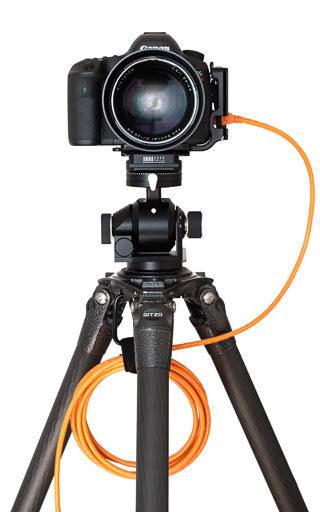
As a quick overview, you can see my rig on the following picture.

Ready to shoot

Ready to shoot

Tripod and Head

I’m using a Gitzo 3532LS tripod for more than three years now. These legs proved to be versatile, have great torsional rigidity and dampen vibrations rather quickly. I prefer three legs sections for increased stability, and myself being 172 cm, this tripod gives me just the right height to work comfortably even on slopes.

On the head front, the Arca-Swiss d4 is my choice. I had been struggling with ballheads for a decade, and they became unbearable when I started to shoot tethered most of the time. I had to wait three months for the d4 to be delivered, but it well worth the wait. Now I can adjust the camera position with just one hand, while holding the MacBook Air in the other. Not to mention that sagging omnipresent even with the best ballheads is a thing of the past. I prefer the d4 compared to the Cube, because of the quick adjustment feature.

The third piece of the the support puzzle is the camera plate. I’ve relocated my Kirk plate from the 5D Mark III – it is 100% compatible. As I wrote in my Kirk plate first impressions piece, I really like its two attachment point fixing method. Together with the 5DS R’s reinforced base plate, it provides very stiff support. Note that no battery grips are used here – they just introduce another attachment point with possible flex and sag.

Filters and Lens Shading

I moved to the LEE filter system when I started shooting with primes only. Four different filter sizes were unmanageable – even with the two types of filters (ND and polarizer) that I use. Still don’t like graduated filters and the dark mountain tops you see so many times on photographs made with them, and my LEE filter set consists of just a 100x100mm polarizer, a 3 stop ND, plus the Little and the Big Stopper.

They beautifully solve the filter thread problem, but forget about stock lens shades. So I had to find a solution. Sometimes I used my hat to shade the lens front element, and that gave me the idea: get a piece of black paper/plastic, and figure out how can I hold it in place (remember, one hand for adjusting the head/camera/lens, another for the MacBook – there’s no third one for holding the shade). I ended up using a Wimberley Plamp as a third hand. Originally I had a piece of black cardboard in my bag as a shade, but recently switched to a piece of matte plastic named Shadepirate. You can’t see on the above picture, but I put a piece of Velcro under the clip of the Plamp to protect the tripod leg.

Tethering

Tethering became integral part of my workflow years ago. At the beginning I had been dragging a 15″ MacBook Pro around, but that turned out to be a bit heavy and problematic. For more than a year now, a 11″ MacBook Air serves as a field computer. It fits into the pocket of my Domke vest, weights as little as five or six 4×5″ film holders… Yes it’s a bit more than 1kg, but my backpack and tripod weighs around 20kg together, so that’s not a huge increase.

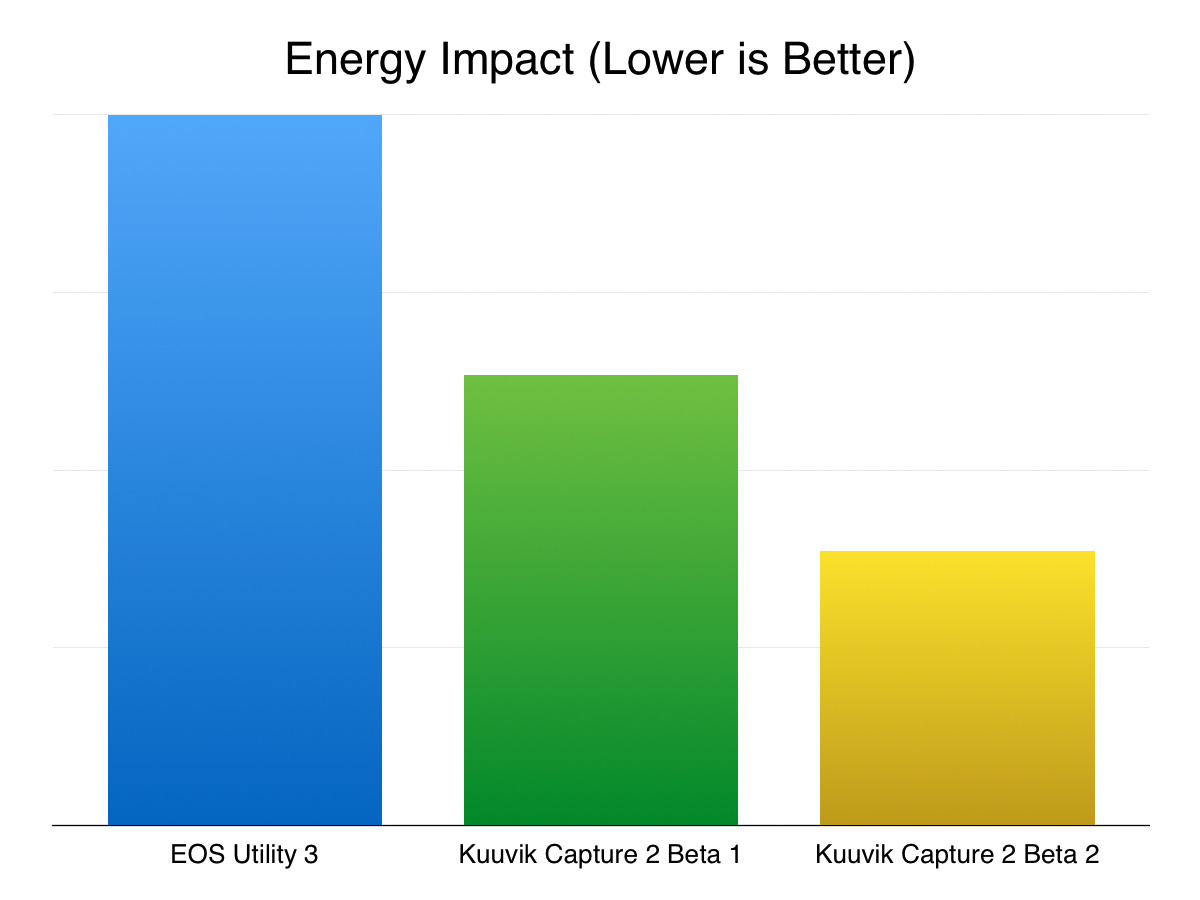
Of course I use my own software – Kuuvik Capture – on the MacBook for controlling the camera. But usually also keep a copy of Capture One open so that I can make critical decisions on the filed.

With the arrival of USB 3, cable quality became increasingly important. You need to have good signal integrity for a reliable connection. For this reason, I settled down with TetherTools’ TetherPro cables – currently the 15 feet (4.57m) orange one. As an interesting side note, we had a handful of Kuuvik Capture support incidents where changing the cheap cabling to a good one solved the issue.

Conclusion

For me, the 5DS R marks the end of the casual 35mm shooting era, but in exchange delivers image quality previously available only with much more expensive medium format systems. Even with expensive Zeiss glass, the complete system price/performance ratio remains on a uniquely high level.

Not to mention that the same camera can be used for birding with stellar results – a domain no medium format camera dare to enter.

  ☕ ☕ ☕

Did you enjoy this post? Consider buying me a coffee if so.

Late Summer Rain at Lake Bled

Even with the 5DS R at hand, I kept my good old Canon 5D Mark III – as a travel camera. I dislike all the current mirrorless offerings (handling, user interface and usability issues), so instead of buying into one of those overhyped systems, simply bought an EF 35mm f/2 IS USM lens to go with the 5D Mark III.

Late Summer Rain at Lake Bled

Late Summer Rain at Lake Bled

This combo is a deadly weapon – handholdable at ridiculous shutter speeds, produces first rate image quality, pretty lightweight (compared to what I’m usually lugging around), batteries just keep going, and handling of the 5D Mark III is a joy.

The above image was shot with the combo during a short visit to Bled this August.

Foggy Sunrise on Little Tisza

Last Sunday morning thick fog greeted me at the lake. Despite the bad visibility (actually because of it), we sailed out to enjoy one of the best foggy shoots of my entire life.

Foggy Sunrise

Foggy Sunrise

Shot with the Zeiss Otus 1.4/55 lens on the Canon 5DS R. Boy, this lens is magical. No chart or numeric test result will tell you that. You’ve gotta do yourself a favor and try one.

More to come.

Flaming Fall Forest

Tilt-shift lenses help you to use perspectives impossible to obtain with normal ones.

The maximum 12mm shift on my Canon TS-E 24mm f/3.5L II lens helped me to tame the strongly converging trees resulting from an upward pointed lens – but still keep some from the convergence, which makes this image work for me.

Flaming Fall Forest

Flaming Fall Forest

Colors from the Canon 5DS R and Capture One Pro 8 combination are just lovely (unfortunately you won’t see their full glory on an sRGB web image).

On the downside of things, the camera clearly outresolves the lens – which is a pity, as this is the best wide angle tilt-shift option currently available. Once the 24 TS was my very best lens, but today with the 5DS R all my Zeiss, Sigma and most Canon optics are better.

But regardless of the resolution difference, there are situations when the perspective control capability is a must, and in these cases the 24 TS comes out of the bag.

Shot tethered to a MacBook Air 11″ running Kuuvik Capture 2.1.1 beta. I’ll post about the whole rig I’m using for landscape shots during the coming days.

A Little Product Photography

My better half made a bunch of soaps today and asked me whether I have a little time to help her make some photos.

Sitting in front of my desk coding for who knows how many days, I smiled, and pulled out the Canon EOS 5DS R with my beloved Zeiss Apo Sonnar T* 2/135 ZE lens. A tripod, a few sheets of colored paper, a flash to open up the deep shadows created by the afternoon sunlight, and a MacBook Air 11″ to run Kuuvik Capture rounded out the rig.

Roses in Soap

Roses in Soap

The above is my favorite from the shoot. The Zeiss – as always – amazed me with its wonderful, clean, airy drawing. This was shot at f/2.2. Everything in the plane of focus is tack sharp, and the bokeh is lovely. Both in front of and behind the focus plane.

And this is a bit dull sRGB version, at least compared to the original having the usual brilliant colors the Zeiss with the 5DS R can produce.