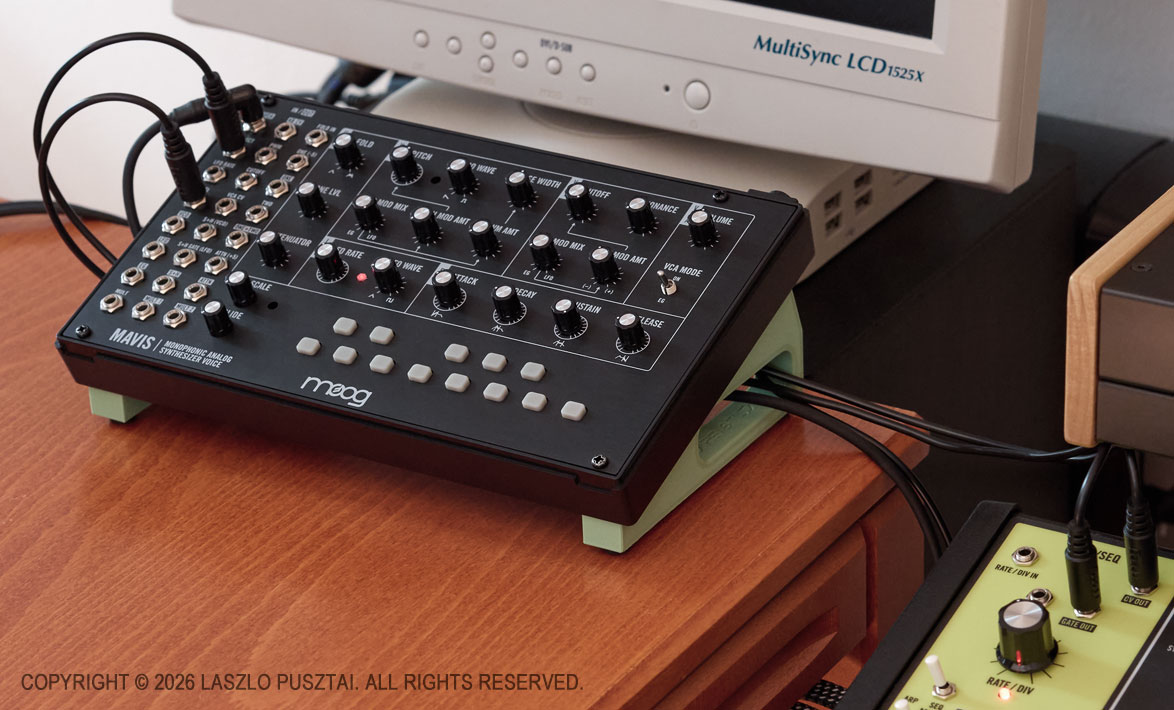
After I bought a Moog Mavis about two years ago, I tried to find a desktop stand for it. And wasn’t remotely amused with what I found.
Typical desktop synth stands consist of a pair of wedges to hold the synth at an angle, with a lip at the front to prevent the device from sliding off the wedges. The wedges happen to be rather thin, so rods or similar constructs are used to connect the two to keep them upright.
This simple design has its places – I used it for the Hapax stand I built specifically for my studio, for example.
There are several issues with these stands, however.
First, the stand forms a separate entity from the synth. If you lift the device, the stand remains in place. For me this is a problem when shuffling things around. And don’t even think about routing cables trough a stand that is separate from the synth… Well, its fine until you try to move the whole conglomerate.
Second, the choice of materials. You can find metal stands – nice but heavy. Or cheap plastic ones. 3D printed variants typically use the cheap, weak, and not really temperature resistant PLA plastic. I found several reviews complaining about PLA parts breaking during assembly.
Third, they are unwieldy when assembled, taking up almost the same footprint as the synth, but have much higher total volume. Don’t dream of throwing them into a bag without disassembly. You can find ones that only consist of two wedges with no connection between them. They are compact, but positioning and keeping them upright can be an exercise in frustration.
What I wanted was a compact, lightweight solution, that attaches securely to the synth, so that I can move the device around with the stand in place as a single object. I would pretty much leave the stand attached all the time.
Given that there was no such commercially available product, I started prototyping several different designs.
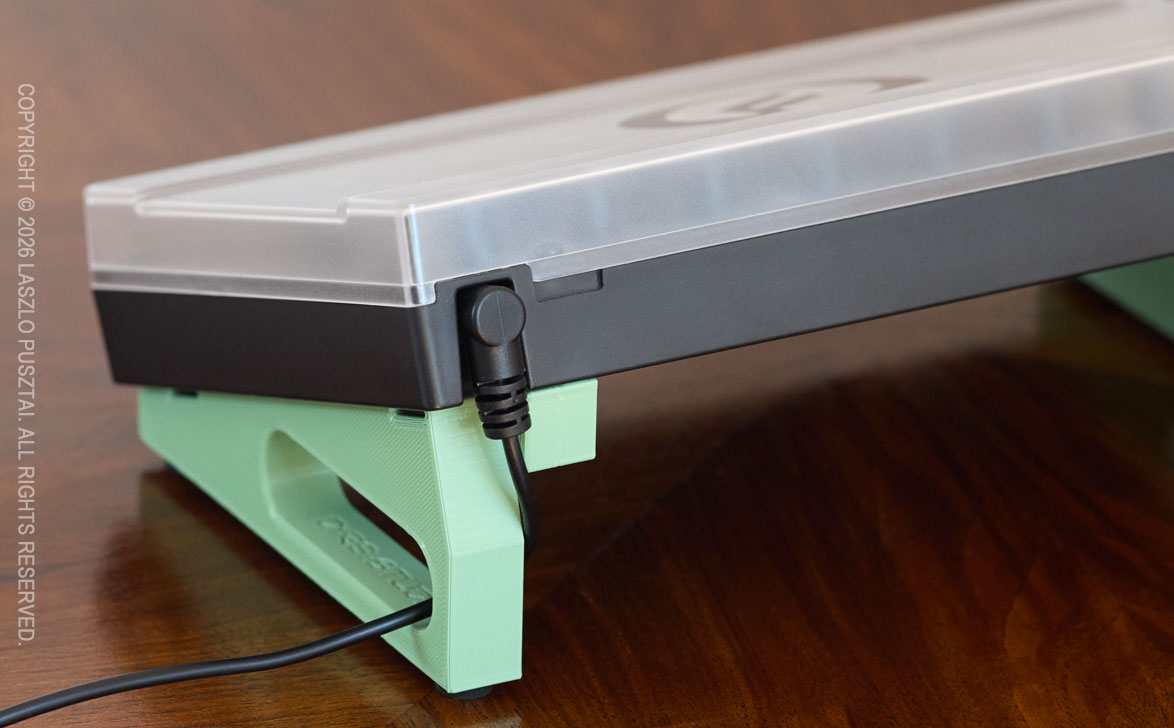
I found that I can use the screw access holes at the bottom of the synth as mounting points. I was able to construct studs that, when inserted into these holes, provide enough frictional force to be able to keep stand legs in place.
You can see the design on the following image. For a fully animated version visit the Compact Stand page on my company’s web site.
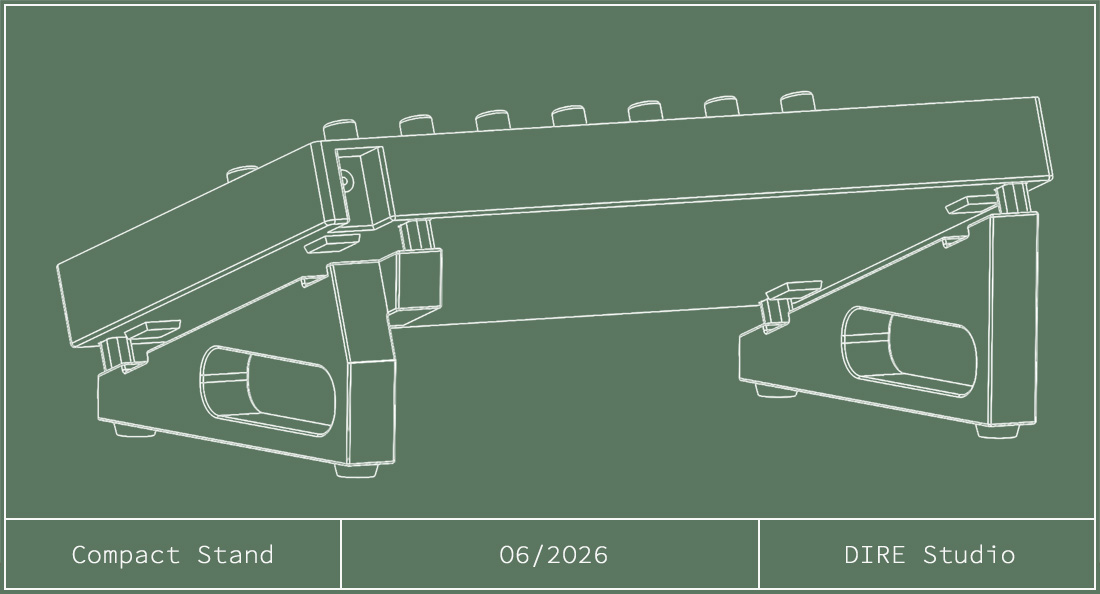
This attachment method allows you to securely mount the legs to the synth. They won’t fall out. Legs become part of the synth. But when needed, you just pull them out. No tools required. You don’t even have to assemble the stand. Just insert the two legs, and you’re good to go. They are also incredibly compact – hence the Compact Stand name.
Our Compact Stands are 3D printed. The material of choice is PETG, which is perfectly suitable for making mechanical parts.
Since my approach was completely different from anything on the market, I did apply for the appropriate intellectual property protections. This was a long process, just completing recently. So now I can publicly talk about my invention.
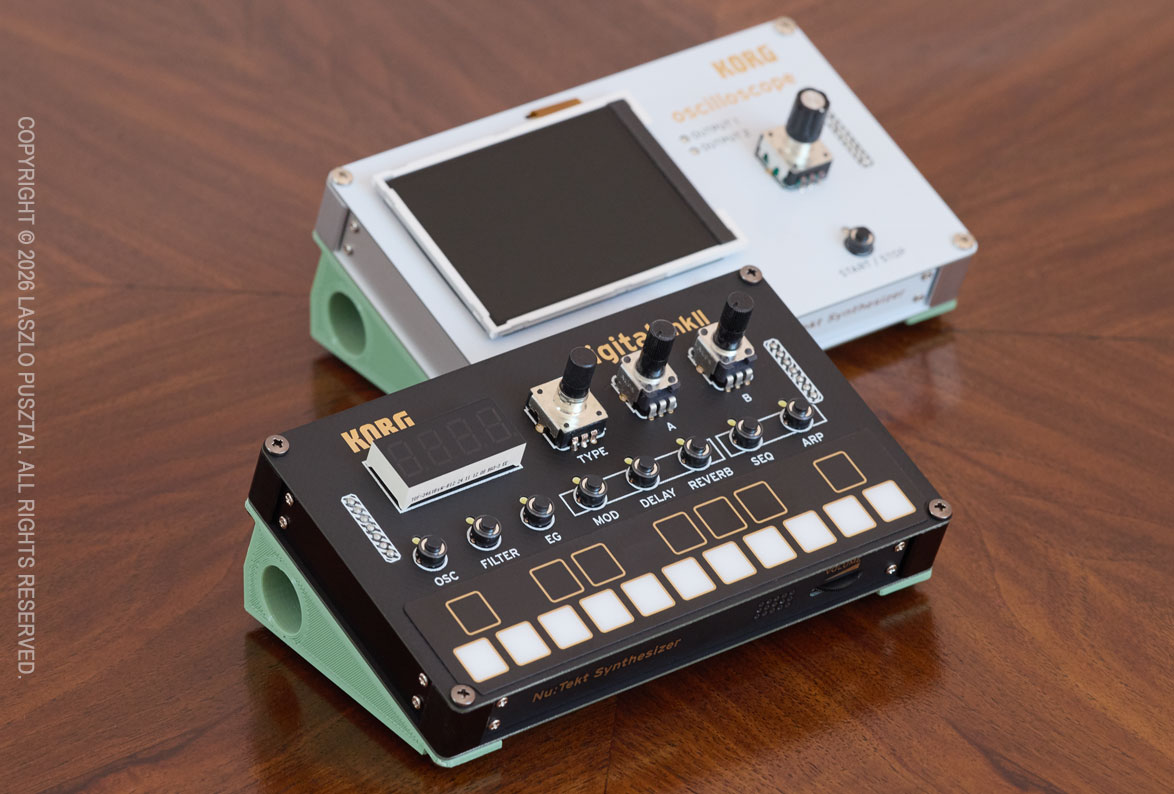
As I mentioned previously, we are in the process of building sales channels. In addition to the Moog Mavis, we also developed custom stands utilizing this mounting method for a bunch of Behringer synths and drum machines. If you are interested, please register on DIRE Studio’s web site.