Kuuvik Capture 2.5 with 5D IV Support Available

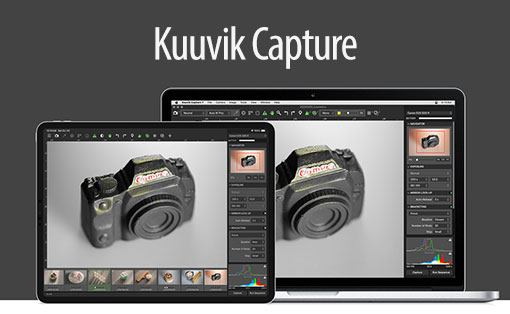
The latest update to Kuuvik Capture is now available on the Mac App Store. It brings complete Canon EOS 5D Mark IV support, including the ability to shoot and display Dual Pixel RAW files. I’d recommend to check out my former notes on 5D Mark IV RAW files.

This release also boosts RAW decoding and camera communication performance – you can find more details on these improvements in my previous post.

A new preference

As a first step toward JPG support, you can now shoot RAW+JPG (Large/Fine) in the camera. Since Kuuvik Capture works from the RAW file only to display the histogram and highlight/shadow warnings, just the RAW files are downloaded even if you shoot RAW+JPG. JPG files are saved to the memory card.

The new "Image quality" preference

The new “Image quality” preference

You can switch between RAW (the default) and RAW+JPG Large/Fine in Preferences.

Notes on macOS 10.12 Sierra

Usually I’m not doing this, but this time I highly recommend NOT to upgrade to macOS 10.12. At the time of writing the new OS has way too many bugs, two of which affecting Kuuvik Capture users specifically.

1) Connecting the 5D Mark IV via USB to an app, and then quitting the app will leave the camera in an inconsistent state, and no app will be able to connect to the camera until the USB cable is disconnected and plugged in, or the camera is turned off and back on, or the memory card door opened and closed.

This only happens with the 5D Mark IV and on macOS 10.12 with the USB connection. The same camera on 10.11 works fine, all other cameras we’ve tried on 10.12 work fine. Even the Wi-Fi connection works fine – well, it’s not a surprise since it doesn’t use the flaky macOS PTP/IP stack.

It seems that macOS forgets to close the session with the camera. There is no workaround to the issue, other than the things mentioned above that actually break the session on the camera side.

2) On some computers (MacBook Pro 15″ Retina Mid-2012 for example) 5DS/R files are not displayed at all.

Update 10/30/2017: The new display engine in Kuuvik Capture 3.3 is immune to this issue.

Availablity

The update is free for existing Kuuvik Capture 2 customers. New users can download Kuuvik Capture 2 from the Mac App Store.

For more information about the app, please visit it’s microsite, or check out my posts.

Aurora Over the Lake

We had been chasing the northern lights for a couple of days now. After two nights with no results at all, yesterday the gods of Valhalla smiled at us. Well, it takes quite a bit of planning (location-wise) as well as weather and aurora forecast monitoring in addition to some help from Asgard.

Arrived to the location just around sunset, so we had a little time to find the best place. We were eagerly awaiting the dark since hemispheric power already crossed the 30GW line, meaning that a gorgeous display was going to happen. And it did.

Aurora Over the Lake

Aurora Over the Lake

During the night we photographed three locations, and the above image is one of my several favorites. How the Zeiss Otus 1.4/28 on the Canon 5DS R performed is simply breathtaking. It resolves fine filaments, colors are stunning, stars are mostly points (there’s a little bit of coma wide open).

It was the best aurora photography session of my life to date. And not just that, but an unforgettable experience.

Dual Pixel RAW and Kuuvik Capture

Dual Pixel RAW is Canon’s new invention that will see its first release with the EOS 5D Mark IV. There’s some vague marketing info floating around, but haven’t seen a concise description of these files yet. So while updating Kuuvik Capture’s (websitemy posts) RAW decoder to support the 5D Mark IV, I had a chance to dig deeper into Dual Pixel RAWs.

To understand the following discussion, you need to know how Canon’s Dual Pixel AF works, especially how these Dual Pixels are divided into two separate photodiodes. This article by Dave Etchells gives you a thorough explanation.

What is a Dual Pixel RAW file?

Normal CR2 files contain the following sections:

  • Metadata
  • Previews
  • RAW data

The DPRAW file is a CR2 file that contains one more additional section:

  • Metadata
  • Previews
  • RAW data
  • DPRAW data

This organization have a very important implication. Any RAW processing software that does support the normal 5D Mark IV files will be able to open DPRAWs. If the app is unable to interpret the DPRAW data part, it will simply ignore it and will work with the file as a normal RAW. There’s no risk or penalty in taking DPRAWs (besides the huge buffer drop from 21 to 7 frames).

The DPRAW file contains the normal RAW data section to make this compatibility possible, plus one side of each pixel in the DPRAW data section.

The RAW data section contains pixel values with the sum left and right sides of the photodiode, while the DPRAW section contains pixel values from just one side of each photodiode.

The RAW data section contains pixel values with the sum of left and right side photodiodes, while the DPRAW section contains pixel values from just one photodiode of the two.

But how do we get the other side of each pixel to let Dual Pixel aware processing apps do their tricks? It’s easy: since the RAW pixel value is the sum of left and right pixel sides, just subtract the DPRAW pixel value from the RAW pixel value.

This is an unusually clever implementation from Canon, where I’m used to see all kinds of inflexible hacks that look like as if they were designed in the 1980s.

Size-wise, DPRAW files are slightly less than double the size of normal RAWs (since metadata and preview images are stored only once).

How will Kuuvik Capture 2.5 handle DPRAWs?

Not being a RAW converter, Kuuvik Capture needs the RAW data for two purposes: the RAW histogram as well as shadow/highlight warnings (the image displayed on the screen comes from the preview embedded in each CR2 file). For these the RAW data section is totally sufficient, and the app will ignore the DPRAW data section if present in a CR2 file.

The app will display normal RAW and DPRAW files equally fast, but downloading DPRAW files from the camera will take almost twice as much time as normal RAW (because of their larger size).

I assume that there will be a possibility to switch the camera into DPRAW mode remotely (I can’t be sure until my rental unit arrives). If that is the case, then a new preference will let you specify whether you’d like to shoot RAWs or DPRAWs.

No Trespassing, Please

There are two ways up to this waterfall. One of them is picturesque 4km uphill hike along the river. The other is a private dirt road, ending half a kilometer shy of the place. There’s also a huge “No Trespassing” sign on the private road.

Turquoise Waters

Turquoise Waters

Of course we did the hike, and it was an absolutely great experience. Both visually and physically. What bothers me is how many people chose to trespass someone else’s land for the convenience’s sake.

Just think about it. You have something interesting in you backyard: how would you feel when hordes of tourists start to invade your property?

5D Mark IV File Support Added to Kuuvik Capture

5d4rawisobugThis morning I had finished adding EOS 5D Mark IV file support to Kuuvik Capture (websitemy posts), and would like to share a few observations with you.

In short, all bugs introduced with the latest Canon camera releases are present in the RAW files.

First, just like the 1D X Mark II, ISOs above 51200 recorded in the EXIF incorrectly as 65535 by the camera. The screen shot on the left shows an ISO 102400 file from the 5D Mark IV. This is something that affects users and can’t be corrected in Kuuvik Capture. So if you are running into this: it’s a problem with the camera firmware, not with the app. Update: Version 3.2 fixes this, as we now can decode private Canon metadata from the files.

Second, internal lossless jpeg headers are corrupt exactly the same way the 5DS/R screws these up. Kuuvik Capture works around this bug, so it’s not something you’ll notice, just annoying to witness.

Third, the whole question of ISO 32000. Since 1/3 stop ISO values are digital trickery, the camera’s top ISO is still 25600. But it seems that marketing folks were not satisfied with that. So the fake top ISO was born. I saw this in the 7D Mark II for the first time (ISO 16000), and it seems that they are so fond of this that the 5D Mark IV also got it. The app handles it correctly, it’s just something you need to be aware of as an informed user.

Of course the upcoming version 2.5 will have full 5D Mark IV support, just wanted to share the progress with you. We plan to release version 2.5 later this fall. It will be a free update for all Kuuvik Capture 2 users.

Shooting a Waterfall in the Rain

One of the things I had learned during the last decade is that image making is a pursuit that involves a healthy amount of plastic bags and gaffer tape to solve various problems.

Let’s take the following image for example.

Smooth and Rough

Smooth and Rough

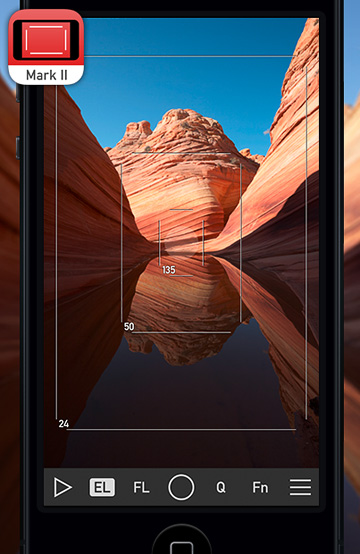
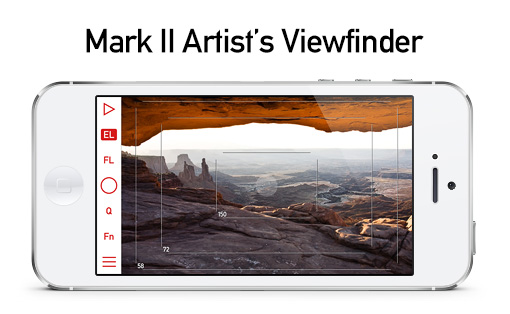
There was a light rain when we arrived, not to mention the water droplets from the waterfall that the wind slammed in our face. It was a blessing to walk the scene with the Mark II Artist’s Viewfinder with no need to open the backpack and soak several lenses just to find a composition.

In my favorite composition (of the several I tried in just a few minutes) I wanted to emphasize the clash of dark rough rocks and light smooth water. So I needed a long exposure to smooth out the water flow. Unlike the 5DS R, none of my Zeiss lenses are weather sealed. And water accumulating on the LEE Big Stopper is also problematic. Since I don’t carry an umbrella (which would be the trivial solution), I used the largest water-resistant thing in my bag: the Shadepirate flag in the plastic bag I used to carry it in.

Shadepirate flag functioning as an umbrella

Shadepirate flag functioning as an umbrella

Some extra light also came from the direction of rain/water so the flag actually served double-duty. The setup worked quite well, and had to wipe just a small amount of water from the filter between exposures.