Gullfoss in Pink

On the evening the image below was made we originally planned to go to the highlands of Iceland. But just a few kilometers into road F35 I noticed that coolant is leaking from our 4×4 – the culprit being a hole somewhere in the radiator. So we quickly abandoned the original plan. But while going back to Reykjavík, we stopped at Gullfoss, and subsequently at Geysír.

I have been at Gullfoss half a dozen times before, but never experienced such a colorful light show. The pink clouds reflecting from the water transformed the waterfall into a nacreous beauty. I was glad that we had to change the plan and came back.

Gullfoss in Pink

Gullfoss in Pink

The image really shines in a large print where the eye can enjoy the abundance of intricate details that the Canon 5DS R and Zeiss Apo Sonnar T* 2/135 can deliver. A LEE Big Stopper was also in use when making the exposure.

Canon EOS-1D X Mark II Review – Part 2

This is the second installment of my ongoing EOS-1D X Mark II review. You can read Part 1 here. My other posts comparing effective reach of the 1D X II with the 7D II and focus drive speed of different cameras including the 1D X II may also be useful for you.

Dynamic range

You may already saw at the usual camera testing sites that the 1D X Mark II has a dynamic range that’s practically identical to the competition, so “Canon is back in the game”. While this is true, let me approach the topic of dynamic range from another angle. Which is prints. I know that only a few of us print anything at all, and that may explain the number of people obsessed with the extreme dynamic range of today’s sensors. But in reality it is a double-edged sword.

Ink on paper has about 6 or 7 stops of dynamic range, so if you have anything with more range, you may need to be careful when preparing the prints to keep pleasing tonal relationships and prevent posterization. Too much contrast after setting the black and white points could also be an issue that needs to be mitigated. So the saying “be careful what you wish for – you may get it” is really holds in this situation.

Puffin Portrait at Látrabjarg

Puffin Portrait at Látrabjarg

Of course it helps in exposing naturally high dynamic range subjects, like the blacks and whites of puffins. But the dynamic range collapses quickly with increasing ISO, so you may not have that much to work with.

All in all, the 1D X Mark II is state of the art, but I had no complaints about the 5DS R either.

High ISO

As I mentioned in Part 1, I print large, and thus resolution is an important aspect of all images I keep. And despite the hype (may I call it marketing bullshit?) of the camera seeing in the dark in those extremely high ISOs, I consider 6400 the maximum usable ISO. Fine details are starting to get eradicated at 3200, though. The only use I have for the higher values is for preparing long exposure compositions.

I use the camera a lot with the 500mm f/4L IS II and the 2x III teleconverter, and my base ISO in this case is 800 – resulting in very clean images. The following image was taken with this combo at ISO 3200 during the Icelandic summer night.

Redshank at Night

Redshank at Night

RAW file bit depth changes a little with ISO changes. You get the highest usable bit depth (13.81 out of the theoretical maximum of 14) between ISO 125 and 200. At ISO 100, you get 13.71 bits, and 13.65 bits between ISO 320 and 51200. Higher bit depth meaning better tonal separation. I still have a habit to only use whole stop ISOs to avoid the ill-effects of digital compensation when using third stop values. At low ISOs (100 and 200) you have to make a tradeoff between dynamic range (better at ISO 100) or bit depth (better at ISO 200) based on what you photograph.

CFast 2.0 image corruption

Firmware 1.0.2 has been released yesterday to address the possible image corruption with SanDisk CFast 2.0 cards. I also experienced a corruption on my Lexar 3500x card. It looked different than the SanDisk issue, the image was cut after a few kilobytes. I don’t know whether the culprit was the card or the camera, but installed firmware 1.0.2 nonetheless. Should the problem happen again, I’ll let you know.

Resolving fine details

While shooting a couple of long exposure images, picked up the 1D X Mark II with the Zeiss Apo Sonnar T* 2/135 lens to make some detail shots, just like the following one. Handheld, since the tripod was already occupied by the 5DS R.

Landmannalaugar Detail

Landmannalaugar Detail

The camera is prominently useful for landscape work. While not in the realms of the 5DS R in terms of sheer resolving power, the images are full of fine details. It seems that Canon opted for a weaker anti-aliasing filter in this case (unlike my old 1D Mark II, which had a pretty strong blurring filter).

Due to the relatively low resolution, less shooting discipline is required. Shooting a 135mm manual focus lens handheld is not a problem (something I failed to do successfully with the 5DS R quite a few times). It is also less demanding on lens quality (although using high quality glass pays off), and you can stop down to f/11 without diffraction becoming an issue. All these add up to a more casual shooting experience than the 5DS R.

So I arrived to a very interesting point. While both the 5DS R and the 1D X Mark II have their strengths in different areas, and I prefer to choose them based on these strengths for each image, the other one could do almost as well. I would be in deep trouble if I could keep only one of them.

To be continued…

The Volcano Dreams

Snæfellsjökull is dormant for the last 2000 years or so. But on warm summer evenings it dreams. And sometimes the waggish sky revels these dreams.

The Volcano Dreams

The Volcano Dreams

Canon 5DS R with the Otus 1.4/28. I was looking for the perfect place the photograph the mountain, which seems to have less snow that I used to see in the past. Finally I gave up, but when we stopped for a totally different reason this scene started to unfold before my eyes.

A New Day Begins in Fjallabak

Driving the Ladmannalaugavegur and the Fjallabaksleið north in the morning can be quite a challenge. The Sun shines right into your face in several sections, and it’s hard to separate the black road from its black surroundings.

This challenge is not without reward, though. You encounter otherworldly formations and scenes, ones that makes this place really special. Just like the spire on the image below.

A New Day Begins

A New Day Begins

Taken with the 5DS R and Zeiss Apo Sonnar T* 2/135.

Bláhnúkur Sunset

Unlike several things in Iceland, Landmannalaugar changed very little over the last decade. Well, the road seemed a bit worse (more washboards), despite my car having better suspension and tires than a vanilla 4×4, and thus more suitable for this type of roads.

I’ve been there a couple of times before, mostly in heavy rain and overcast days. But the last evening was spectacular. This is undoubtedly an advantage of living close to a subject and being able to go there anytime the weather is good.

Bláhnúkur Sunset

Bláhnúkur Sunset

The detail my 5DS R and Otus 1.4/55 delivers still amazes me. But the real icing on the cake is how the Zeiss renders the image.

Eldey Blue Hour

While waiting for the car’s coolant leak fix, we’re limited to exploring areas closer to Reykjavík. But there are a couple of interesting places in the Reykjanes peninsula, so there’s no time wasted. One of my favorites is the area surrounding the Reykjanesviti lighthouse.

It was 10 years ago that I photographed Eldey island (the 70m bare rock that’s the home of the largest gannet colony in the North Atlantic). At that time I experimented with infrared, so I tried long exposures now.

Eldey Blue Hour

Eldey Blue Hour

Taken with the 5DS R and Zeiss Otus 1.4/55 plus the LEE Big Stopper and another 3-stop ND stacked. The exposure time was 10 minutes. To my surprise, these exposures ended up quite noisy until I turned on long-exposure noise reduction (dark frame subtraction) in the camera. The auto setting doesn’t seem to work.

This dual ND setup needs a bit of edge sealing. As usual, gaffer tape to the rescue… My favorite tape now is the microGAFFER, which occupies only minimal space.

Dual ND edge sealing

Dual ND edge sealing

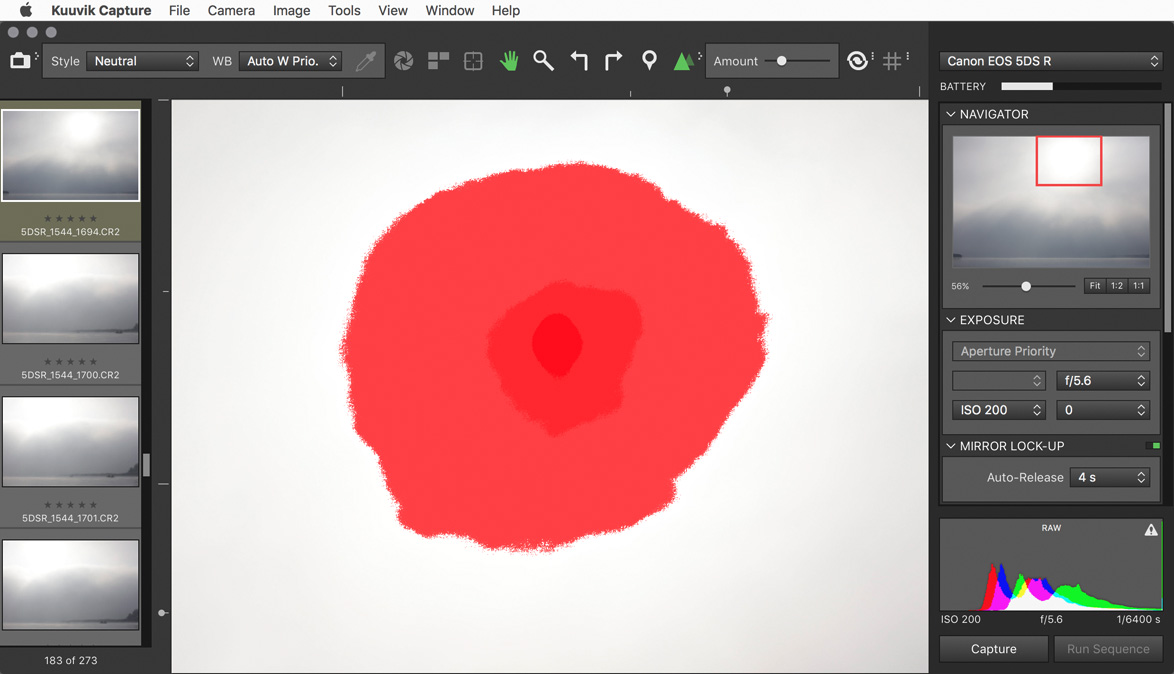
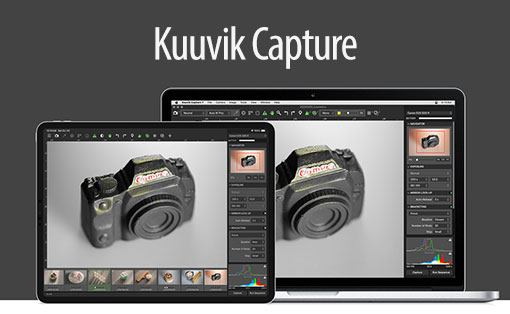
You may wonder why I used the good old cable release instead of Kuuvik Capture. Well, it’s pretty hard to do that with the USB cable left on your desk at home…