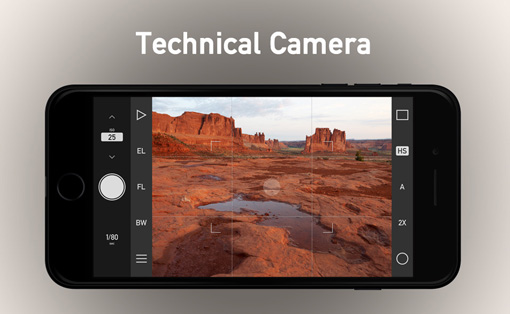
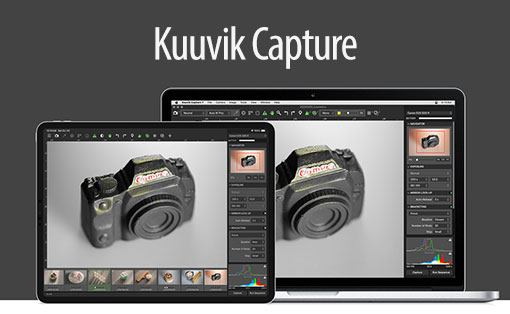
ShutterCount 4.1 Released

The last of today’s updates is for ShutterCount. Of course version 4.1 brings iOS 13 support, including a lovely dark interpretation to the app.
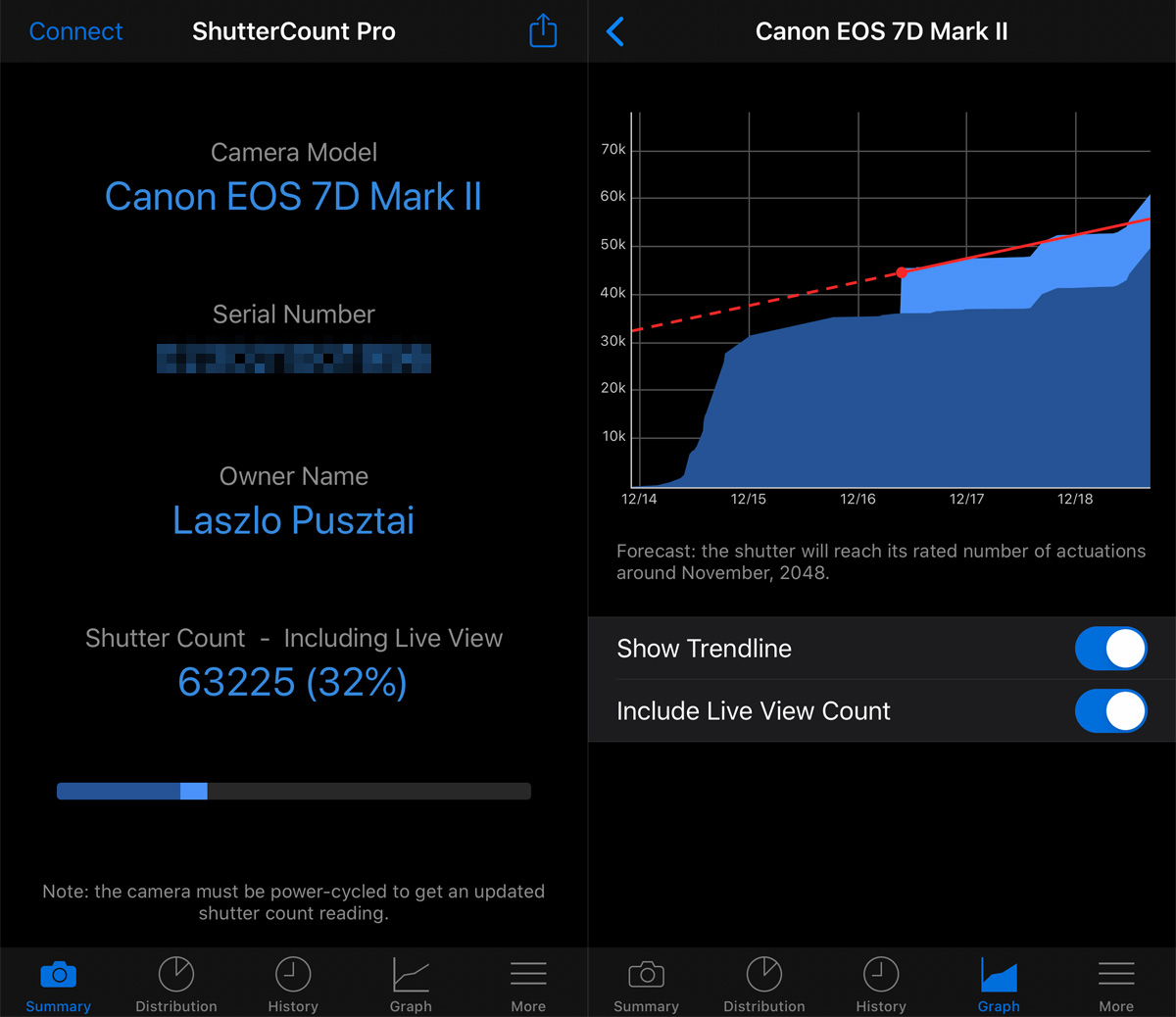
We like it so much that the Mac version was also updated with a variant of the iOS dark mode colors.

Current firmware version info in the Plus Pack was also updated to reflect the latest security patches from Canon. While I usually don’t mention it, this time it’s important to update your camera as soon as possible. Read Canon’s security advisory for more information.

Version 4.1 is a free update for both Mac and iOS users.

Artist’s Viewfinder 6.3 Released

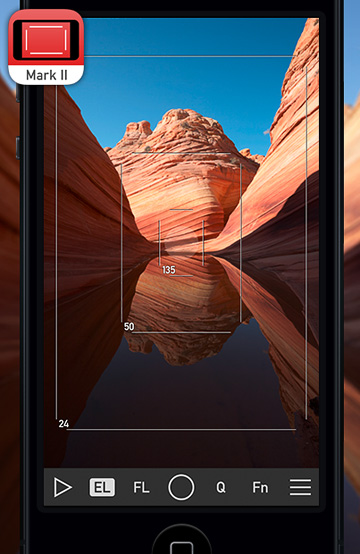
Continuing today’s iOS 13 compatibility updates, version 6.3 of the Mark II Artist’s Viewfinder is now available on the App Store. It brings full iOS 13 support (again, you must update to this version if you are using iOS 13). Dark Mode is supported in the menu, but the main screen’s color theme is still controlled with the Toolbar Theme preference in the menu.

Along a few new cameras, there’s a notable new feature: Zoom to Active Frame.

Once it’s turned on in the menu, double or triple tapping a frame will not just set the mask or highlight, but will also zoom to the active frame so that it fits the screen (that is, the whole active frame becomes visible, at the largest possible size where the whole frame is on the screen). Clearing the mask or highlight will change the zoom level back to where it was before activating the frame (the original zoom level). There are a few things to keep in mind, though.

If the active frame is too small (it would need a higher zoom level than the maximum possible) or too large (smaller zoom level than possible), then it may not fit the whole screen. This may happen with long telephoto or ultra wide lenses.


Viewfinder forgets the original zoom level (and will not revert to it when the mask or highlight is cleared) if you:

  • 
manually change the zoom level after the app zoomed into the active frame;
  • switch between the wide and tele cameras on the phone; or
  • toggle Wide Mode.

When you activate another frame while still in a previously activated one, the display will change to reflect your new activation. The original zoom level will not change in this case, so clearing the active frame will bring you back to the zoom level used before the first frame activation.

Optical image stabilization and exposure simulation described in my previous posts for Technical Camera are also present in this app (since they share the underlying capture engine).

The Viewfinder Handbook was also updated to reflect the new features.

This update is free for existing users. New users can purchase the app in the App Store.

Technical Camera 1.4 : Exposure Simulation

Technical Camera did support longer exposures (up to a given device’s capabilities, which is usually in the 0.5s-1s range) from day one. And live view frame rate followed the exposure time, resulting in substantial lag when longer exposures were used.

To resolve this issue, version 1.4 introduces exposure simulation.

It works exactly the same way your regular camera’s live view does: we simulate the brightness of longer exposures by increasing ISO instead of dropping the shutter speed. The result is a fluid, high frame rate live view feed under all circumstances.

There’s a limitation, though, that you should be aware of. When light levels drop, simulation may end up showing a darker image when the actual (non-simulated) exposure would also use a very high ISO. Practically this isn’t a big deal, since very high ISOs are unusable on a phone.
Update 10/2/2019: While it’s a version 1.5 feature, the exposure simulation warning should also be mentioned here. It appears when the simulation can no longer show the actual exposure, because it hit the high ISO limit.

In this case an orange dot starts to blink once a second.

Exposure simulation is always on, no way to disable it.

Version 1.4 is a free update for existing Technical Camera owners. New users can purchase the app in the App Store.

Technical Camera 1.4 : Optical Image Stabilization

The latest update to Technical Camera is now available on the App Store. Version 1.4 fully supports iOS 13, so anybody upgrading tomorrow to Apple’s newest operating system will be able to continue to use the app. This includes support for Dark Mode in the menu.

But there are two other prominent features in this version, one of which is the ability to utilize optical image stabilizers found in newer iPhone cameras.

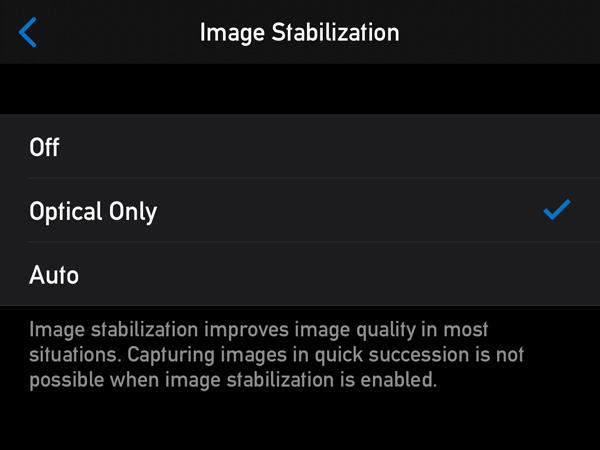
We’ve added a new Optical Only option to the Image Stabilization preference. Honestly, I was never a big fan of Apple’s digital image stabilization (used when Auto is selected), so that’s why we have this option now.

Optical stabilization is available at any shutter speed, as well as when shooting RAW. I routinely shoot one second long exposures handheld at ISO 25 with the wide angle camera on my iPhone XS Max, and the results are pretty good.

Auto stabilization has also been updated. By default it tries to use the digital/optical combined stabilization you are familiar with. But in cases where digital stabilization is not available (such as in case of RAW captures or at shutter speeds longer than 1/20s) it will switch to optical only stabilization. Well, if the currently selected camera supports it.

Starting with this version, manually set ISO and shutter speed values are retained when you exit and relaunch the app. So you can now set ISO 25 and optical only stabilization to have the highest quality RAW captures, and forget about it. Only increasing ISO when needed. This elevates image quality by a huge margin compared to higher ISO captures, and is exactly what I do.

The update is free for existing Technical Camera owners. New users can purchase the app in the App Store.

Artist’s Viewfinder 6.2 Released

Version 6.2 of the Mark II Artist’s Viewfinder is now available on the App Store. This is mainly a camera database update, with adding support for the default copyright template (a feature now available in all our apps).

With the default copyright template, you just have to type in your name into the Artist Name field, and the app will generate a copyright info template for you. The format is described in my post that introduced the feature for the first time.

Other that this, the usual slew of newly released cameras were added to the database. Plus the Real Lenses feature now includes ALPA’s just released Switar cine optics and all Hasselblad X and H mount lenses. For the complete list of new stuff I’d recommend to check out the release notes.

The Viewfinder Handbook was also updated, and the PDF is now a 25% smaller download thanks to my move from Adobe InDesign to Affinity Publisher.

This update is free for existing users. New users can purchase the app in the App Store.

What’s New in ShutterCount 4.0

ShutterCount 4 for both Mac and iPhone/iPad is available now on the respective App Store. This major new release brings a host of under-the hood enhancements that will serve as a basis for exciting new features. But as always, new camera support (EOS RP and new DSLRs) is part of the package.

The first installment of these new feature (owner name editing, the copyright information template and IPTC export/import) is available for users who purchased the Plus Pack or have the Pro edition and is shared with Kuuvik Capture. Please read my former post on them before continuing.

There are a few differences from Kuuvik Capture on a Mac, though. While the copyright information template is available from the Preferences dialog for both apps, owner name editing and IPTC export / import is directly under the Camera menu for ShutterCount (that is, no sub-menu). You can also click the Owner Name title on the Camera Summary tab to edit the owner name.

On iOS things are laid out a bit differently. Owner name editing and IPTC export / import can be found under Camera Settings on the More tab. And the copyright information template editor is also accessible from the More tab, via the Copyright Information item. You can also tap the Owner Name title on the Summary tab as a shortcut for editing the owner name.

As you can see on the screen shot, Prevent Auto Power Off makes an appearance in ShutterCount. Formerly camera connections were terminated when the camara powered itself off. But since you can now edit stuff, it wouldn’t be a great idea to let the camera go (in the worst imaginable moment, of course). So the default is to prevent auto power off. You can disable it if you want to, but we don’t recommend doing so.

Auto power off prevention is available in all editions.

Interference Detection

Canon cameras do not tolerate when multiple apps connect to them, despite the PTP standard would allow it. And instead of a clear error message, they just start to behave erratically. So apps, whose developers believe that every camera manufacturer respects the standard, could inadvertently kick Canon-specific apps in the stomach.

To avoid this, we had a technology to detect interference (that is, when some other app is already connected to and using a camera) since the early days of ShutterCount. Unfortunately Apple decided to kill this technology with the release of macOS 10.12 (and to add insult to injury, introduced a nasty bug in 10.12 that may ruin 5D Mark IV connections – see the end of Q5 in our FAQ).

So we ended up in a situation that’s a nightmare from product support standpoint. This was a high priority issue to solve.

I’m proud to announce that version 4.0 brings back the interference detection on macOS 10.12 and later (ShutterCount on iOS is not affected)! The only difference from the former implementation is that we are no longer able to pinpoint the impostor (the app already using the camera), but can detect the fact that there’s such an app. At the end of the day this is a much better situation, because we at least know for sure that this is the cause of the communication problem and could effectively help people in finding the culprit.

Speaking of these impostors, Photos is number one by far. We already knew it is, and since it pops up a window, it’s something easy to identify. But just hours after the release of 4.0, we got a few support requests complaining about the Another app is also using the camera error message, while there were seemingly no such app running.

Seemingly. You probably don’t know that not all such apps have a visible window. The investigation we carried out after these support requests discovered that the cause is… Dropbox.

Dropbox have a feature that allows you to upload every image when a camera connects. But it locks to all connected cameras regardless if you turn this feature off. This is a major oversight from Dropbox, and we already filed a bug report with them. I’ll let you know how it proceeds. But until they fix it, you should quit Dropbox when you want to use ShutterCount (and the same applies to Kuuvik Capture as well as other camera control apps).

Availability

Version 4 is a free update for existing users on both operating systems. New users can purchase the app in the respective App Store by following links on ShutterCount’s homepage.