Photographing partial solar eclipses usually isn’t that rewarding. A yellow disk covered partially with a black disk. Nothing to write home about. But today’s eclipse was different: a lone Sunspot (actually two, in region 2303) turned the Sun into a giant Pac-Man.
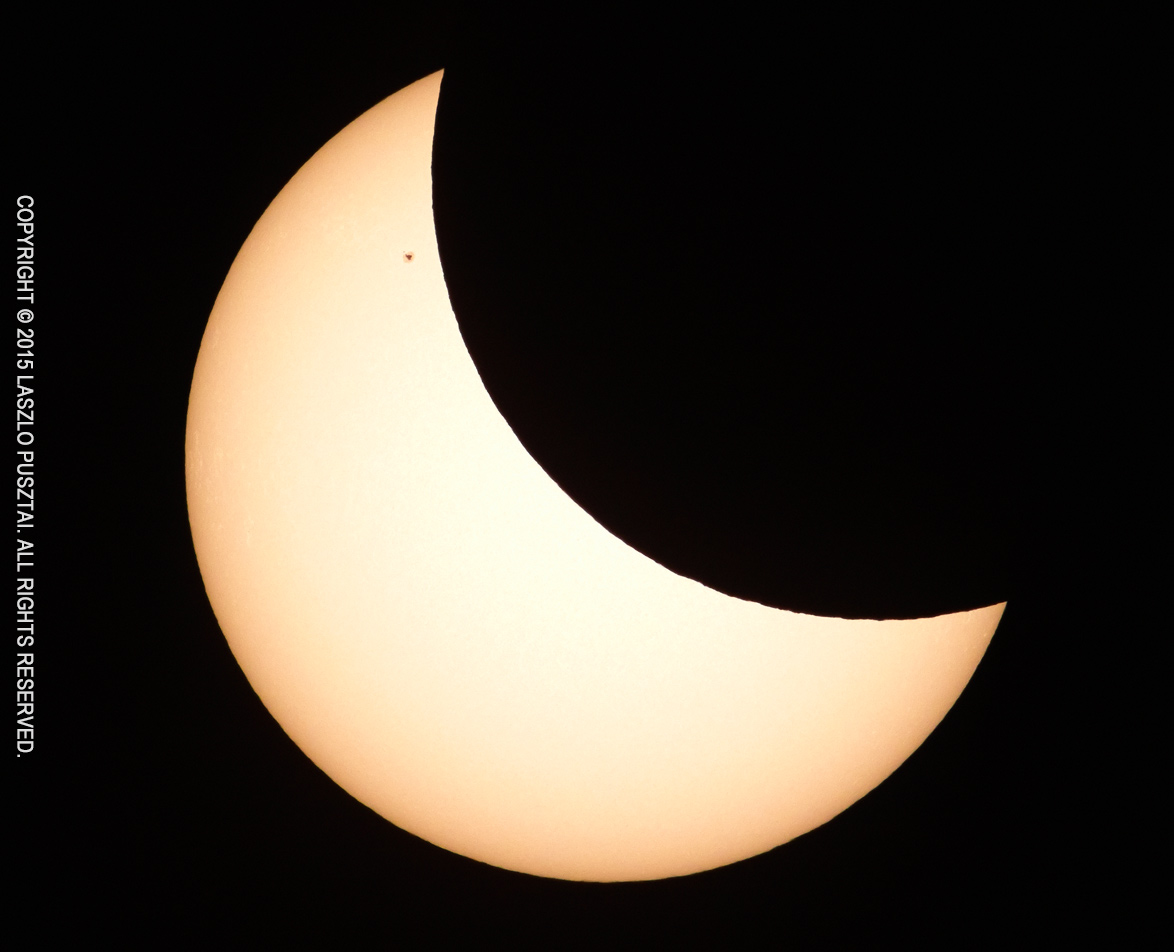
Partial Solar Eclipse with Sunspot Region 2303
Not being rewarding doesn’t mean that it’s without any challenges, though. A special filter is needed to protect the lens, the sensor and – most importantly – the photographer’s eye. And the filter must be mounted in front of the lens.
The filter I have is a piece of thin metal foil mounted in an aluminum ring. It was made for my former 70-200/2.8 zoom some 7-8 years ago.

Sun filter on the 500mm f/4
But I wanted to use my 500mm f/4 with a 2x teleconverter on a 7D Mark II today to make the Sun large on the image.
Somehow I had to mount the filter onto the much larger front ring of the 500. Cardboard and gaffer tape to the rescue! The adapter ring was completed in about 20 minutes and worked perfectly.
I lost about 4cm clear aperture this way, but that isn’t a problem when photographing the Sun. You still have plenty of light and contrast.
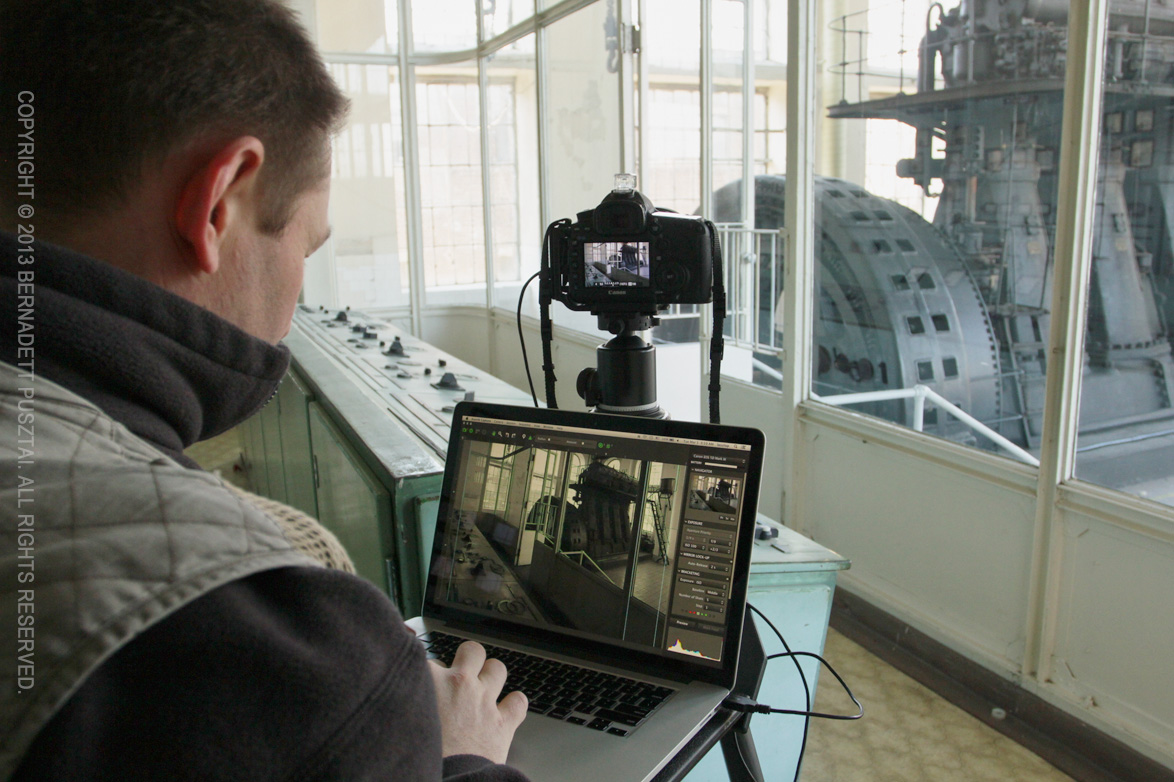
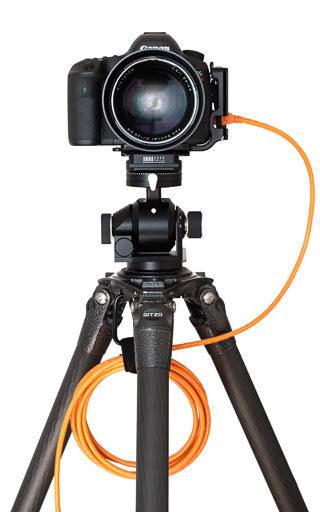
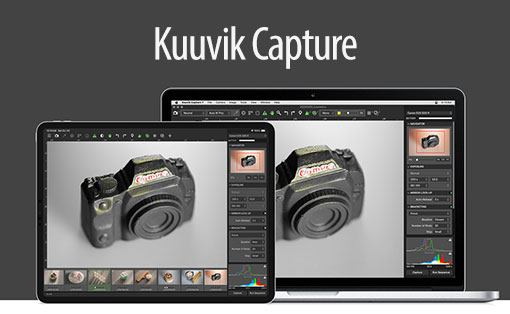
Another challenge was focusing. The turbulent air made it hard for the AF to catch the best focus. So I tethered the 7D Mark II to my 11″ MacBook Air and fired up Kuuvik Capture to do the focusing. And it was also a joy to watch the event unfolding on a notebook screen.
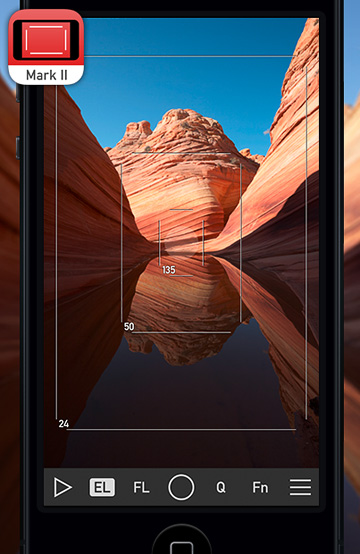
Note that I had been using a special build of Kuuvik Capture with 7D Mark II support – the currently selling one doesn’t support this camera. A privilege for being the developer of the app :)
 Today I practically finished the focus bracketing feature in
  We have also changed the maximum number of shots you can expose in other bracketing modes to 15. As you can see on the bracketing monitor, this number is usually more than the exposure range your camera is capable of, but some of you requested it, so we added it.
 When the first wireless transmitters had appeared for Canons, they were ugly bricks that connected to the camera with a cable, but in exchange they supported multiple cameras. Then Canon made their mind, and started to sell dedicated transmitters for each camera model (think 5D2 and 7D). With the WFT-E7, the ugly brick returns. In theory it will support future cameras, but I found no sign on the Net whether it works with anything except the 5D3. I plan to investigate this in the near future.
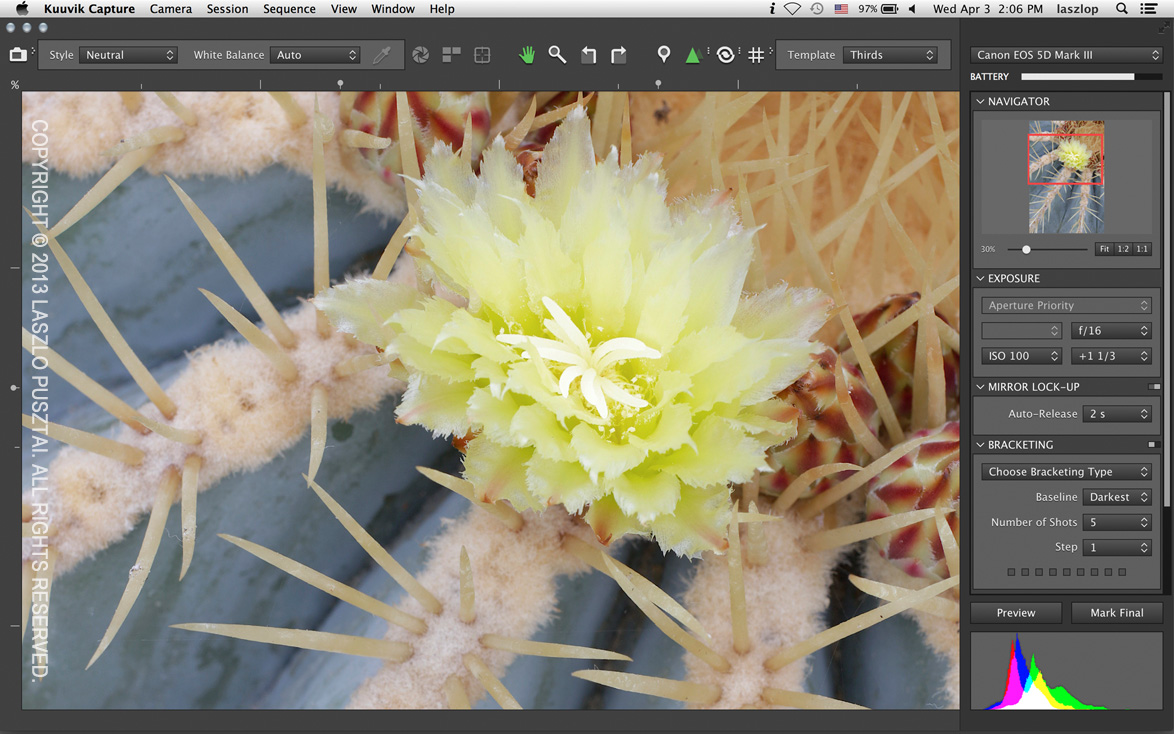
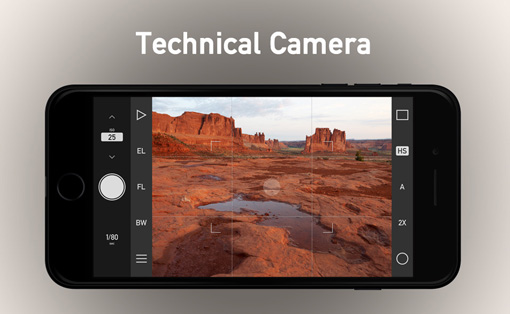
 Ladies and gentlemen! It’s my pleasure to introduce something I have been developing for the past 15 months: